

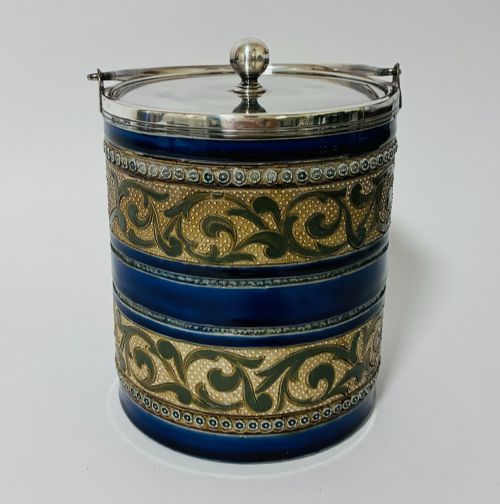
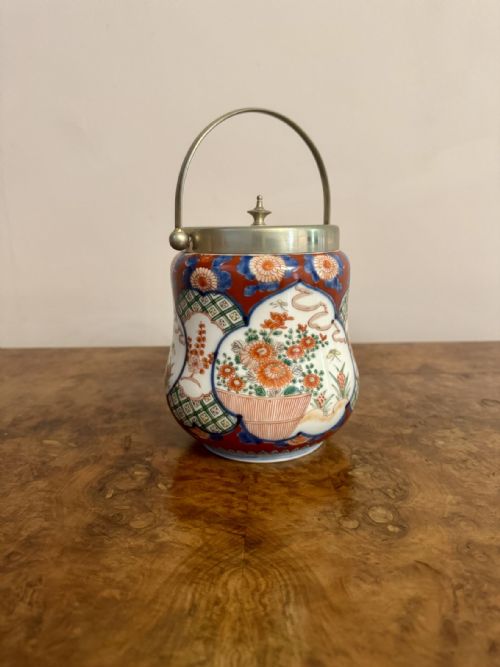


Ceramic Biscuit Barrel
A ceramic biscuit barrel sits at the heart of the table, holding dry biscuits inside earthenware or stoneware bodies fitted with metal mounts.
Ceramic Biscuit Barrel
A ceramic biscuit barrel serves as a covered container designed for storing dry biscuits during Victorian and Edwardian tea services. These vessels combine functional ceramic bodies with hinged metal mounts and lids to preserve the contents.
Most examples found here date from the late nineteenth century through to the early twentieth century. Common stylistic expressions include classic Jasperware, blue and white transfer printing, and Japanese Imari patterns.
Makers utilised earthenware, stoneware, and porcelain for the main bodies, often pairing them with silver-plated or brass hardware. The resulting forms range from simple cylindrical jars to more ornate neoclassical shapes.
How they were made
Potters shaped the bodies using traditional ceramic techniques such as throwing, casting, or moulding in stoneware and earthenware. Surface decoration frequently involved applied relief motifs, as seen on Jasperware, or underglaze transfer printing like Flow Blue.
Metalworkers fitted the finished ceramic jars with hinged lids, rims, and swinging bail handles, usually composed of silver plate or brass. These metal mounts were secured directly to the ceramic body to complete the barrel.
Ceramic Biscuit Barrel Retail Price Guide 2026
Typical asking prices for ceramic biscuit barrel among the pieces listed under this phrase on Sellingantiques today, from the lower quarter to the upper quarter. They describe what is for sale here now, not the wider market.
These lidded jars ensured that crisp dry biscuits survived the damp British climate long enough to be served with afternoon tea.
What varies in quality
The refinement of the ceramic body and the crispness of any applied relief work distinguish finer examples from standard production pieces. Sharpness in moulded details and clarity in transfer-printed designs indicate superior craftsmanship.
The weight and quality of the silver plate or brass hardware also influence the overall character of the piece. Substantial metal mounts that fit the ceramic body securely reflect higher manufacturing standards.
Doulton Lambeth·Crown Devon·Carlton Ware·Wedgwood
The Ceramic Biscuit Barrel Glossary
- Jasperware
- A fine-grained, unglazed stoneware developed with contrasting coloured relief decoration applied to the surface. It is most commonly associated with neoclassical designs.
- Flow Blue
- A style of transfer printing where cobalt blue ink bleeds slightly into the surrounding white glaze during firing. This technique creates a soft, hazy appearance on the ceramic surface.
- Silver Plate
- A thin layer of silver fused to a base metal such as copper, brass, or nickel silver. It provides the bright finish seen on the lids and mounts of many barrels.
- Imari
- A style of Japanese porcelain decoration featuring rich underglaze blue and overglaze iron red, often augmented with gold. It influenced various European potteries during the period.
Ceramic Biscuit Barrel: Frequently Asked Questions
What is a ceramic biscuit barrel?
A ceramic biscuit barrel is a covered container used to keep dry biscuits fresh on the dining table or tea trolley during the late nineteenth and early twentieth centuries.
These pieces combine ceramic bodies made from earthenware, stoneware, or porcelain with metal hardware such as hinged lids and swing handles.
How were biscuit barrels used?
They were placed on the parlour or dining table during afternoon tea to serve dry biscuits to family members and guests.
The fitted lid helped keep the contents dry and protected from moisture in the air between tea services.
How do I date a biscuit barrel?
Dating relies on stylistic clues, ceramic materials, and any maker marks stamped or printed on the base of the vessel.
Victorian pieces often feature heavy ornamentation or Jasperware reliefs, while Edwardian examples frequently show lighter floral patterns or blue and white transfer printing.
How do I clean a ceramic biscuit barrel?
Cleaning requires gentle wiping with a soft, damp cloth to remove dust from the ceramic body and metal mounts.
Harsh chemical cleaners and abrasive materials should be avoided to protect both the glaze and the silver-plated surfaces.