

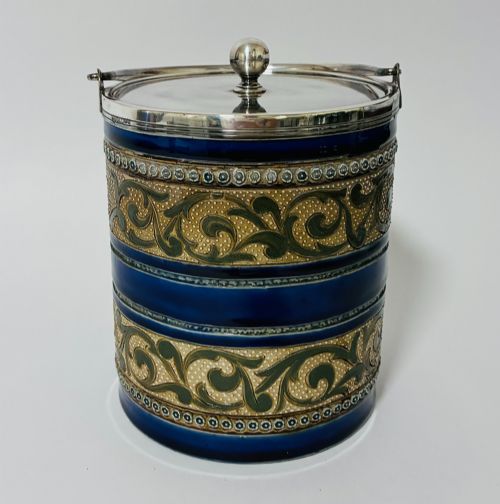
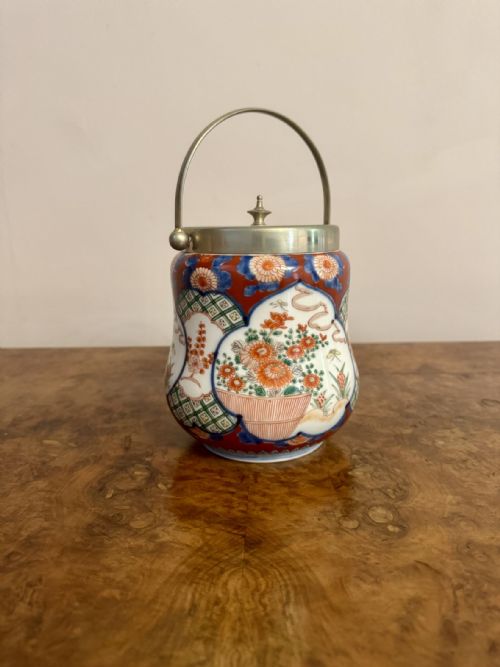


Ceramic and Silver Biscuit Barrel
A ceramic and silver biscuit barrel brings Victorian and Edwardian dining rooms to life, offering a charming vessel for storing tea biscuits.
Ceramic and Silver Biscuit Barrel
When you search for a ceramic and silver biscuit barrel, you encounter a specialised table container designed to keep biscuits fresh during formal teas and gatherings. These Victorian and Edwardian pieces combine ceramic bodies with silver-plated mounts, swing handles, and hinged lids.
The versions you are most likely to meet on this page span the late nineteenth and early twentieth centuries, featuring distinct ceramic traditions. Makers utilised earthenware, porcelain, and stoneware forms, often incorporating stylistic influences from Neoclassical and Japanese Imari traditions.
Forms range from traditional cylindrical jars to bulbous vessels, frequently stamped with notable potteries such as Doulton Lambeth, Crown Devon, Carlton Ware, and Wedgwood. Each example reflects the domestic priorities of its period, balancing utility with decorative presence on the parlour sideboard.
Materials and construction
Potters shaped the bodies using dense ceramic, earthenware, or stoneware, applying decorative techniques such as flow blue transfers, applied jasperware reliefs, and intricate hand-painted Japanese Imari motifs. These ceramic bodies provided a sturdy, moisture-resistant container for dry baked goods.
Silversmiths encased the ceramic vessels in protective metal frames, attaching chased or engraved silver-plated rims, swing handles, and domed lids. The metal mounts secured the ceramic core while adding an elegant metallic contrast to the colourful pottery beneath.
Ceramic and Silver Biscuit Barrel Retail Price Guide 2026
Typical asking prices for ceramic and silver biscuit barrel among the pieces listed under this phrase on Sellingantiques today, from the lower quarter to the upper quarter. They describe what is for sale here now, not the wider market.
Early biscuit enthusiasts required a dedicated lidded jar on the table because damp British air made keeping biscuits crisp an ongoing domestic challenge.
Judging quality and craftsmanship
Quality rests upon the crispness of the ceramic moulding and the complexity of the surface decoration, whether in the delicate relief work of jasperware or the intricate depth of hand-painted Imari patterns. Finer examples display superior registration in multi-coloured ceramic bodies and greater precision in the applied motifs.
The standard of the silver plating and the mechanical integrity of the hinged lid and swing handle further differentiate the tiers of production. Heavier, more substantial metal mounts and robust ceramic walls indicate superior manufacturing standards intended for affluent households.
Doulton Lambeth·Crown Devon·Carlton Ware·Wedgwood
The Ceramic and Silver Biscuit Barrel Glossary
- Biscuit barrel
- A covered container designed specifically for holding dry biscuits on the dining table or sideboard. These vessels became particularly popular during the Victorian era as formal tea drinking expanded.
- Jasperware
- A type of fine stoneware developed by Wedgwood, characterised by a matt unglazed surface and contrasting raised white clay reliefs. It frequently appears in shades of blue and sage.
- Flow blue
- A transfer-printing technique where cobalt blue colour bleeds slightly into the white glaze during firing, creating a soft, hazy effect. This style flourished during the Victorian and Edwardian periods.
- Silver plate
- A layer of silver fused to a base metal such as copper, nickel, or brass to give the appearance of solid silver. It forms the protective mounts and hardware on these biscuit containers.
- Imari
- A style of Japanese porcelain decorated in underglaze blue, iron red, and gilt, which heavily influenced Western ceramic design. Such pieces display dense, vibrant patterns.
Ceramic and Silver Biscuit Barrel: Frequently Asked Questions
What is a biscuit barrel used for?
These lidded vessels were placed on the parlour or dining room table to serve biscuits to guests during afternoon tea.
The fitted lid helped keep the baked goods dry and fresh between formal gatherings.
How do I date a ceramic and silver biscuit barrel?
Dating relies heavily on the ceramic body style, registration marks stamped on the base, and the aesthetic markers of periods such as Victorian or Edwardian.
Changes in decorative motifs, from Neoclassical jasperware to flow blue transfers, also help narrow down the decade of manufacture.
How should I clean the silver plating?
Maintenance requires gentle cleaning with a specialised silver cloth to avoid damaging the underlying ceramic body or wearing through the thin plated layer.
Harsh chemical dips should be avoided, particularly near the junctions where the metal meets the pottery.