
Century Dining Table
A century dining table anchors the room with substantial timber and functional grace, offering historic presence for daily gatherings.
Century Dining Table
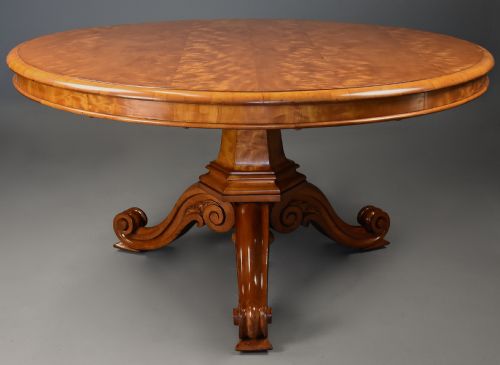
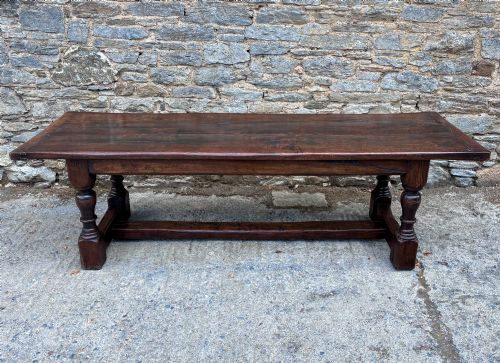
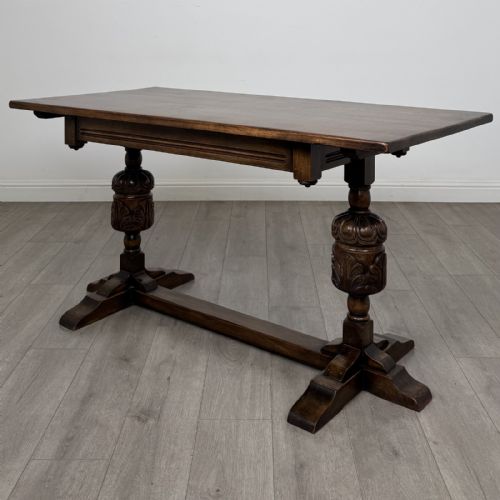
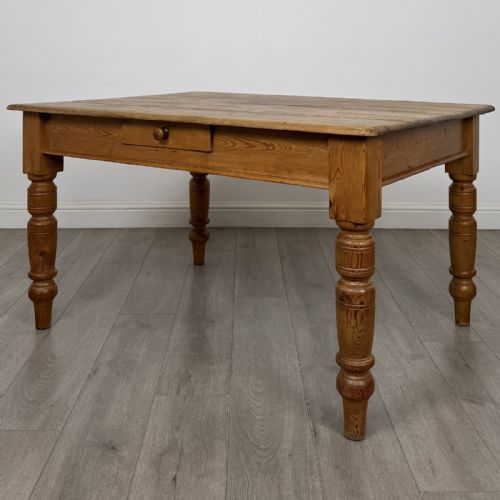
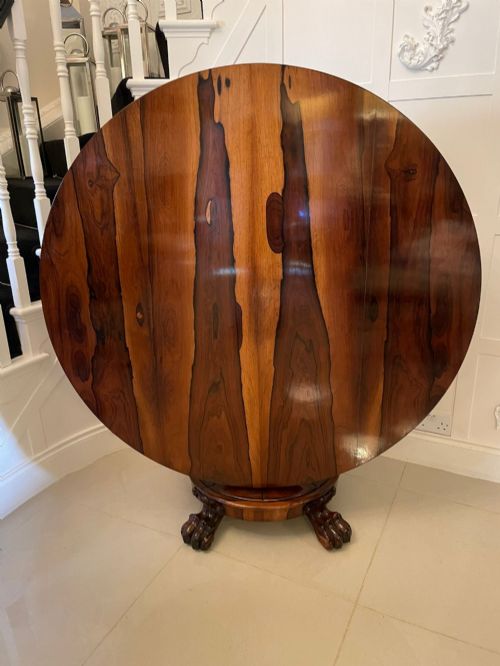
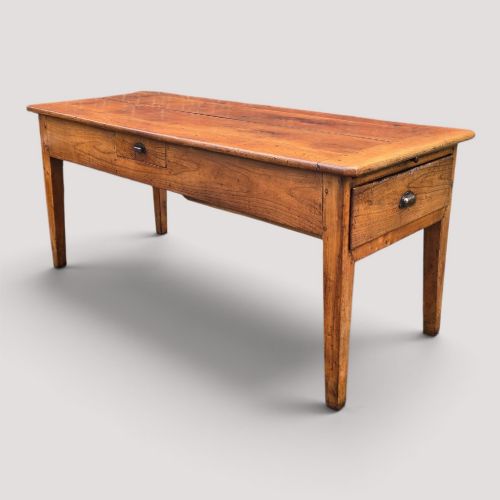
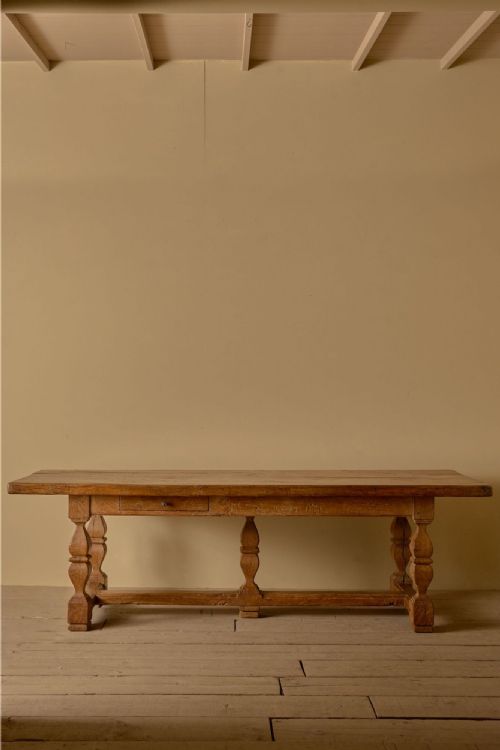
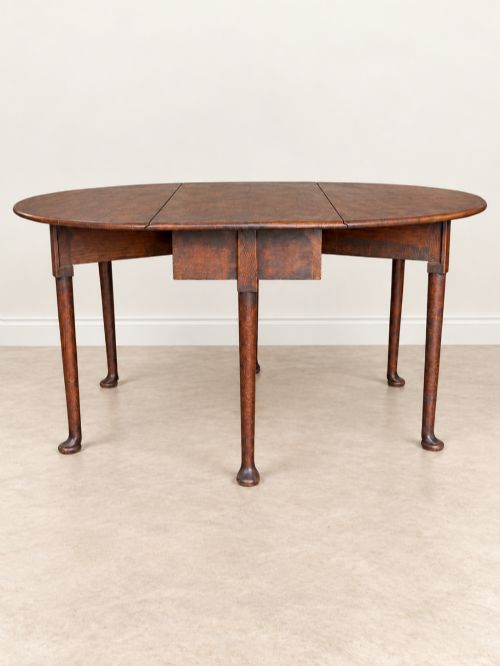
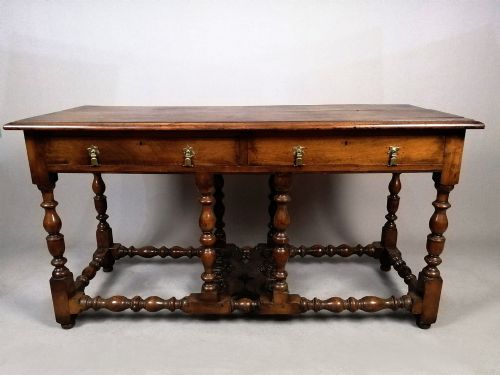
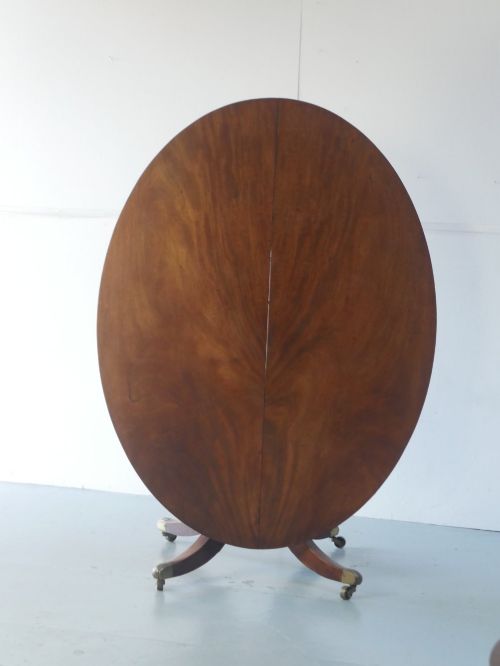
When you search for a century dining table, you encounter diverse forms ranging from robust oak gateleg designs and rustic fruitwood refectory boards to refined mahogany pedestal and drop-leaf formats. These pieces emerge from periods spanning the seventeenth through the nineteenth centuries, drawing on Georgian, Regency, and Victorian aesthetics.
The most common examples on this page are generous mahogany extending tables and solid oak or chestnut farmhouse pieces. British, French, and wider European workshops produced these surfaces for practical domestic use, resulting in surviving tables designed to seat families and guests across generations.
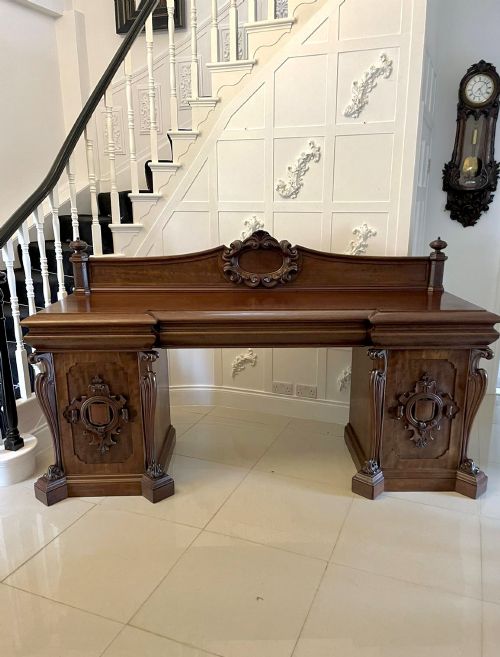
Beyond standard dining formats, the selection includes specialised variations like French hunting tables, wine tasting tables, and centre tables. Each type reflects the social habits and interior architecture of its era, utilising domestic and imported timbers suited to heavy daily wear.
Materials and construction methods
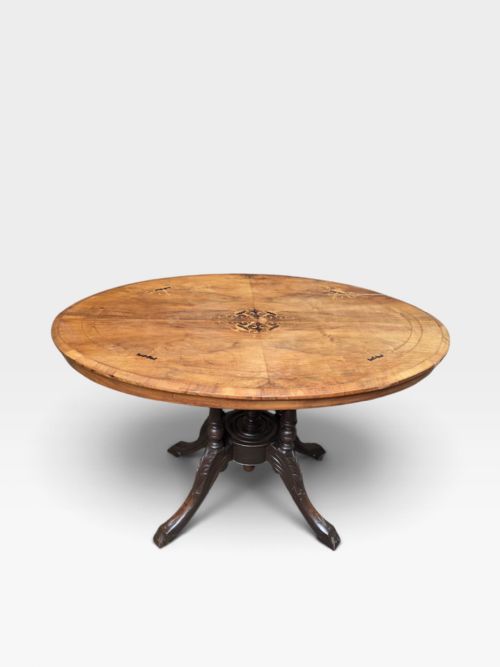
Cabinet makers and joiners relied primarily on hardwoods such as oak, mahogany, walnut, fruitwood, and chestnut. Flame mahogany veneer and walnut frequently appear on formal nineteenth-century tops, while solid planks of oak, elm, poplar, or cherry form the heavy surfaces of earlier farmhouse and refectory tables.
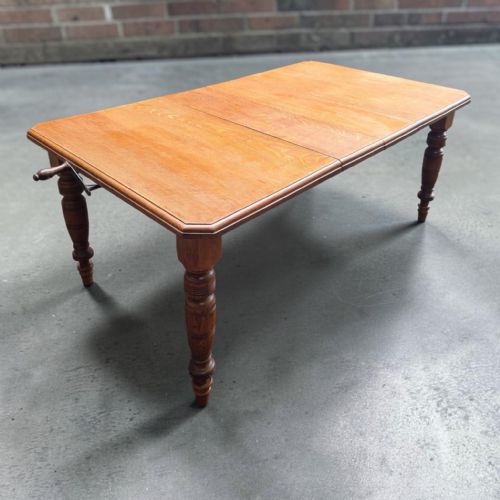
Construction techniques balanced structural rigidity with adaptability, seen in drop-leaf mechanisms, gateleg supports, and extending leaves operated by wooden runners or brass fittings. Turned legs, castors, and pedestal bases provided mobility and support for heavy timber tops without sacrificing stability.
Listings feature woods like mahogany, oak, chestnut, fruitwood, and pine across Georgian, Regency, and Victorian periods.
Judging timber selection and joinery
Quality rests upon the selection and figuration of the timber, distinguishing plain utilitarian boards from highly figured flame mahogany veneers or densely grained old-growth oak. The integrity of the original construction, including tight joints and matching extension leaves, separates superior examples from heavily altered pieces.
Proportion and execution define the higher tiers of the range, where carved details, balanced pedestals, and smooth operating mechanisms demonstrate superior craftsmanship. The preservation of original surface patination further separates well-maintained tables from those stripped or heavily refinished.
Selbat
The Century Dining Table Glossary
- Gateleg table
- A table with hinged flaps supported by swing-out legs that resemble the stationary legs. This design allows the surface area to expand or contract easily.
- Drop leaf
- A table featuring a fixed central section and hinged leaves that drop down at the sides. These leaves are held horizontally by pivoting brackets or swing-out legs.
- Refectory table
- A long, narrow dining table historically used in monastic dining halls. Surviving examples often feature heavy stretcher bases and solid plank tops.
- Extending table
- A dining table designed with a mechanism to separate in the middle, allowing additional leaves to be inserted for extra seating capacity.
- Pedestal table
- A table supported by one or more central pillars rather than four corner legs. This configuration maximises legroom around the perimeter.
Century Dining Table: Frequently Asked Questions
How do I seat more guests?
Many period tables feature extending mechanisms or drop leaves designed for flexibility. Pulling apart the central sections allows the insertion of extra leaves.
Drop-leaf formats use hinged flaps supported by swing-out legs to increase surface area quickly when needed.
What woods were commonly used?
Cabinet makers utilised dense hardwoods suited to heavy domestic service. Mahogany and walnut appear frequently in formal nineteenth-century designs.
Earlier farmhouse and refectory pieces rely on solid oak, chestnut, fruitwood, elm, and poplar for robust daily utility.
How do I care for antique timber?
Protect the surface from excessive heat, moisture, and direct sunlight to prevent timber warping and finish degradation. Regular dusting with a soft cloth maintains the natural lustre.
Applying appropriate wax occasionally nourishes the wood and preserves the historical patination developed over centuries.
Can I use these for daily meals?
These tables were built precisely for daily domestic gatherings and heavy use. Their solid timber construction handles routine dining well.
Using mats and coasters protects the historic finish from accidental damage while letting you enjoy the piece daily.