

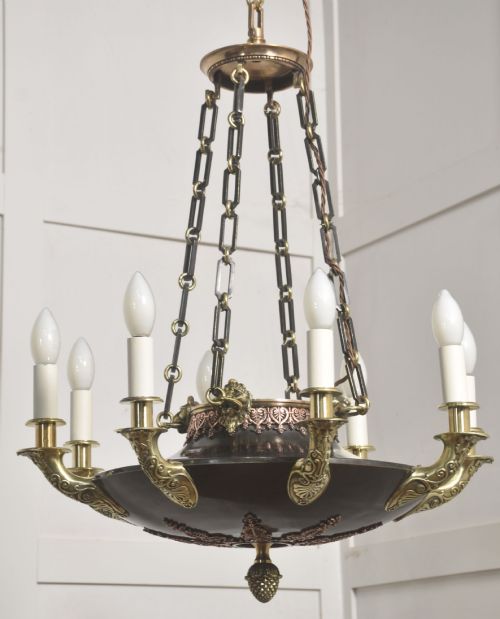
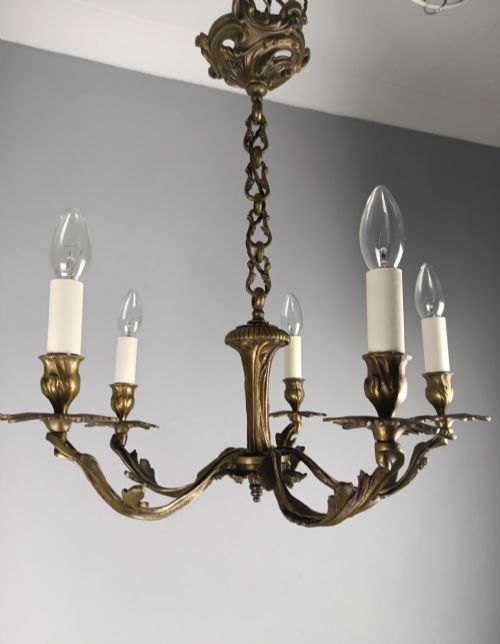
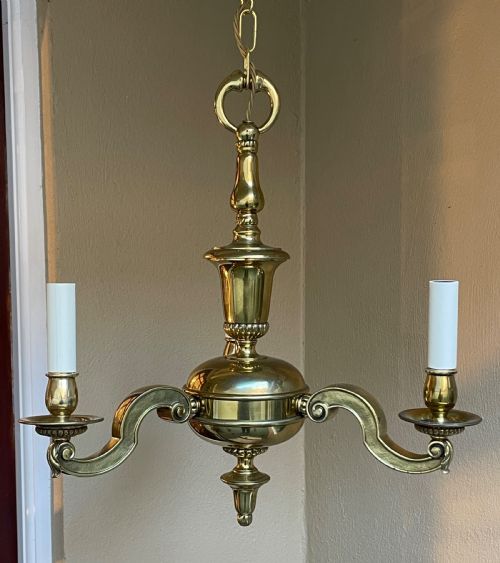
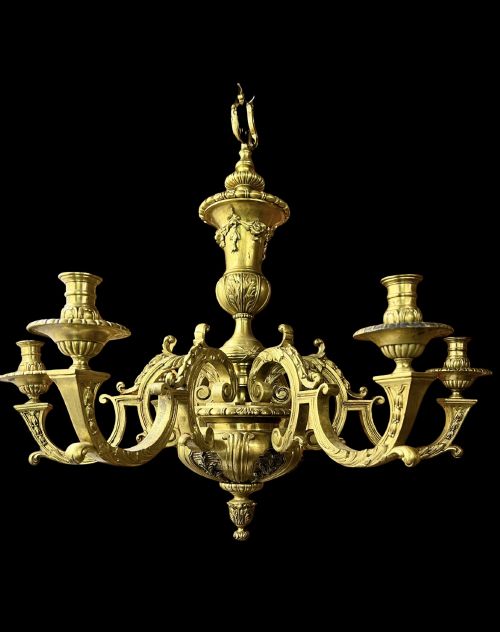
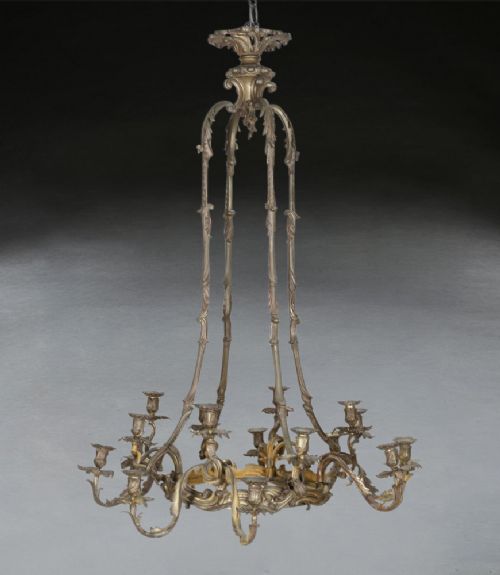


Cast Brass Ceiling Light
These cast brass ceiling light fixtures bring weighty period presence and warm metallic depth to interior spaces.
Cast Brass Ceiling Light
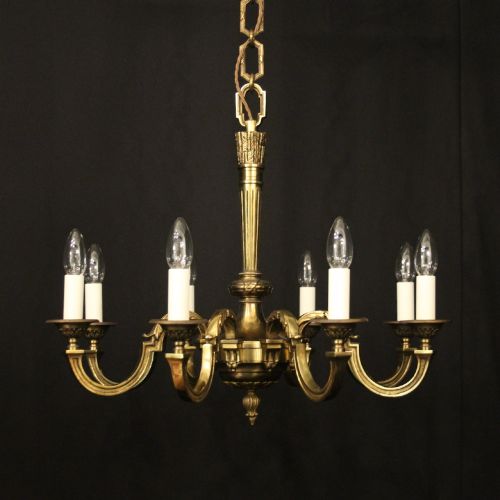
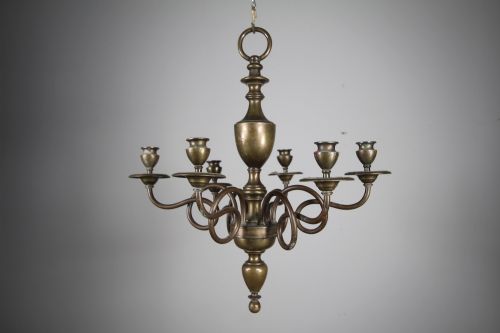
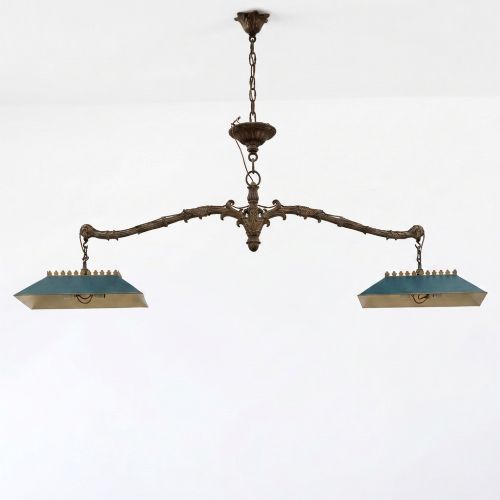
A cast brass ceiling light provides robust overhead illumination through substantial metal framing and multi-branch configurations. Buyers pursuing this search phrase encounter chandeliers, hall lanterns, ceiling roses, and hanging candelabra spanning several historic decades.
The selection here draws heavily on 19th-century production, Victorian designs, and early 20th-century French output. Common configurations range from simple three-branch fixtures to heavy multi-armed chandeliers adorned with decorative mounts.
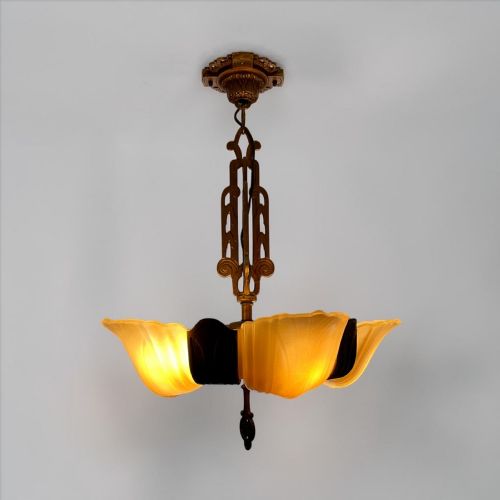
Stylistic influences vary widely across the inventory, encompassing French Rococo, Louis XVI style, Empire Revival, and Art Deco aesthetics. Many pieces incorporate frosted glass shades or cut glass elements alongside the primary metal structure.
How they were made
Makers utilised casting techniques to shape heavy brass and bronze into structural arms, intricate ceiling roses, and ornate leaf mounts. Molten metal poured into moulds allowed for consistent reproduction of complex decorative motifs like acanthus leaves and classical friezes.
Surface finishes include gilt bronze, gilt brass, dark bronze, and silvered bronze treatments that alter the reflective quality of the metal. Glass components, such as frosted slip shades and cut glass panels, were integrated into specific frames to diffuse light.
Cast Brass Ceiling Light Retail Price Guide 2026
Typical asking prices for cast brass ceiling light among the pieces listed under this phrase on Sellingantiques today, from the lower quarter to the upper quarter. They describe what is for sale here now, not the wider market.
Current listings feature pieces spanning the Victorian era, 1880, 1900, 1910, 1920, and 1930.
What varies in quality
The calibre of a cast brass ceiling light depends largely on the crispness of the casting work and the depth of the metal finishing. Superior examples display sharply defined ornamentation, such as deeply chiselled acanthus foliage, rather than softened or blurred details.
Weight and structural substance distinguish heavy-gauge mountings from lighter alternatives, influencing how solidly the fixture hangs and holds its form. The integration of complementary materials, including high-grade cut glass or carefully preserved gilding, further separates standard production from exceptional work.
The Cast Brass Ceiling Light Glossary
- Cast brass
- Metal shaped by pouring molten alloy into a mould. This method permits complex three-dimensional ornamentation on structural chandelier arms and ceiling roses.
- Gilt bronze
- Bronze coated with a thin layer of gold or gold-coloured alloy. It offers a rich, enduring metallic lustre.
- Acanthus leaf
- A decorative carving or casting motif derived from Mediterranean foliage. It appears frequently on classical and revival light mounts.
- Hall lantern
- An enclosed hanging light fixture designed for entryways and corridors. These pieces often feature glass panels held within a metal framework.
- Slip shade
- A moulded piece of glass that slides directly into a supportive metal frame. This component is characteristic of Art Deco lighting designs.
Cast Brass Ceiling Light: Frequently Asked Questions
How do I hang a heavy brass chandelier safely?
Heavy fixtures require direct attachment to ceiling joists using rated structural hooks rather than standard plaster fixings. Professional electrical installation ensures the weight is supported adequately.
Consulting a qualified electrician prevents strain on older wiring and guarantees compliance with current safety regulations.
What rooms suit a cast brass ceiling light?
Larger multi-branch chandeliers complement principal reception rooms and high-ceilinged dining spaces where their scale commands attention. Smaller lanterns or ceiling roses fit narrower hallways and intimate chambers.
Matching the drop of the fixture to the room height ensures proper clearance and balanced illumination.
How should I clean antique brass lighting?
Dusting gently with a soft, dry cloth prevents the accumulation of grime without disturbing the historic surface patina. Harsh chemical cleaners strip away desirable ageing effects and damage delicate finishes.
Specialist metal preservation wax can be applied sparingly if protection against atmospheric moisture is required.
How do I identify French revival styles?
French revival pieces incorporate distinct architectural vocabulary like classical urns, symmetrical garlands, and scrolling foliage derived from Louis periods. The presence of heavy cast bronze and fine chasing often points to continental workshops.
Comparing structural proportions against known historical design books helps clarify the specific revival era.