




Carved Wood Hall Tree
A carved wood hall tree makes a dramatic first impression in an entrance hall while keeping hats, coats and umbrellas organised.
Carved Wood Hall Tree
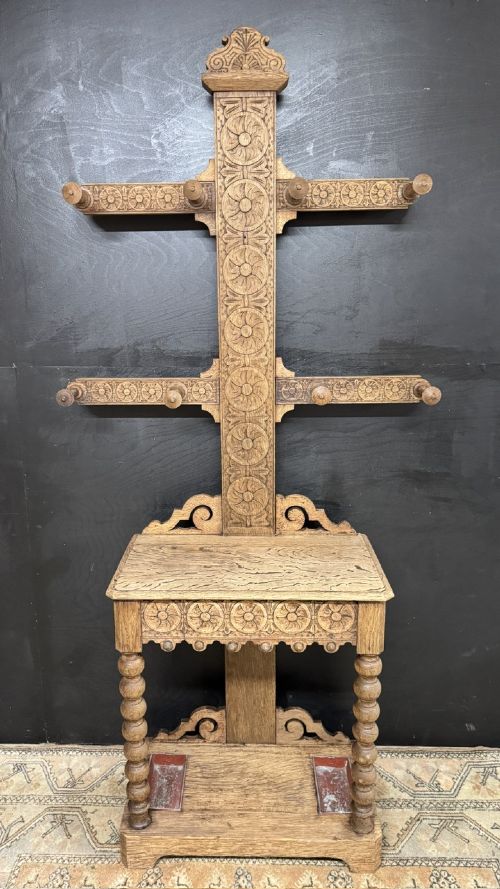
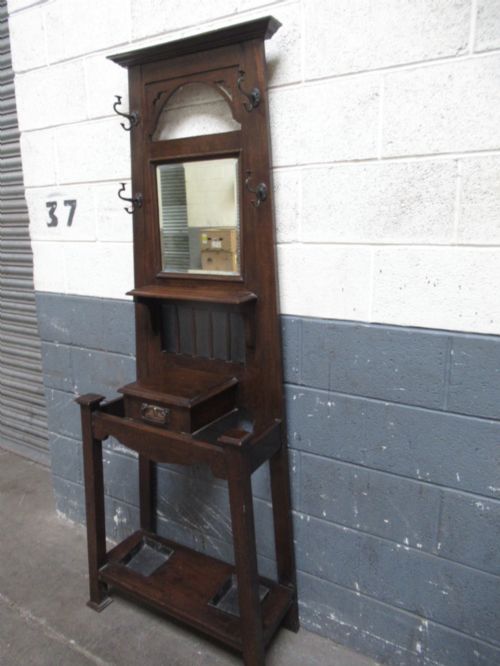
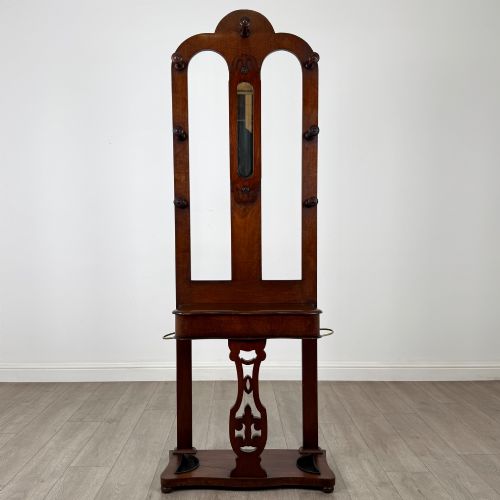
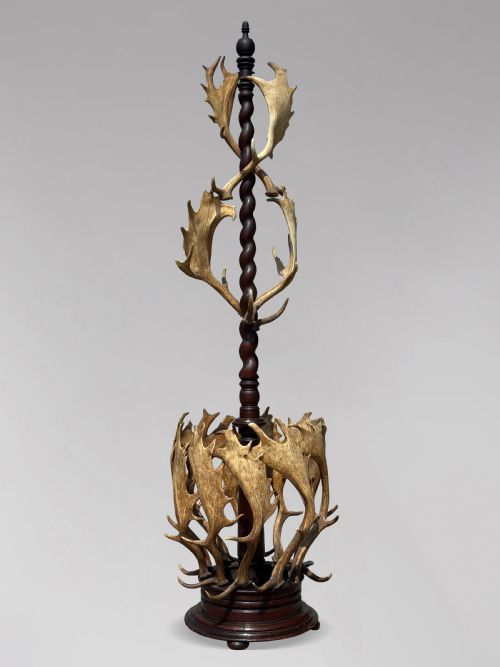
A carved wood hall tree combines functional hallway storage with sculptural woodwork, frequently featuring an integrated mirror and umbrella wells. The selection relies heavily on Victorian and Edwardian examples, alongside striking continental Black Forest work.
Most pieces date from the nineteenth century, spanning various forms from substantial oak and mahogany hall stands to intricate linden wood carvings. These architectural furniture items anchor an entranceway by merging coat hooks, hat racks and display surfaces into a single focal point.
Materials and construction methods
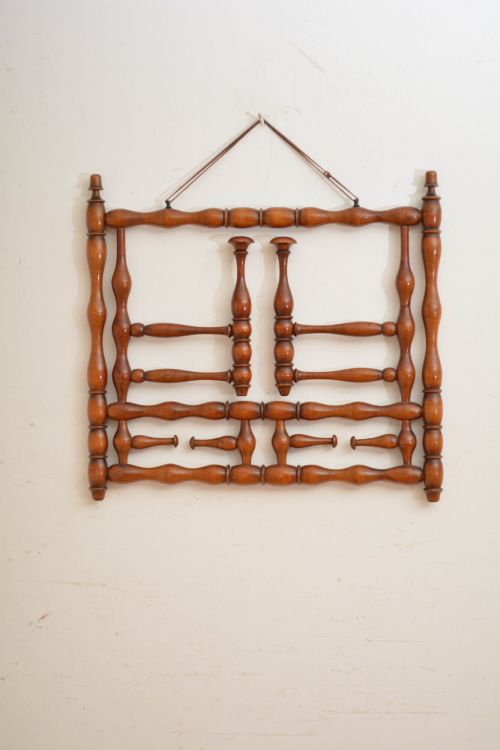
Cabinet makers utilised dense hardwoods such as oak, mahogany and walnut to withstand the daily weight of heavy winter garments. Carvers shaped these timbers alongside linden wood and exotic yew, incorporating brass hooks, cast iron drip pans and bevelled glass mirrors.
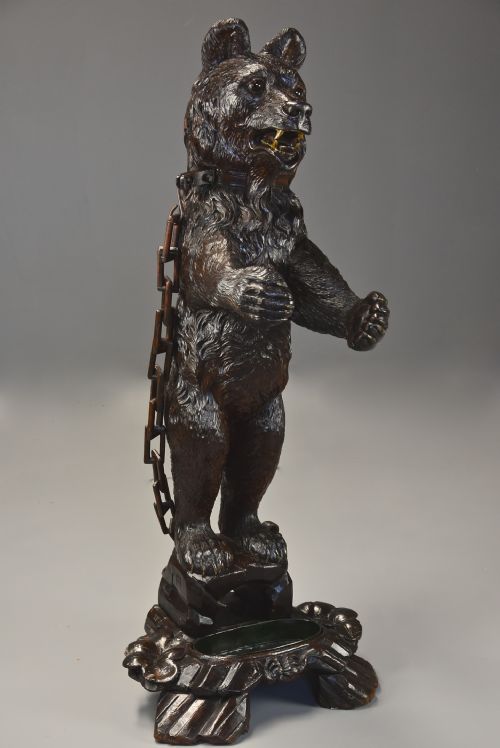
Continental pieces demonstrate deep relief carving techniques, transforming timber into naturalistic bears, foliage and deer antlers. British workshop construction prioritised sturdy frame assembly, often pairing carved panels with turned columns and marble shelves.
Carved Wood Hall Tree Retail Price Guide 2026
Typical asking prices for carved wood hall tree among the pieces listed under this phrase on Sellingantiques today, from the lower quarter to the upper quarter. They describe what is for sale here now, not the wider market.
Distinguishing quality in hall furniture
Quality rests upon the depth and ambition of the carving, moving from simple mouldings to fully realised animal figures and Greenman motifs. Exhibition pieces demonstrate superior anatomical detail in carved fauna and utilise premium timber selections throughout the framework.
Structural integrity separates functional items from purely decorative survivals, particularly where heavy mirror frames and multiple coat hooks meet the main uprights. The integration of original brass hardware and undamaged cast iron umbrella trays preserves the historical completeness of the piece.
J Parker of Woodstock
The Carved Wood Hall Tree Glossary
- Hall stand
- A piece of entrance furniture incorporating coat hooks, a mirror and umbrella storage. These items serve the practical purpose of receiving outdoor garments upon entry.
- Black Forest
- A style of intricate wood carving originating from Switzerland and South Germany. This tradition typically depicts woodland animals, particularly bears and stags, rendered in deep relief.
- Greenman
- A sculptural motif representing a human face entwined with foliage and vines. Carvers frequently applied this symbol of rebirth to Victorian oak panels.
- Marble shelf
- A stone surface inset into the centre of a hall stand. This feature provides a durable landing area for calling cards and keys.
Carved Wood Hall Tree: Frequently Asked Questions
How do I maintain a carved hall tree?
Dust the deep relief carvings regularly with a soft brush to prevent dirt accumulation in the crevices. Apply a traditional beeswax periodically to nourish the hardwood and preserve the finish.
Avoid placing the furniture near direct heat sources or in areas of high moisture to protect the timber and mirror backing. Ensure that umbrella drip pans are emptied and dried after wet weather use.
What is the difference between a hall stand and a coat rack?
A hall stand is a freestanding architectural piece of furniture that typically combines coat hooks, a mirror, a glove drawer and umbrella stands. It is designed to stand independently against an entrance wall.
A coat rack is a smaller hanging fixture or simpler frame intended solely for wall mounting. Hall stands offer a comprehensive entranceway solution compared to single-purpose wall racks.
How can I date my Victorian hall stand?
Examine the timber species, mirror type and carving style to determine the period of manufacture. Mid nineteenth century examples often feature rich mahogany with classical columns, while later Victorian pieces lean towards heavily carved oak and Black Forest motifs.
Look at the construction of the backboards and the type of screws or fixings used in the assembly. Hand-cut elements and original brass hardware offer reliable indicators of nineteenth century production.
Where should I place a hall tree in my home?
Position the piece in a spacious entrance hall or reception room where it can be viewed and utilised fully. Ensure there is adequate clearance around the base for accessing coat hooks and umbrella wells.
Keep the furniture away from direct sunlight to prevent fading on polished mahogany and walnut surfaces. The integrated mirror works best when positioned to reflect natural light from nearby windows or doorways.