
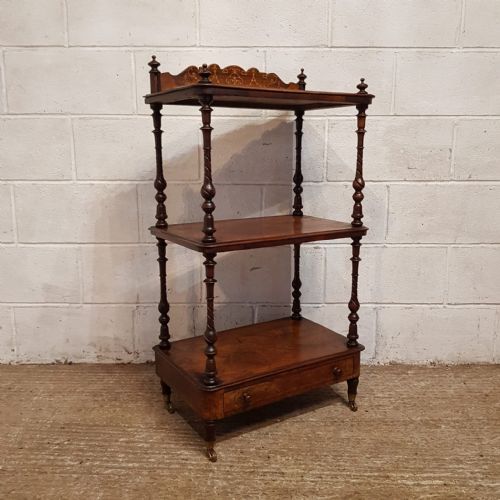
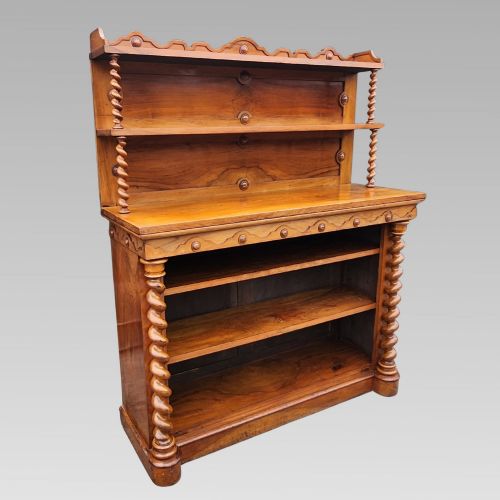


Carved Walnut Shelving Unit
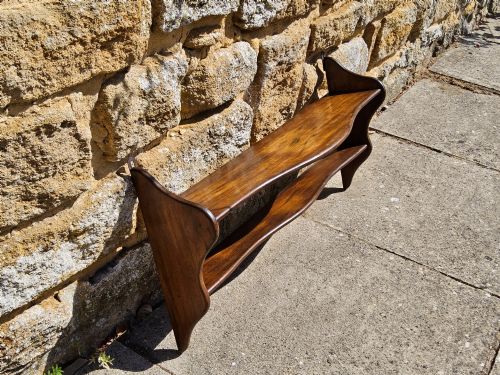
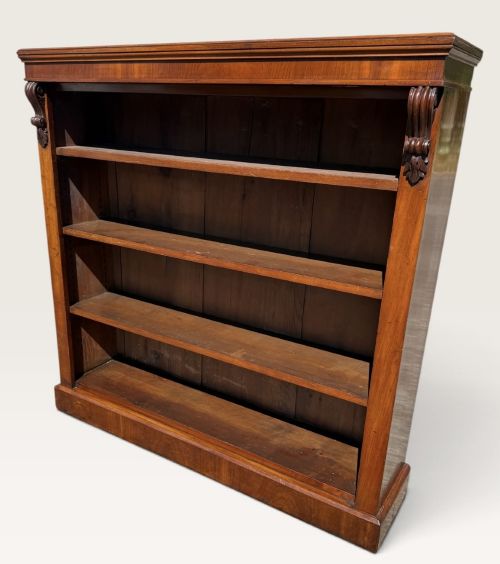
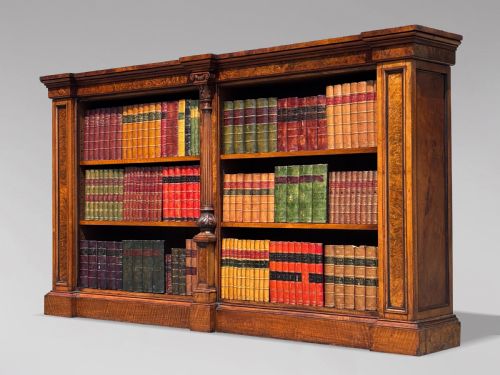
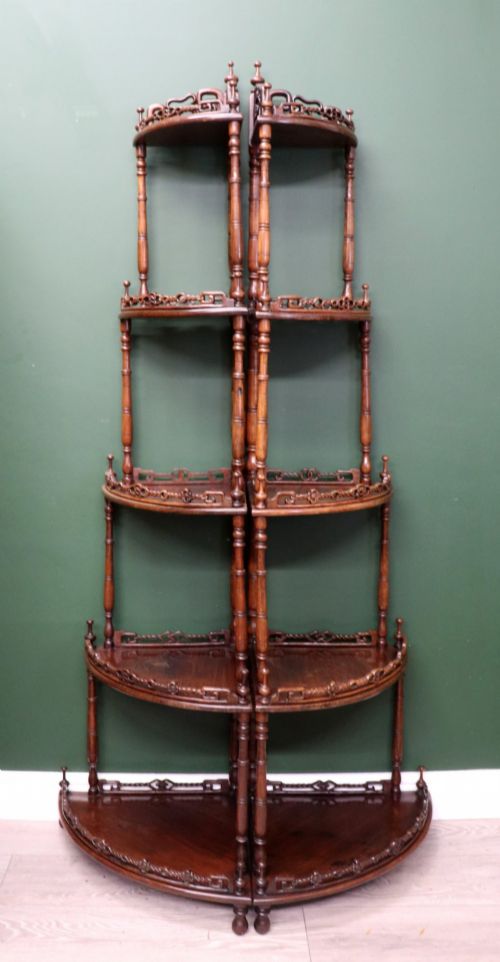
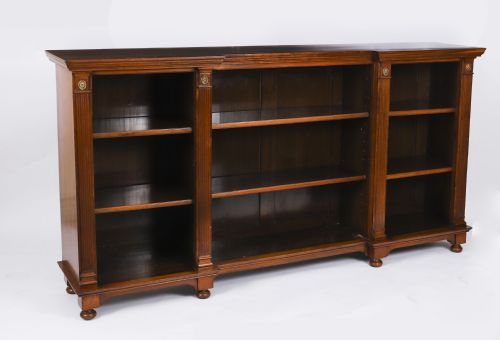
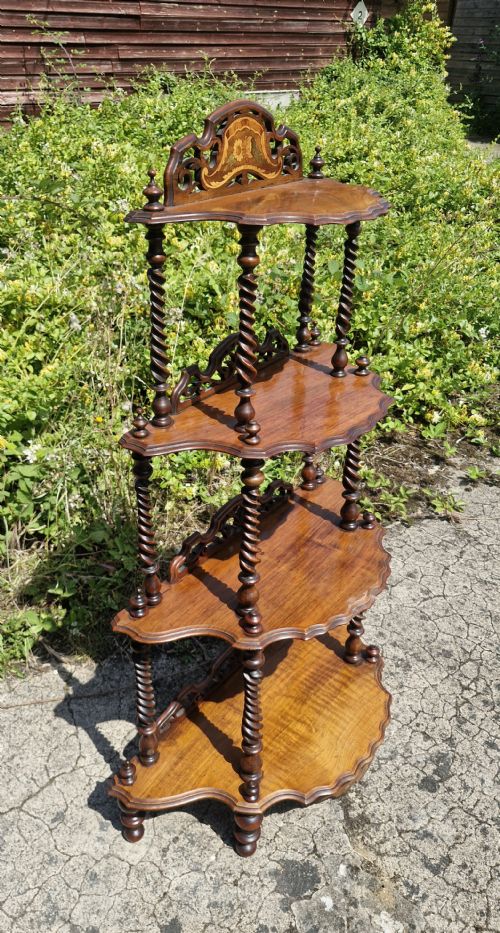
A carved walnut shelving unit brings rich timber grain and layered display space to a room, most frequently appearing here as a Victorian whatnot or open bookcase.
Carved Walnut Shelving Unit
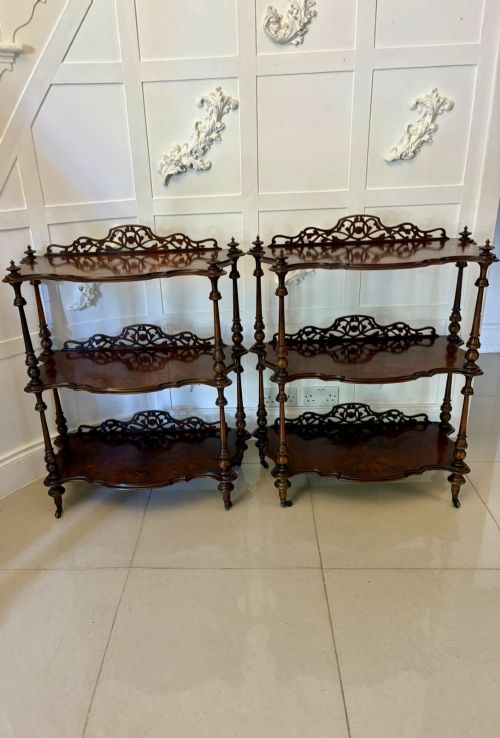
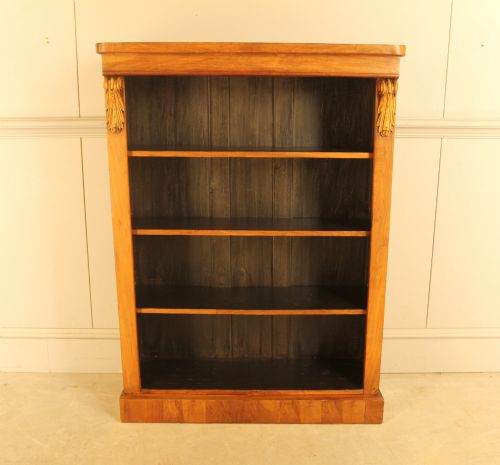
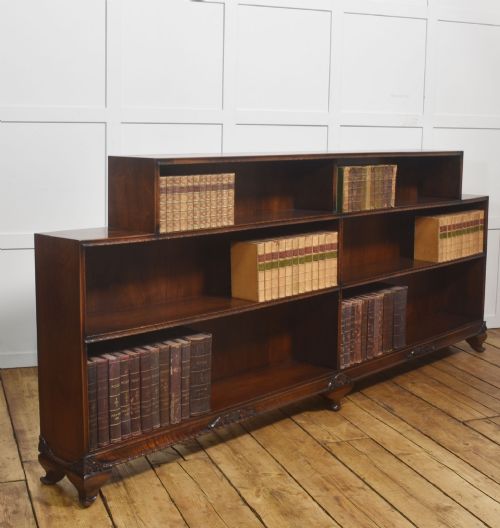
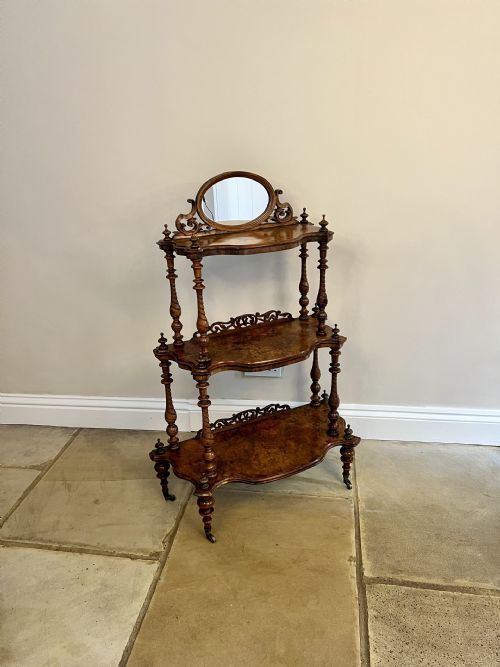
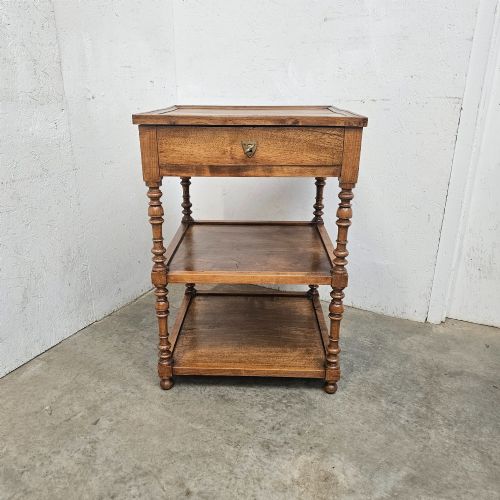
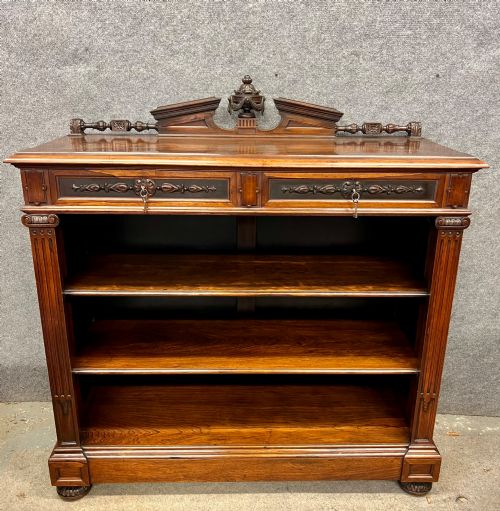
A carved walnut shelving unit is a practical display piece designed to hold books and decorative objects, encompassing forms such as whatnots, etageres, corner shelves, and bookcases. Buyers searching this phrase encounter predominantly Victorian examples dating from the mid-nineteenth century onwards, alongside pieces influenced by French styles and William IV periods.
The format ranges from low open bookcases and stepped shelving to multi-tiered corner whatnots and wall shelves. Walnut and burr walnut dominate the construction, often supplemented by secondary timbers like mahogany and pine.
How they were made
Makers utilised solid walnut and highly figured burr walnut veneers over secondary timbers such as pine and mahogany to construct these shelving units. Surface decoration frequently involved intricate marquetry inlay, hand-carved friezes, and turned or barley twist columns.
Structural embellishments often included brass fittings, ormolu mounts, and mirrored glass panels set into the backboards of display cabinets and whatnots. French and English workshops applied polished finishes to accentuate the natural grain patterns of the walnut timber.
Listings feature walnut, burr walnut, mahogany, and pine, demonstrating the variety of timbers used in nineteenth-century cabinetmaking.
What varies in quality
Quality in these shelving units rests upon the selection of timber, particularly the choice between plain walnut and highly figured burr walnut veneers. Pieces displaying careful marquetry inlay, balanced proportions, and detailed hand-carved elements sit at the higher end of the range.
The sophistication of the joinery and secondary decorative details, such as ormolu mounts, turned columns, or mirrored backings, distinguishes standard production items from finer workshop pieces.
The Carved Walnut Shelving Unit Glossary
- Whatnot
- A piece of furniture consisting of multiple open shelves for displaying small objects or books, popular in the Victorian period. These tiered stands often fit into corners or stand freely against a wall.
- Burr walnut
- A highly prized timber obtained from the wart-like growths on walnut trees, yielding rich and swirling grain patterns. It is typically used as a veneer on high-end Victorian furniture.
- Marquetry
- The art of applying decorative pieces of wood veneer to a structure to form geometric or pictorial designs. This technique frequently decorates the tiers and friezes of better-quality whatnots.
- Etagere
- A piece of furniture with a series of open shelves for display, similar in function to a whatnot. The form gained popularity in French-influenced interior design during the nineteenth century.
- Barley twist
- A type of turning resembling a spiralling rope, used for the vertical supports and columns of bookcases and shelving units. This decorative turning adds architectural interest to Victorian pieces.
Carved Walnut Shelving Unit: Frequently Asked Questions
What is the difference between a whatnot and a bookcase?
A whatnot is primarily designed for displaying ornaments and small curiosities across multiple open tiers, often with slender supports and corner configurations. A bookcase focuses on housing volumes, typically featuring deeper and more robust shelves with enclosed or open fronts.
While both utilise walnut and share nineteenth-century origins, the whatnot prioritises tiered display space whereas the bookcase emphasises storage capacity for books.
How do I identify a Victorian walnut shelving unit?
Victorian walnut shelving units generally feature dark, rich timber tones, often utilising burr walnut veneer or marquetry inlay across the surfaces. Stylistic indicators include turned columns, carved friezes, and tiered structures that reflect nineteenth-century interior fashions.
Construction methods typical of the period, such as hand-cut dovetails and the use of secondary timbers like pine or mahogany, help confirm the era of manufacture.
Where should I place a corner whatnot in a room?
A corner whatnot fits neatly into unused room angles, making it an efficient choice for smaller spaces or drawing rooms requiring additional display area. These units draw the eye upward without obstructing floor circulation.
Pairing a walnut corner whatnot with complementary nineteenth-century furniture creates a cohesive display for ceramics, books, or small decorative objects.
Are these shelving units suitable for modern homes?
These walnut pieces integrate easily into contemporary interiors by offering vertical storage and display surfaces with natural warmth and texture. Their compact footprints suit modern living spaces where floor area is at a premium.
Open bookcases and tiered etageres provide functional organisation while introducing distinct nineteenth-century craftsmanship into a modern room.