
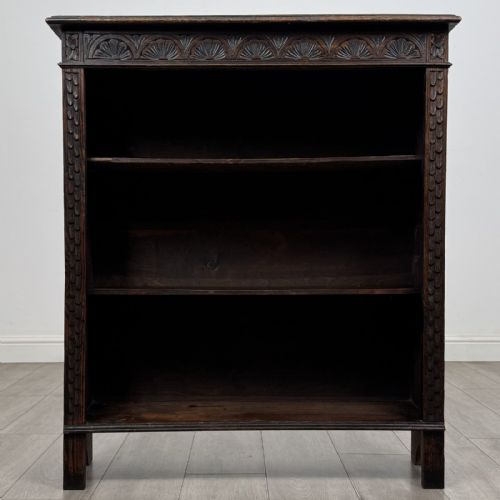
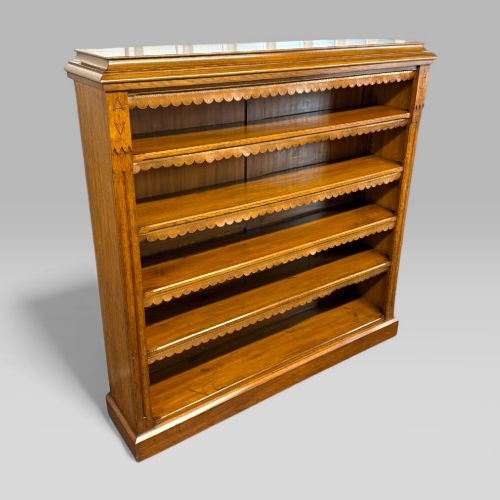
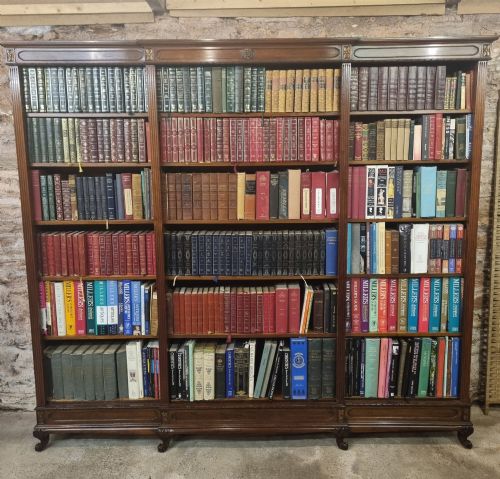
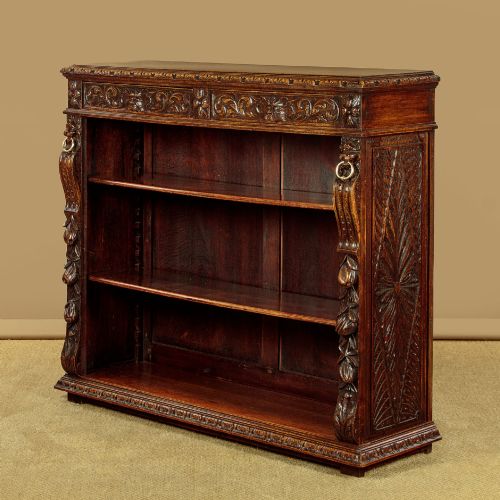
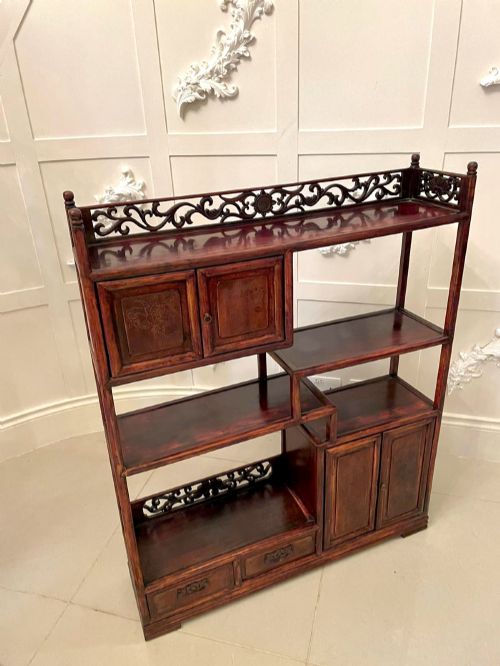
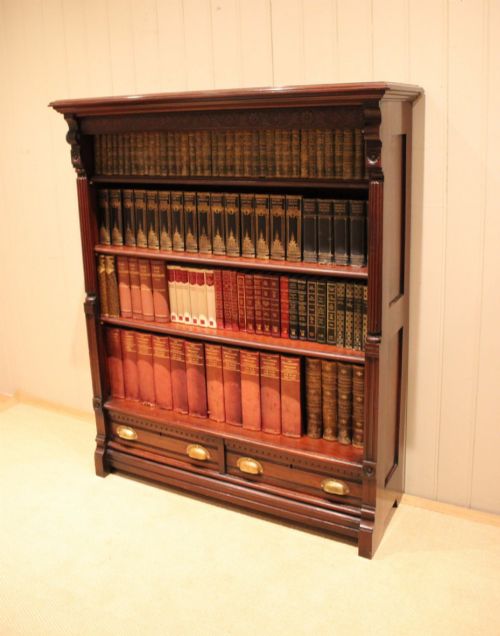
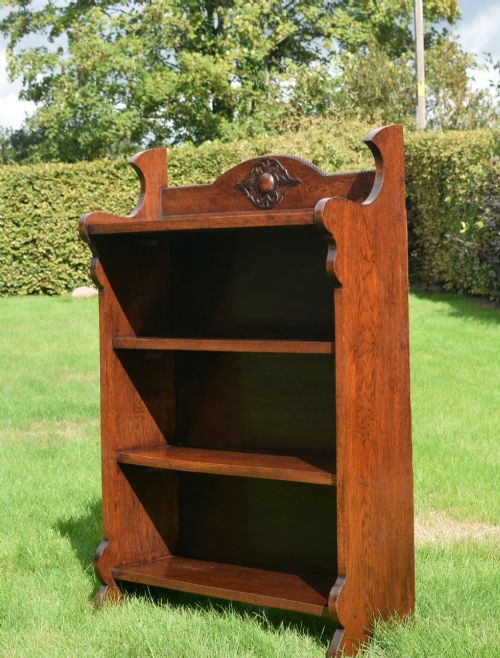
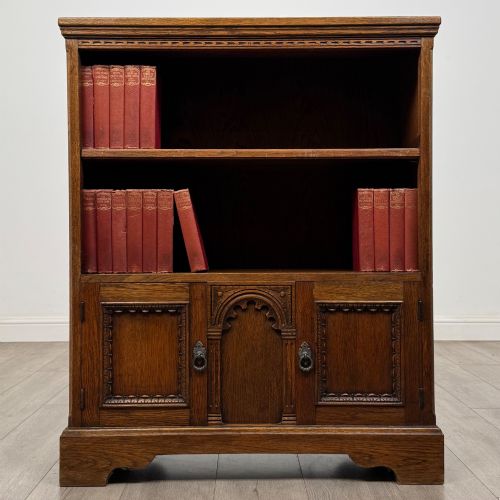
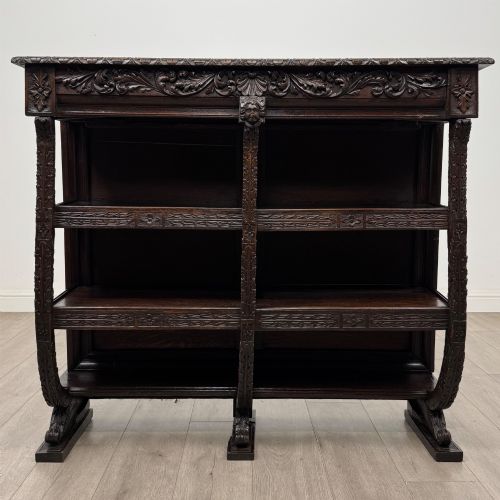
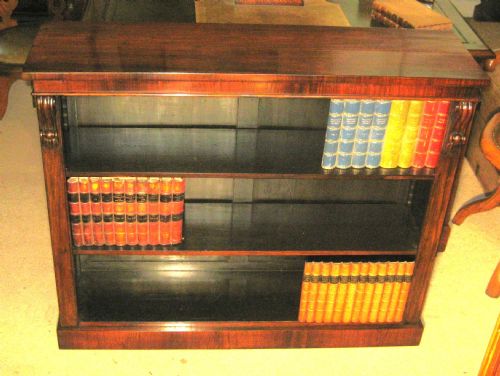
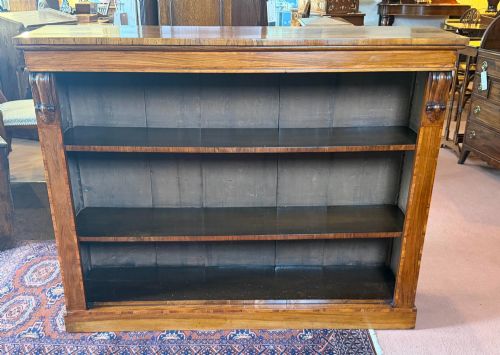
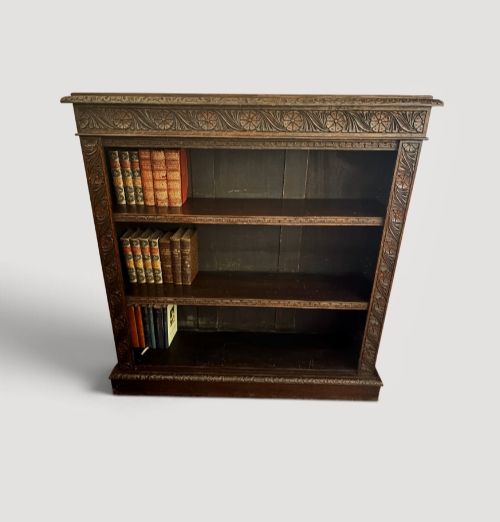
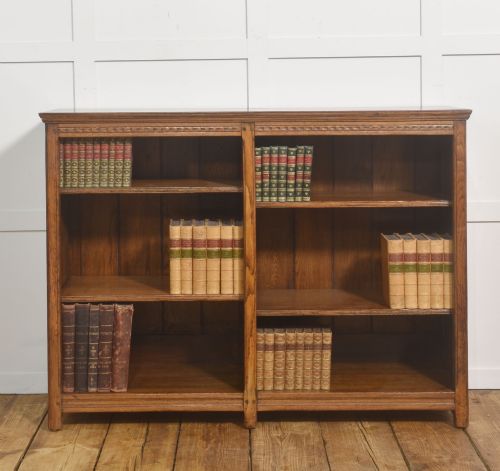
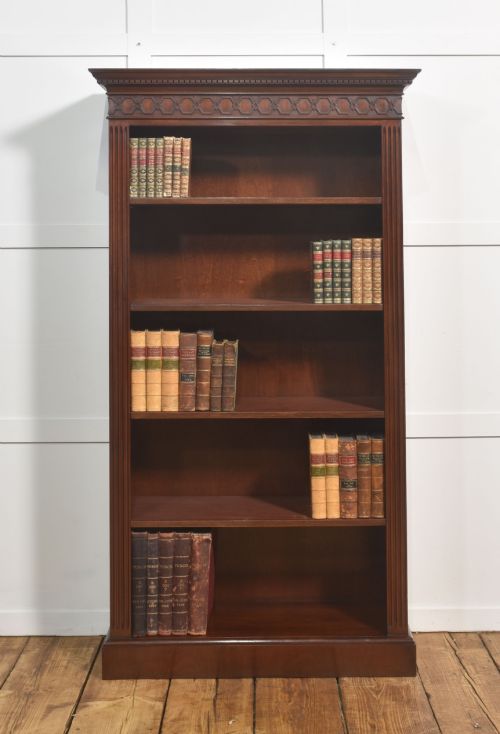
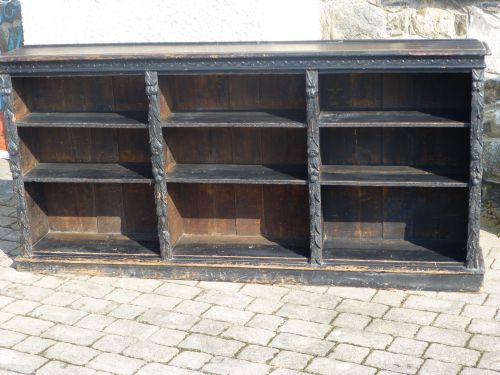
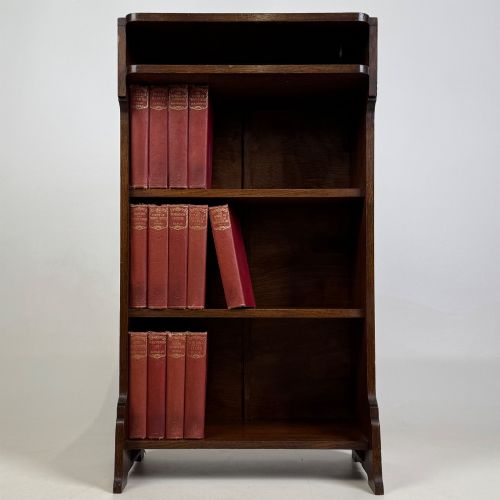
Carved Open Bookshelf
A carved open bookshelf offers an accessible home for a library, combining open access with timber character.
Carved Open Bookshelf
A carved open bookshelf provides accessible storage for volumes without the barrier of glazed doors, prioritising daily utility and display. These items appear across multiple eras, with Victorian and Edwardian examples forming the largest share of the current selection.
The form spans various proportions, from low dwarf shelving and small units to large breakfront library bookcases. Oak and mahogany serve as the primary timbers, frequently supplemented by walnut, rosewood, and teak.
Makers adapted the style to changing domestic tastes, producing pieces that range from plain utilitarian shelving to ornate units decorated with green man carvings, ormolu mounts, and Gothic revival details.
Materials and construction
Cabinet makers utilised solid hardwoods such as oak, mahogany, walnut, and rosewood, often pairing them with burr veneers for decorative grain patterns on larger surfaces. Timbers were selected for durability and stability to support heavy rows of books.
Carpentry techniques included adjustable shelf mechanisms supported by brass racks or wooden bearer strips, allowing owners to alter compartment heights for varying volumes. Structural elements incorporated carved mouldings, applied panels, and brass or ormolu mounts on select high-status pieces.
Listings feature oak and mahogany most frequently, alongside walnut, rosewood, and teak across nineteenth and early twentieth-century periods.
Distinctions in quality
Quality rests upon the selection of timber and the execution of the carving, where crisp, deep hand-carved details distinguish superior pieces from mechanical or shallow work. The integration of secondary woods and the precision of joint work indicate the skill of the original workshop.
Proportion and architectural balance set finer pieces apart, particularly in larger breakfront libraries and pieces bearing stylistic details such as green man motifs or ormolu mounts. The inclusion of original adjustable shelving mechanisms in good working order adds to the integrity of the piece.
The Carved Open Bookshelf Glossary
- Breakfront
- A cabinet or bookcase where the central section projects forward from the flanking wings. This configuration creates architectural depth in larger library pieces.
- Dwarf bookcase
- A low piece of shelving designed to sit beneath dado height, keeping books within easy reach. These units often feature adjustable shelves.
- Green man
- A sculptural motif depicting a human face entwined with foliage or vines. It appears frequently in carved woodwork from the nineteenth century.
- Ormolu
- Gilded bronze applied as decorative mounts to furniture. It is commonly found on high-status Victorian walnut pieces.
- Adjustable shelves
- Shelving that can be moved vertically to accommodate books of different heights. This system usually relies on brass ratchets or wooden slots.
Carved Open Bookshelf: Frequently Asked Questions
How do I adjust the shelves?
Most period bookcases use either a system of vertical wooden ratchets or brass strip supports set into the interior sides. You simply lift the shelf and reposition the wooden or metal pins into the desired slots.
Ensure the shelf rests evenly on all four supports to maintain stability under the weight of books.
Are these pieces suitable for heavy books?
Solid hardwood shelves made from oak or mahogany provide strong support for substantial volumes. Many period examples were specifically engineered for heavy library use with thick timber boards.
Check the thickness of the shelves and the condition of the interior supports if you plan to store dense reference folios.
How do I date a carved bookcase?
Dating relies on identifying the prevailing style, timber choices, and construction methods visible in the piece. Victorian and Edwardian examples often feature distinct revival motifs, such as Jacobean or Gothic detailing.
Examine the secondary woods inside and the type of fixings used, as these change across the nineteenth and early twentieth centuries.
Can these bookcases stand away from walls?
Most open bookcases are designed with finished fronts and plain, unadorned backs intended to face a wall. Placing them centrally in a room exposes the secondary backing timber.
If you require a freestanding piece visible from all sides, look for breakfront or finished library formats.