



Carved Elephant Furniture
Carved elephant furniture brings animal form directly into functional domestic items, offering distinctive tables, chairs, and stands crafted across the nineteenth and early twentieth centuries.
Carved Elephant Furniture
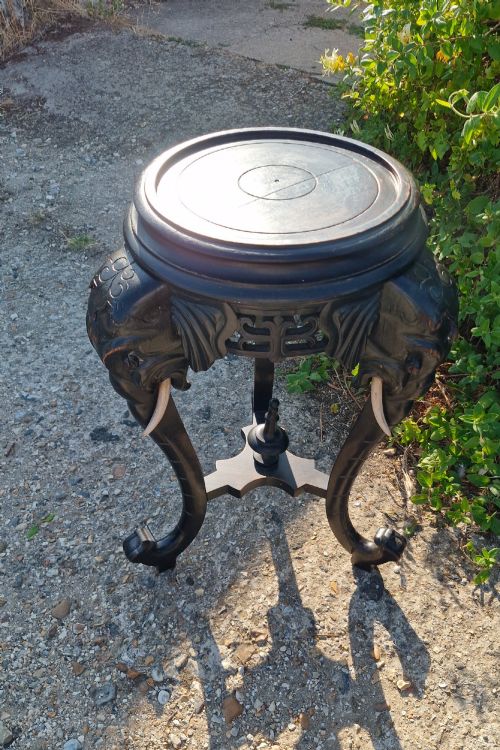
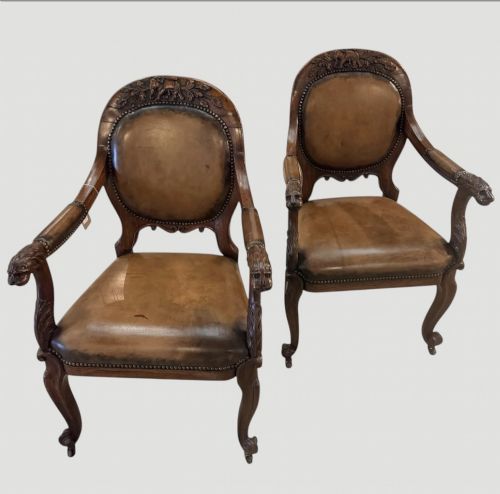
Carved elephant furniture encompasses a range of seating and tables featuring animal motifs, most frequently encountered as side tables, occasional tables, armchairs, and plant stands. These pieces predominantly originate from British colonial periods, spanning the Victorian era through the early decades of the twentieth century.
The regional origins on this page stretch across the Indian subcontinent and Southeast Asia, including Bombay Presidency, Hoshiarpur, and Burma. Buyers will find side tables with hexagonal or octagonal tops supported by carved animal legs alongside ceremonial armchairs.
Anglo-Indian and Burmese workshops produced the majority of these items, integrating regional carving traditions with British domestic forms. Stools, accent chairs, and coffee tables complete the selections currently represented.
How they were made
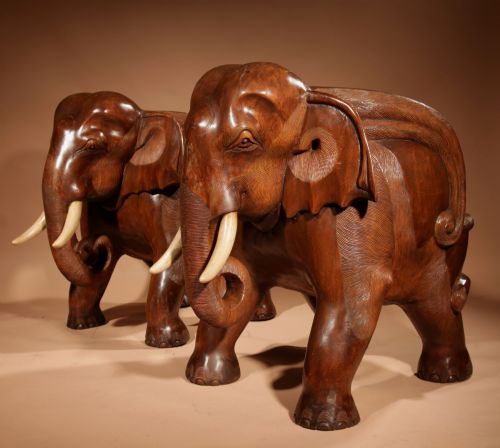
Joinery relies heavily on dense tropical timbers such as teak and rosewood, which provided the structural stability necessary for intricate sculptural work. Artisans carved these hardwoods by hand, shaping elephant figures, tusks, and foliate borders directly into the supports of tables and chairs.
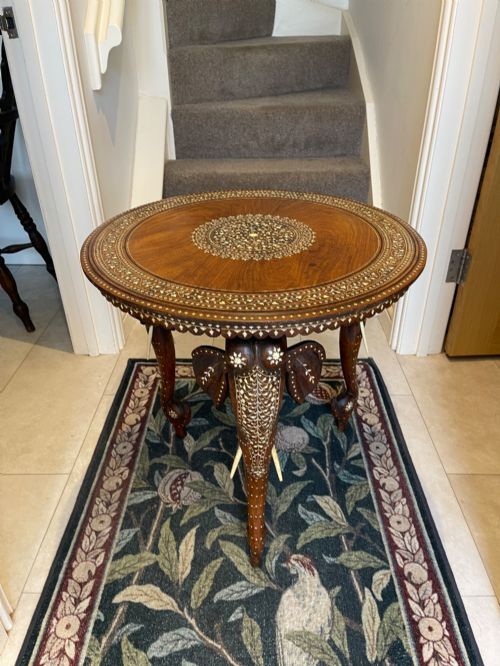
Surface ornamentation incorporates contrasting materials, notably bone and bone inlay, alongside painted wooden elements and occasional brass fittings. The combination of carved hardwood surfaces with delicate inlay work demonstrates traditional regional craftsmanship.
Carved Elephant Furniture Retail Price Guide 2026
Typical asking prices for carved elephant furniture among the pieces listed under this phrase on Sellingantiques today, from the lower quarter to the upper quarter. They describe what is for sale here now, not the wider market.
Several tables feature painted wooden tusks, ensuring the domestic elephant remains fully equipped for the drawing room without the need for real ivory.
What varies in quality
The distinction between standard production and superior craftsmanship lies in the depth and precision of the hand-carved detailing on the animal figures and structural supports. Finer examples exhibit realistic anatomical proportions and clean, sharp edges in the foliate and figurative carving.
Material selection also dictates overall grade, with solid rosewood or heavy teak frameworks demonstrating greater structural integrity than softer woods. The complexity of the joinery, particularly in multi-legged tables and sculptural armchairs, separates utilitarian items from masterworks.
The Carved Elephant Furniture Glossary
- Anglo-Indian
- A style describing furniture made in India during the British colonial period, combining local timber and carving techniques with European domestic forms. These items often feature dense botanical and animal motifs.
- Hoshiarpur
- A North Indian town renowned for intricate woodwork, particularly tables and stands featuring detailed inlay work. Artisans utilised bone and lighter woods set into darker timber grounds.
- Rosewood
- A dense, heavily grained hardwood favoured in colonial furniture production for its rich colour and durability. It provides a stable base for deep relief carving.
- Tripod Table
- A small occasional table supported by three legs, frequently utilised in nineteenth-century interiors. In this category, the three supports often take the form of carved elephant legs and tusks.
Carved Elephant Furniture: Frequently Asked Questions
What is carved elephant furniture?
This category includes tables, chairs, and stands featuring carved elephant figures as structural supports or decorative elements. The forms range from small occasional tables to substantial ceremonial armchairs.
Most examples date from the nineteenth and early twentieth centuries, reflecting colonial production and regional Asian woodcarving traditions.
Where was this furniture made?
Production primarily centred around workshops in the Indian subcontinent and Burma during the British colonial period. Specific regional styles originate from areas such as the Bombay Presidency and Hoshiarpur.
Local artisans adapted traditional woodworking techniques to suit British domestic fashions, creating hybrid forms for export and local use.
How do I date these pieces?
Dating relies on timber selection, construction methods, and stylistic markers associated with Victorian, Georgian, or Art Deco periods. Surviving pieces on this page span from the early nineteenth century through the 1930s.
Colonial records and regional attribution often help narrow the window of manufacture based on the evolution of carving styles.
What woods were used?
Artisans selected dense tropical hardwoods capable of holding intricate, sharp detail under hand tools. Teak and rosewood appear most frequently across the listed items.
Contrasting materials like bone inlay and painted wooden tusks were frequently added to enhance the sculptural realism of the animal figures.