



Carved Arm Bench
A carved arm bench brings historic timber and sturdy joinery into a room, offering a solid seat with architectural presence.
Carved Arm Bench
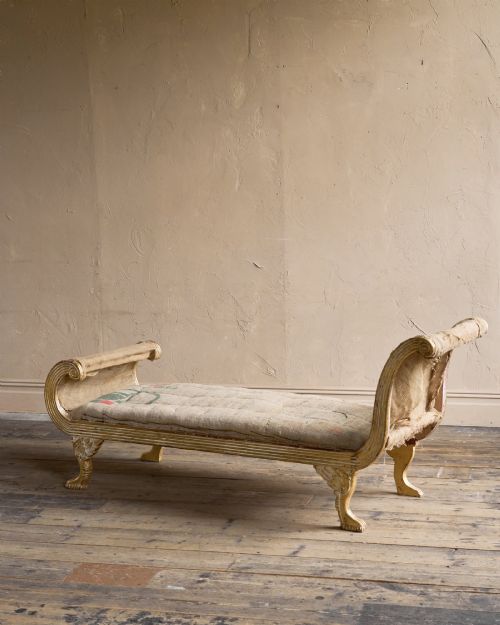
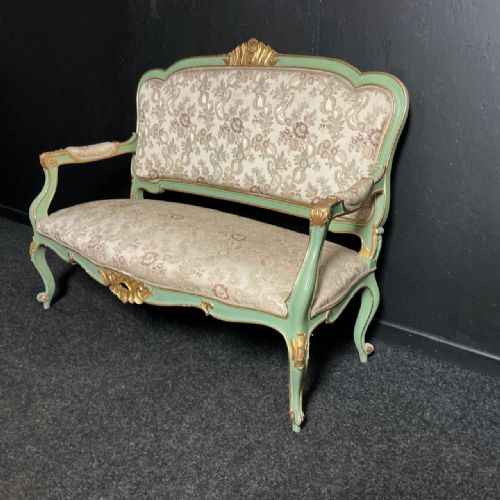
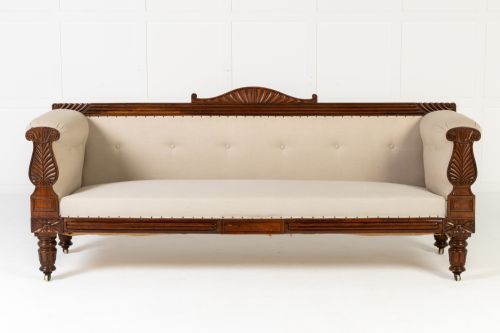
A carved arm bench encompasses a variety of long seating forms, most frequently appearing here as mahogany and rosewood window seats, hall benches, and open arm sofas spanning the eighteenth to the twentieth centuries. These pieces combine structural timber frames with carved decoration, often influenced by Regency, Victorian, and revivalist styles.
Buyers will encounter multiple seating formats including double-ended settees, chaise longues, and X-frame stools alongside traditional window seats. The wood selection ranges from golden oak and walnut to rich mahogany, frequently paired with fabric, velvet, damask, or tapestry upholstery.
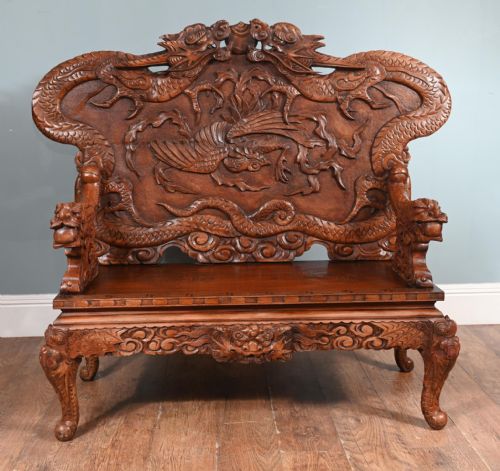
Origins span English country houses to French ateliers and Chinese workshops, showing diverse craftsmanship from specific periods like the Regency and William IV eras. Each format serves a distinct domestic purpose, from hallway perches to drawing-room daybeds.
Materials and construction methods
Makers utilised dense hardwoods such as mahogany, rosewood, walnut, and oak to build resilient frames capable of supporting intricate hand-carved details. These timbers were selected for grain pattern and structural strength, ensuring the carved arms and legs remained stable over generations.
Upholstery techniques involved traditional stuffing secured over webbing, finished with textiles including silk damask, wool tapestry, and velvet. Brass hardware and gilt accents frequently complemented the woodwork, particularly in French and Regency designs.
Carved Arm Bench Retail Price Guide 2026
Typical asking prices for carved arm bench among the pieces listed under this phrase on Sellingantiques today, from the lower quarter to the upper quarter. They describe what is for sale here now, not the wider market.
Upholstered elements frequently incorporate decorative textiles such as silk damask, velvet, and tapestry.
Assessing quality and craftsmanship
Quality rests in the crispness and depth of the woodcarving, where hand-chiseled details on scroll arms and friezes demonstrate superior artisan skill compared to shallow or mechanical shaping. Timber selection also dictates value, with well-figured rosewood and dense mahogany denoting higher status pieces.
Structural integrity of the joints and the preservation of original timber patination separate standard examples from finer specimens. Pieces retaining their early upholstery webbing or harmonious proportions reflect careful historical upkeep.
The Carved Arm Bench Glossary
- Chaise longue
- An upholstered sofa in the form of a chair with a seat long enough to support the user's legs. These pieces often feature a single scrolled arm or backrest.
- Window seat
- A bench designed specifically to fit within the recess of a window. They typically feature low backs or open sides to maintain light levels.
- Damask
- A reversible figured fabric of silk, wool, or synthetic fibres used for upholstery. It is woven on a jacquard loom with contrasting matte and lustrous patterns.
- X-frame
- A structural furniture base formed by intersecting diagonal members resembling the letter X. This ancient form reappeared frequently in neoclassical and revivalist seating.
- Cinnabar
- A bright scarlet mineral form of mercury sulfide used to colour lacquerware. Carved cinnabar objects display deep relief patterns cut into multiple layered coats.
Carved Arm Bench: Frequently Asked Questions
Where should I place a window seat?
A window seat suits hallway spaces, bedroom ends, or living room window recesses where low profiles preserve natural light and views.
These pieces also function effectively as standalone architectural accents against empty walls.
How do I care for antique wood?
Maintain timber surfaces by dusting with a dry cloth and applying natural beeswax periodically to nourish the grain. Avoid placing antique furniture near direct heat sources or strong sunlight.
Proper humidity control prevents the wood from drying out and splitting over time.
Are these benches comfortable for daily use?
Comfort varies depending on whether the piece has supportive sprung upholstery or a firm wooden panel seat. Many period daybeds and settees offer deep lounging support suitable for relaxation.
Upholstered variants can be re-webbed to suit modern sitting preferences without altering the frame.
How do I identify a Regency piece?
Regency seating typically exhibits classical restraint, clean lines, and dark timbers such as mahogany or rosewood. Look for sabre legs, brass inlay, and scroll-ended arms characteristic of the early nineteenth century.
Proportions remain balanced and draw heavily on ancient Greek and Roman design motifs.