


Carolean Revival Armchair
These robust seating pieces channel seventeenth-century grandeur through nineteenth- and early-twentieth-century craftsmanship.

Carolean Revival Armchair
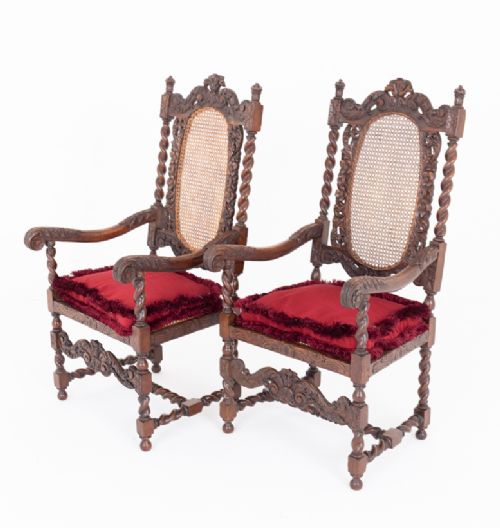
A carolean revival armchair translates the opulent, scrolling woodcarutions of the late seventeenth century into Victorian and Edwardian seating. When you search for a carolean revival armchair, you find robust wooden frames built to mimic court furniture from earlier dynasties.
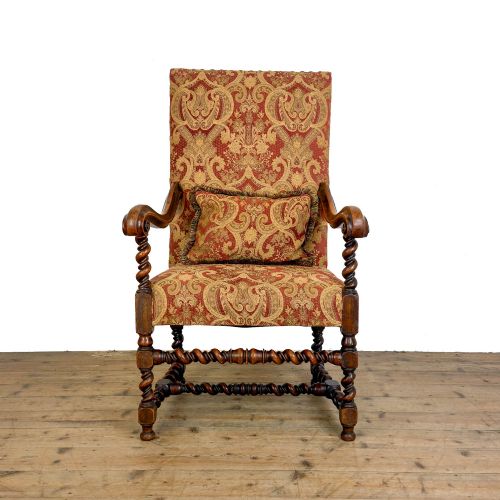
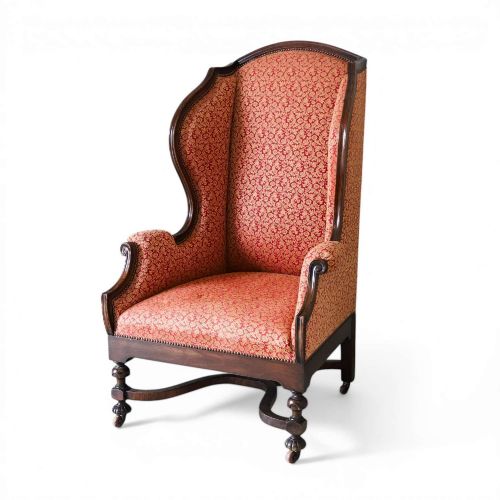
The pieces on this page span the nineteenth century up to nineteen-twenty, incorporating related revivals such as Jacobean and Cromwellian styles. You will encounter open elbow chairs, high-backed throne seats, and wing library armchairs alongside dining chairs.
Makers of these revival pieces utilised sturdy timbers to support heavy carving, high crest rails, and barley-twist supports. The resulting seating offers the visual weight of antique oak and walnut without the extreme fragility of original seventeenth-century timber.
What varies in quality
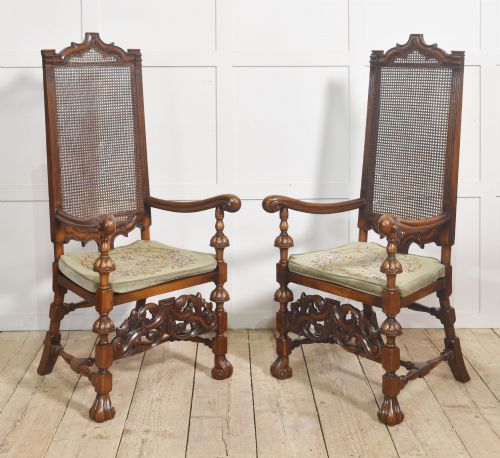
The depth and crispness of the woodcarving separate standard production models from the finest examples in walnut or oak. Sharp undercut details and substantial proportions indicate a maker who spent significant time finishing the frame.
The integrity of the structural joinery and the selection of secondary materials, such as tight hand-woven cane or heavy upholstery hides, dictate the overall grade of the armchair. Pairs and matched sets command greater interest than isolated single chairs.
Several armchairs are grand enough to be classified as throne or hall chairs, ensuring you can sit in judgment over your household.
The Carolean Revival Armchair Glossary
- Crest rail
- The horizontal top member of an armchair back, frequently carved with scrolls or crowns in revival pieces.
- Bergere
- An enclosed upholstered armchair with wooden framing, often featuring cane panels on the sides or back.
- Stretcher
- The horizontal wooden brace connecting the legs of a chair to provide structural stability.
- Elbow chair
- An alternative term for an armchair, describing a seat fitted with armrests for the user's elbows.
Carolean Revival Armchair: Frequently Asked Questions
How do I date a carolean revival armchair?
Examine the timber shrinkage, tool marks, and upholstery webbing to distinguish nineteenth-century production from nineteen-twentieth-century examples.
Revival furniture often borrows motifs from multiple centuries, so style names alone will not provide an exact decade.
Are these chairs comfortable for daily use?
Many models feature high padded backs and deep seats designed for library or fireside reading.
Open armchairs with cane panels offer a firmer sit, whereas upholstered throne chairs provide deeper cushioning.
What is the difference between oak and walnut models?
Walnut frames typically showcase sharper, finer carved details due to the density of the grain.
Oak versions provide a more rustic appearance and heavier physical weight.
Can I mix these with modern furniture?
The dark timber tones and ornate carving anchor traditional rooms or serve as focal points in contemporary spaces.
Pairing a heavily carved armchair with simple surroundings highlights the craftsmanship of the frame.