

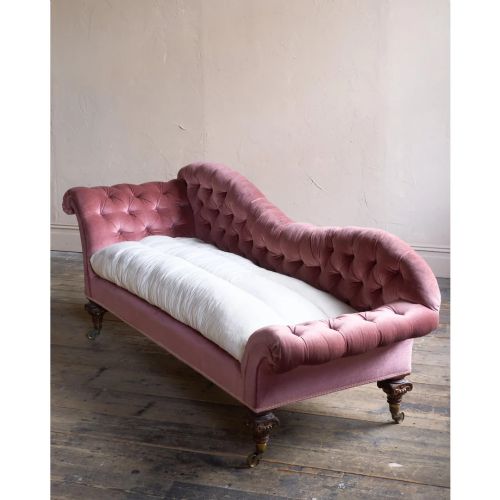


Buttoned Back Daybed
A buttoned back daybed offers reclining elegance in mahogany, rosewood and walnut, spanning Regency and Victorian eras.
Buttoned Back Daybed
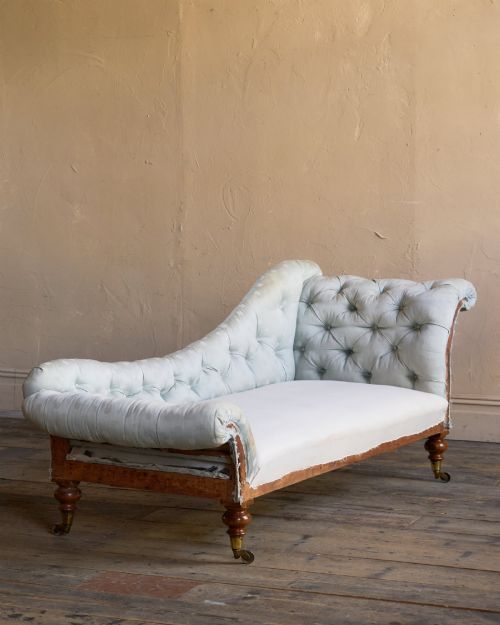
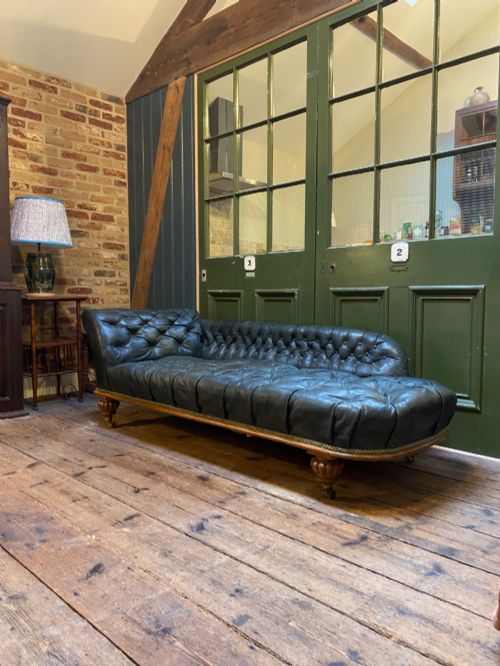
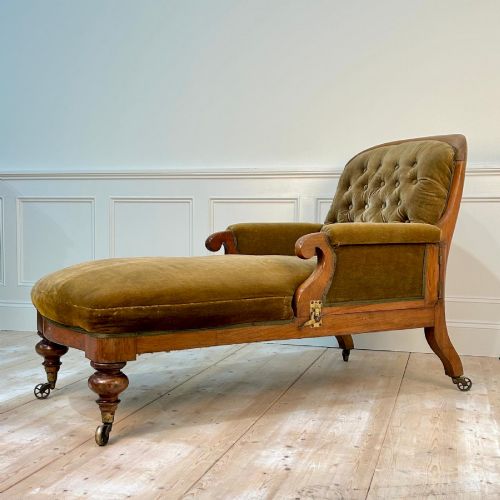
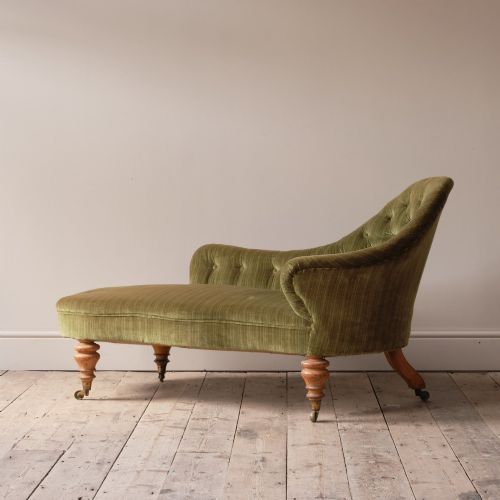
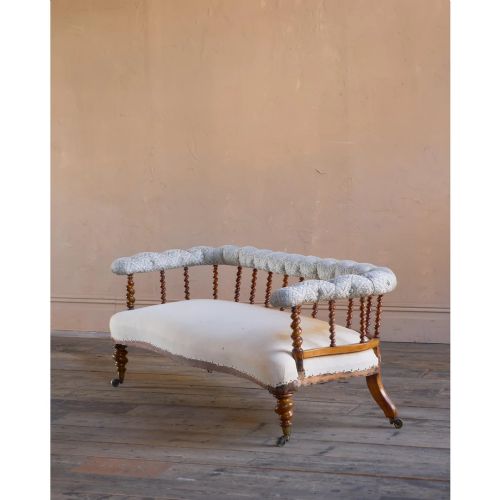
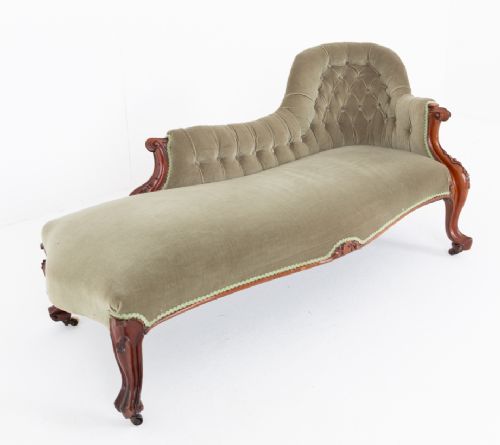
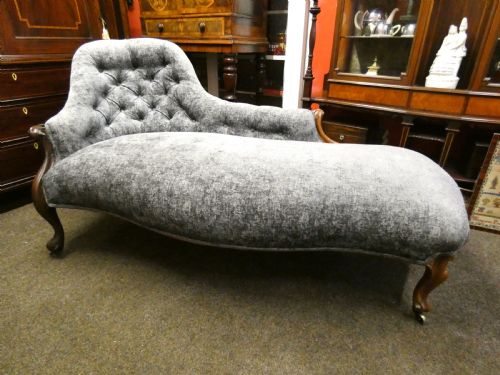
A buttoned back daybed is an upholstered lounge piece designed for reclining in the nineteenth-century interior, frequently listed as a chaise longue or salon sofa. The selections here centre on Victorian and Regency forms, including double spoonback frames, kidney sofas, and open arm settees.
Variations include ornate carved frames, gilt decoration, and specific architectural supports like Ionic column legs. Miniature furniture and paired daybeds also appear within the nineteenth-century groupings.
Construction and materials
Makers utilised dense timbers including mahogany, walnut, and rosewood to construct the structural frames of these daybeds. Ebonised finishes and gilt decoration appear on select nineteenth-century examples.
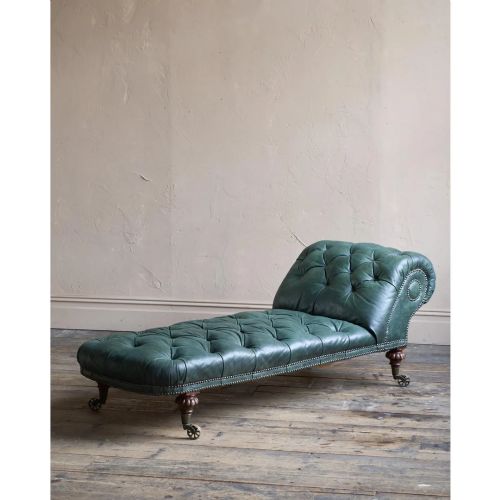
Upholstery methods involved buttoning fabric, velvet, or leather across sprung and padded forms. Brass fittings and carved wooden details finished the framework of these lounging seats.
Buttoned Back Daybed Retail Price Guide 2026
Typical asking prices for buttoned back daybed among the pieces listed under this phrase on Sellingantiques today, from the lower quarter to the upper quarter. They describe what is for sale here now, not the wider market.
Ebonised miniature loungers prove that nineteenth-century artisans occasionally worked with customers who were very small indeed.
Judging quality in a buttoned back daybed
The refinement of the timber carving and the complexity of the frame dictate the standing of a piece. Finer examples display deeply carved rosewood or walnut, while simpler versions utilise plain mahogany.
The execution of the buttoned upholstery and the selection of covering material, such as leather or silk velvet, distinguish standard production from exceptional salon seating.
C. Hindley & Sons·Holland & Sons·Miles & Edwards·Howard and Sons
The Buttoned Back Daybed Glossary
- Chaise longue
- A long upholstered chair for reclining, combining a chair and a couch. This form dominates nineteenth-century seating selections.
- Buttoned back
- Upholstery secured with deep tufting and buttons arranged in a geometric pattern. It creates distinct cushioning contours.
- Regency
- An English stylistic period spanning the early nineteenth century. Pieces from this era often feature classical lines and mahogany frames.
- Rosewood
- A heavy, dark timber with distinct figuring utilised in fine nineteenth-century cabinet making. It provides a rich red-brown surface tone.
- Spoonback
- A chair or sofa back curved in the concave shape of a spoon. This silhouette is typical of Victorian seating.
Buttoned Back Daybed: Frequently Asked Questions
Where should I place a daybed?
These pieces suit spacious living rooms, bedrooms, or large dressing rooms where they can function as primary lounging seats. Their elongated form requires adequate floor clearance to display the carved wooden frame properly.
Position the daybed away from direct sunlight to protect antique fabrics and leather from fading. Allow sufficient space around the piece to appreciate the profile of the backrest and legs.
How do I identify a Victorian daybed?
Victorian daybeds typically feature dark timbers such as walnut, rosewood, or mahogany, often accompanied by buttoned upholstery. Look for characteristic details like spoonbacks, carved scroll arms, and heavy wooden frames.
Earlier Regency examples display lighter mahogany tones and classical influences, whereas mid-nineteenth-century pieces lean towards more ornate carving. Structural proportions and joinery methods help confirm the nineteenth-century origin.
Can I use a daybed for sleeping?
Most antique daybeds were designed for daytime reclining and reading rather than full overnight sleeping. The narrow proportions and sloping backrests suit lounging rather than a flat mattress surface.
If utilised for occasional rest, ensure the upholstered platform and internal webbing remain supportive. Historic frames may require professional assessment before sustaining heavy daily use.
What maintenance do leather daybeds need?
Leather surfaces benefit from regular dusting and occasional treatment with appropriate leather dressings to prevent drying. Keep the material away from intense heat sources to preserve the finish.
Inspect the buttoned tufting periodically to ensure the underlying tension remains secure. Gentle care preserves the patina developed over the nineteenth century.