


Butterscotch Amber Jewellery
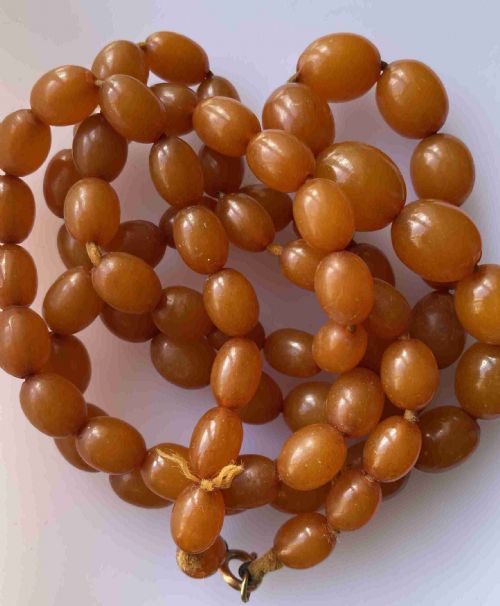
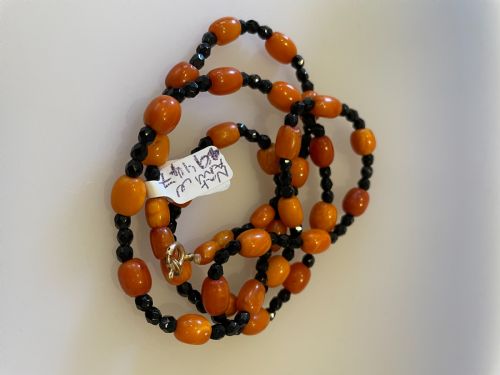
Butterscotch amber jewellery offers warm, opaque yellow-orange tones that draw collectors seeking vintage warmth and distinctive organic forms.
Butterscotch Amber Jewellery
Butterscotch amber jewellery consists primarily of necklaces and matched sets spanning the Edwardian era through to the nineteen thirties and nineteen fifties. When buyers search for butterscotch amber jewellery, they encounter warm, opaque organic pieces often shaped into graduated beads or raw configurations.
The selections on this page concentrate heavily on nineteen thirties examples alongside Edwardian and mid-century items. These pieces showcase stylistic influences ranging from Art Deco geometry to traditional Baltic folk designs.
Materials and construction
The physical construction of these pieces relies on natural Baltic amber and related early plastics such as Bakelite and phenolic resin. These materials are threaded or set into sterling silver, chrome, and metal mountings to create wearable ornaments.
Beads are frequently shaped through polishing and graduation techniques, allowing natural variations in colour and opacity to remain prominent. Thread provides the flexible foundation for bead arrangements, while metal settings secure individual stones within necklaces and earring sets.
Butterscotch Amber Jewellery Retail Price Guide 2026
Typical asking prices for butterscotch amber jewellery among the pieces listed under this phrase on Sellingantiques today, from the lower quarter to the upper quarter. They describe what is for sale here now, not the wider market.
Some nineteen thirties pieces cleverly blur the line between ancient fossil and modern chemistry by pairing genuine amber with newly invented Bakelite.
Judging quality in butterscotch amber jewellery
Quality differences stem from the material composition and the precision of the bead shaping. Natural Baltic amber and high-grade resin alternatives hold distinct physical characteristics that separate superior examples from simpler pieces.
The uniformity of bead graduation and the integrity of the stringing or metal mounts further distinguish finer pieces. Superior items display careful attention to proportion and symmetry across the entire necklace or jewellery set.
The Butterscotch Amber Jewellery Glossary
- Baltic Amber
- Fossilised tree resin originating from the Baltic region, valued for its organic inclusions and warm honey or yellow tones.
- Bakelite
- An early form of synthetic phenolic resin used extensively in nineteen thirties decorative objects and costume pieces. It often mimics the appearance of natural amber.
- Graduated Beads
- Beads that increase progressively in size from the clasp towards the centre of a necklace. This technique creates a balanced visual drape.
- Art Deco
- A design style prominent in the nineteen thirties characterised by sleek geometric lines and stylised motifs. It heavily influences the metalwork settings of the period.
Butterscotch Amber Jewellery: Frequently Asked Questions
What is butterscotch amber?
Butterscotch amber is a dense, opaque variety of fossilised tree resin displaying rich yellow-orange and cream hues. Its unique coloration results from microscopic air bubbles trapped within the material during formation.
This distinct appearance made it a favourite for nineteen thirties bead necklaces and early plastic imitations like Bakelite. Collectors prize genuine examples for their warmth and distinct tactile quality.
How do I date these pieces?
Dating relies on examining the mounting techniques, clasp types, and stylistic influences present in the piece. Edwardian items often feature delicate settings, whereas nineteen thirties examples frequently incorporate bolder geometric lines.
Materials also provide clear chronological clues by distinguishing natural resin from twentieth-century plastics. Comparing the bead shape and stringing method helps confirm the era of manufacture.
Are these pieces made of real amber?
The inventory includes both natural Baltic amber and synthetic alternatives such as Bakelite and phenolic resin. Each material possesses specific physical properties that collectors learn to identify through weight and appearance.
Natural amber originates from ancient forests, while alternative materials reflect early twentieth-century industrial innovation. Both categories hold significant historical interest for jewellery enthusiasts.
How should I care for my amber jewellery?
Amber is a relatively soft organic material that requires gentle handling to prevent surface scratching. Store pieces away from hard metals and avoid exposure to harsh chemicals, perfumes, or extreme heat.
Cleaning should be limited to a soft, damp cloth without abrasive soaps. Proper storage ensures the material maintains its natural lustre over time.