


Butterfly Lapel Pin
These butterfly lapel pin pieces combine delicate metalwork and bright enamel, offering a charming touch of nature for everyday wear.
Butterfly Lapel Pin
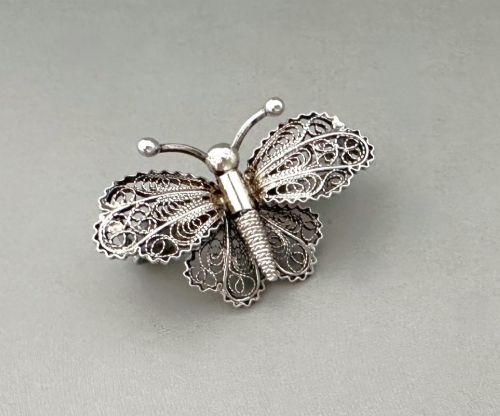
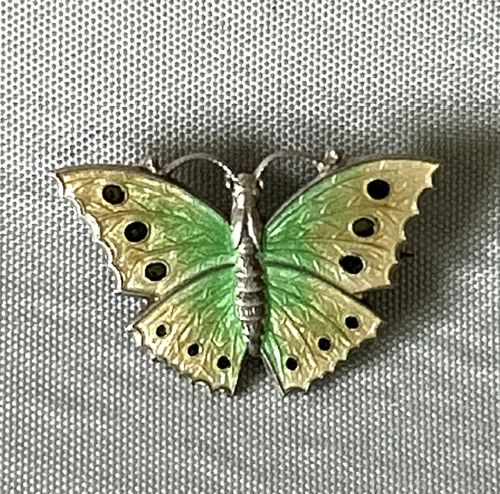
You are most likely to meet silver and enamel versions dating from the nineteen-thirties, often featuring colourful guilloche work or intricate filigree details. These pieces function as both brooches and pins, serving to fasten scarves, lapels, or hats with a decorative accent.
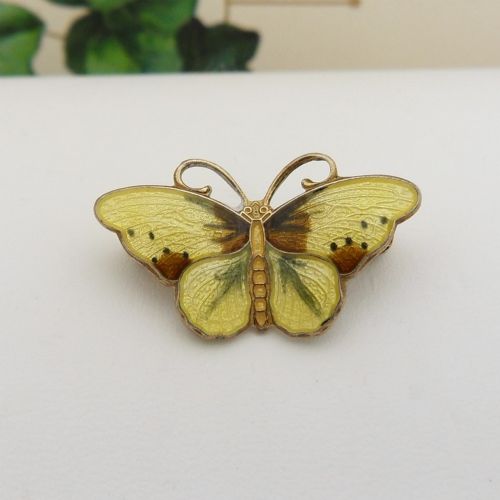
The wider range includes sterling silver butterfly wing designs alongside gold and gemstone examples from earlier decades. Chinese export work and Scandinavian pieces appear frequently, showing how different regional workshops interpreted the insect form.
Materials and construction
Makers fashioned these pieces primarily from silver, sterling silver, and various grades of gold, occasionally applying silver gilt or gold vermeil to the surface. Enamel provides the vibrant colour on many wings, whilst specialised techniques like guilloche lay down precise geometric patterns beneath translucent glazes.
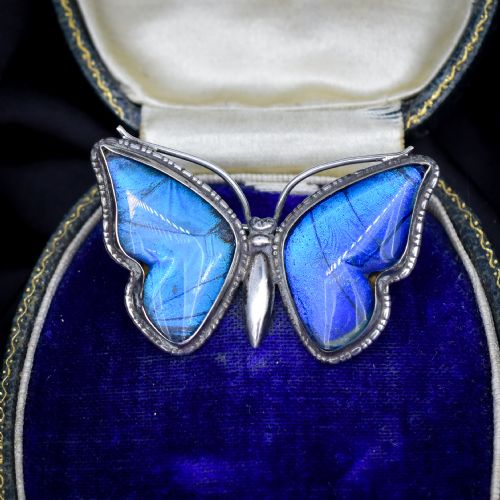
Filigree wirework twists fine silver threads into open patterns that trace the delicate veins of insect wings. In certain pieces, genuine butterfly wing sections lie sealed beneath glass panels to create an iridescent natural blue sheen.
Earlier creations incorporate carved moonstones or small diamonds set into gold mounts, reflecting the high standards of nineteenth-century and Edwardian jewellers. Hatpins and brooches utilise secure pin stems and catches soldered directly to the reverse of the metal body.
The listings on this site feature sterling silver, enamel, and butterfly wing materials across Art Nouveau, Art Deco, and mid-century styles.
Evaluating quality and finish
The distinction between standard items and superior examples lies in the crispness of the metalwork and the condition of the enamel. Finer pieces display smooth, unblemished vitreous surfaces without chipping, and the underlying guilloche engine-turning remains sharp and regular.
In filigree and wirework, the skill of the artisan shows in the tightness of the soldering and the symmetry of the wings. Pieces by documented designers or established Scandinavian and Chinese export workshops often command attention for their balanced proportions and detailed chasing.
The integration of stones such as moonstones or diamonds dictates the upper tier of the range, where precious materials meet thoughtful design. Conversely, heavier oxidation or crude repairs detract from the intended delicacy of the insect form.
Hroar Prydz·Rene Lalique
The Butterfly Lapel Pin Glossary
- Guilloche enamel
- A decorative technique where an intricate geometric pattern is mechanically engraved into metal and then covered with translucent enamel. This allows the light to reflect through the colour, creating depth and movement.
- Silver filigree
- Fine silver wire twisted and soldered into openwork patterns resembling lace. Artisans use this method to achieve lightweight yet complex wing structures.
- Silver gilt
- Silver that has been coated with a thin layer of gold. This gives the appearance of solid gold while maintaining a silver base.
- Butterfly wing jewellery
- Ornamental pieces utilising iridescent scales from tropical butterflies preserved beneath glass domes. This technique gained popularity during the early twentieth century.
- Hatpin
- A long pin with a decorative head used to secure hats to the hair. Examples often mirror the designs of contemporary brooches.
Butterfly Lapel Pin: Frequently Asked Questions
How do I wear a butterfly lapel pin safely?
Attach the pin through a sturdy weave on your lapel or scarf, ensuring the safety catch is fully engaged to prevent loss. Avoid placing them on delicate fabrics that lack structural support.
Store your pieces flat in a lined jewellery box away from direct sunlight to protect any enamel or organic elements from fading over time.
What periods do these pieces come from?
The listings span from the Victorian era and Art Nouveau periods through the nineteen-twenties and nineteen-thirties, up to mid-century Scandinavian designs. Each era brings distinct materials and artistic sensibilities.
Victorian and Edwardian examples often feature gemstones and gold, whilst later decades favour silver and colourful enamel.
How should I clean my silver enamel brooch?
Use a soft, dry microfibre cloth to gently wipe away dust and oils from the metal and glass surfaces. Avoid liquid silver dips, as harsh chemicals can ruin the enamel or damage butterfly wing panels.
Professional jewellers can advise if a deeper clean is necessary for older settings.
Are butterfly wing pieces fragile?
The butterfly wing sections are sealed securely beneath glass, but they remain sensitive to moisture and heavy impacts. Keep them dry and handle them with care to protect the delicate scales inside.
Proper storage prevents the glass seals from failing due to pressure or temperature changes.