
Bureau Commode
These bureau commode pieces combine the practical storage of a chest of drawers with writing surfaces, spanning periods from the late seventeenth century onwards.
Bureau Commode
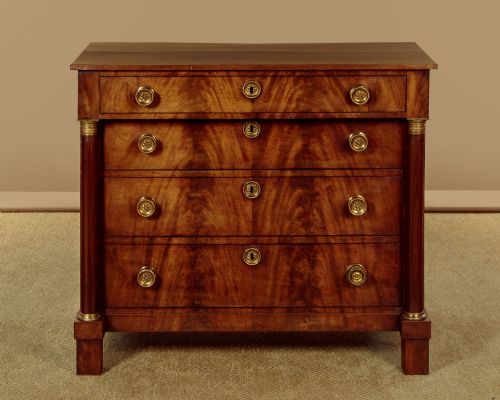
A bureau commode encompasses a variety of storage furniture including chests of drawers, desks, and bureaus across periods from the 18th Century to the 20th Century. The pieces span Georgian, Victorian, Edwardian, and Regency styles, alongside specific forms such as French bombe shapes and cylinder bureaus.
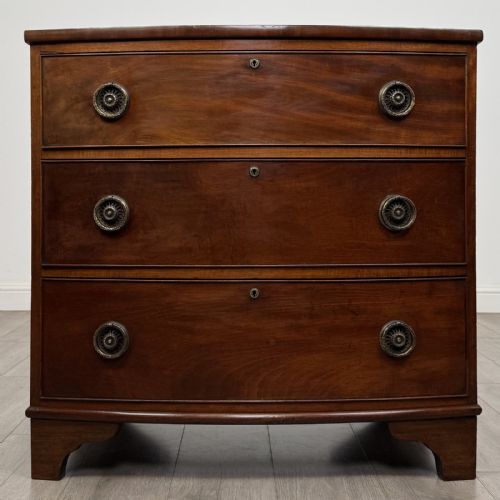
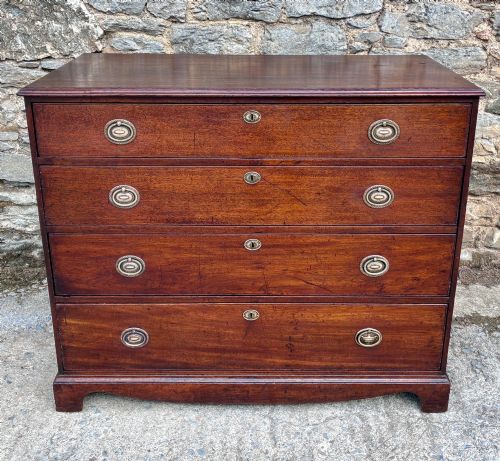
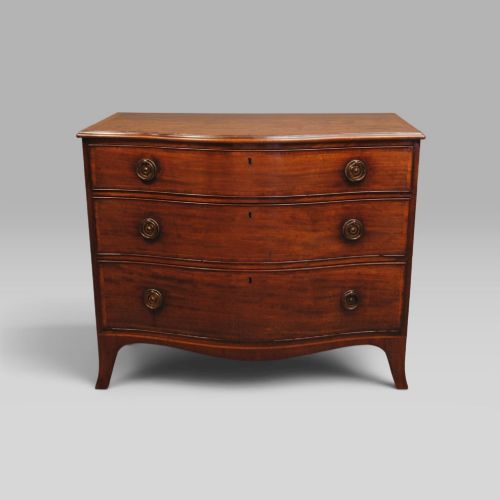
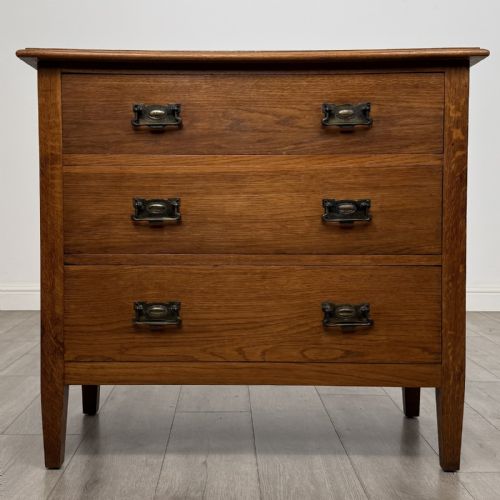
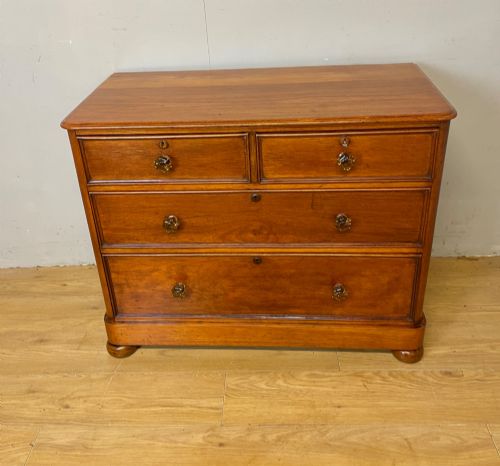
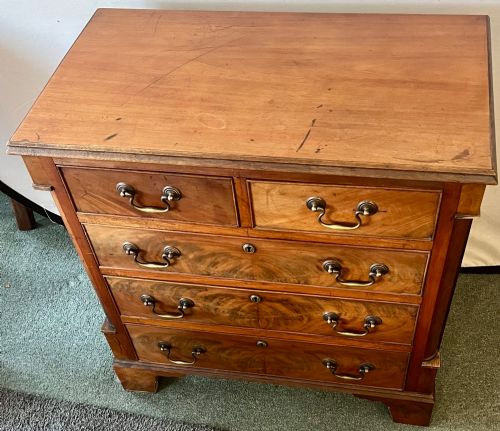
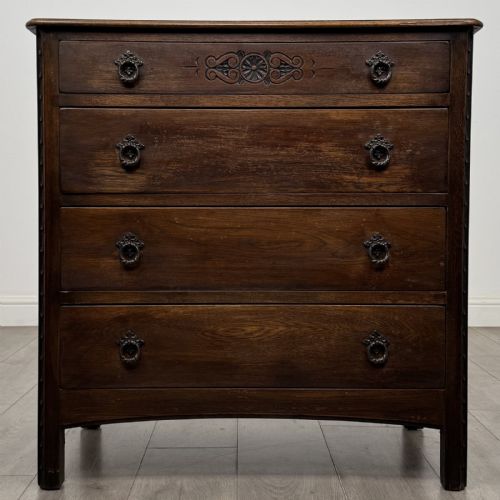
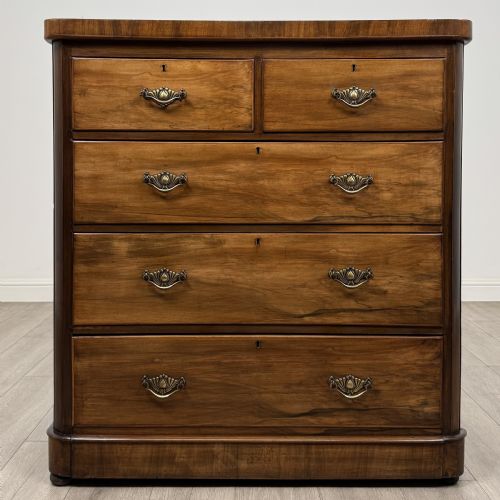
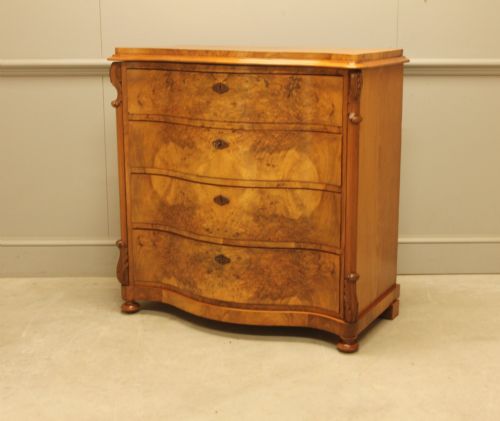
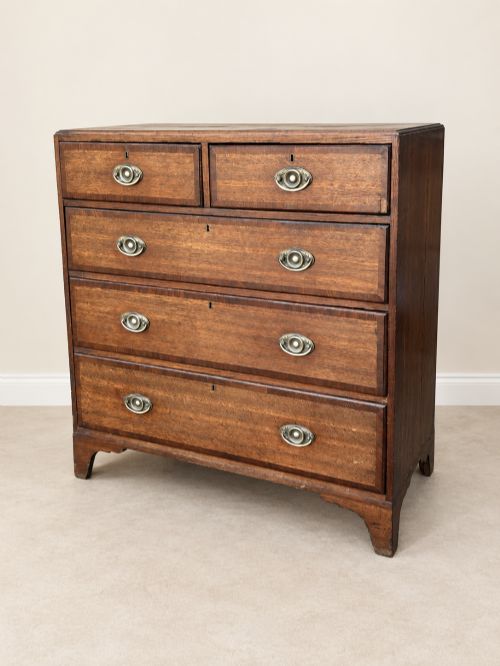
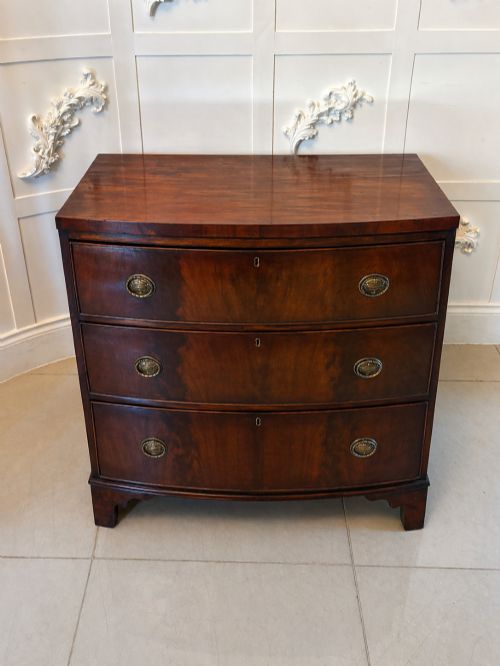
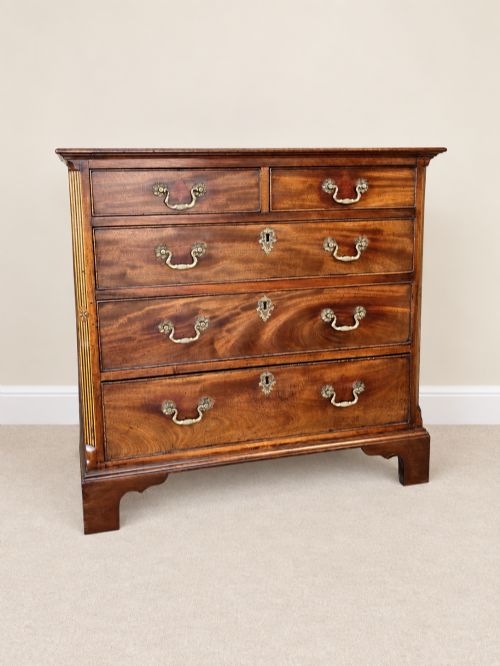
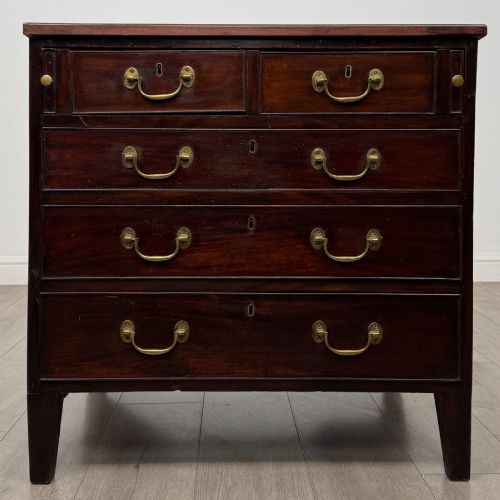
The most common form met here is the mahogany or oak chest of drawers, often featuring bow fronts, serpentine shapes, or straight profiles with brass handles. Alongside standard drawer arrangements, examples include specialised writing pieces with brushing slides and fitted compartments.
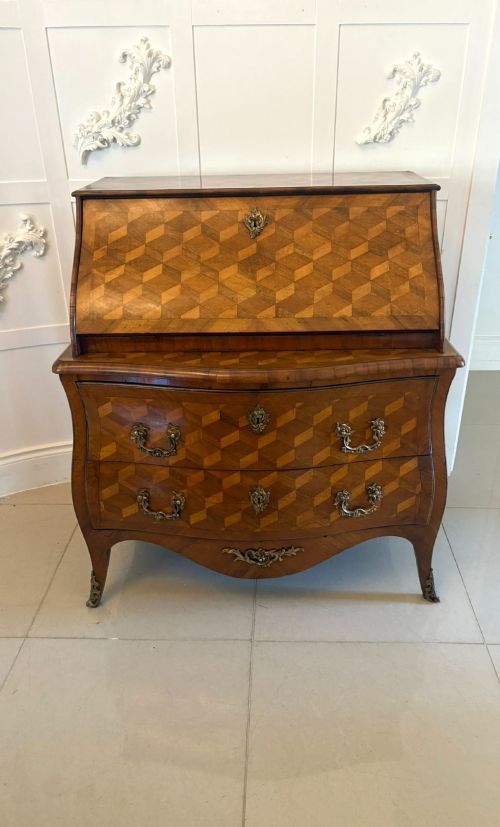
Origins range across British, French, Swedish, and Scottish workshops, showing regional design preferences in bracket feet, turned legs, and carved top edges. Pieces such as the 18th Century French walnut inlaid parquetry bombe shaped bureau demonstrate more elaborate continental forms.
Materials and Construction
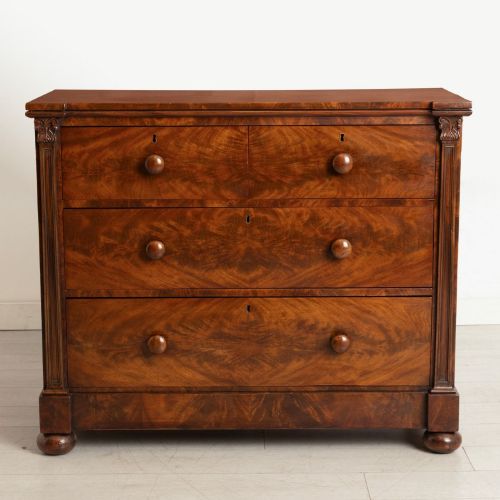
Cabinet makers utilised dense hardwoods such as mahogany, oak, walnut, and teak, often applying flame mahogany or burr walnut veneers to primary surfaces. Solid pine appears frequently in carcases and secondary drawer linings, whilst brass handles and escutcheons provide functional hardware.
Construction techniques involve precise dovetailing for drawer construction and delicate parquetry or floral marquetry inlay across selected walnut and mahogany surfaces. Carved details adorn specific pieces, ranging from Edwardian carved top edges to Victorian grotesque motifs.
Listings feature woods including mahogany, oak, walnut, pine, teak, and brass hardware across Georgian, Victorian, Edwardian, and Regency periods.
Assessing Quality and Execution
Quality rests in the selection of timber figures, such as highly figured mahogany and burr walnut veneers, matched carefully across drawer fronts. Superior execution shows in crisp parquetry and marquetry inlay work, alongside the precision of dovetail joints and smooth drawer operation.
Design sophistication separates standard workshop output from exceptional examples, evident in complex serpentine or bombe profiles and integrated brushing slides. Original brass handles and sound structural integrity further distinguish pieces preserved from earlier centuries.
Sir Clough Williams Ellis
The Bureau Commode Glossary
- Serpentine
- A front shape curving outward in the centre and inward at the sides, creating a gentle undulating line on chests of drawers.
- Bombe
- An outward-swelling convex shape characteristic of continental furniture, seen most notably on 18th Century French pieces.
- Brushing slide
- A pull-out shelf positioned above the top drawer, traditionally utilised for dusting clothes or writing correspondence.
- Parquetry
- Geometric patterns formed by fitting together small pieces of wood veneer on a surface.
- Marquetry
- Inlaid wood designs forming pictorial or floral patterns, often utilising contrasting timbers on drawer fronts.
Bureau Commode: Frequently Asked Questions
How do I care for mahogany surfaces?
Keep wooden furniture away from direct sunlight and sudden temperature shifts to prevent the timber and veneer from splitting.
Dust regularly with a soft, dry cloth and avoid commercial silicone polishes that build up residue over time.
What is a brushing slide used for?
A brushing slide provides a convenient pull-out shelf just beneath the top surface, historically used for brushing clothes or inspecting garments.
On desks and writing pieces, it also serves as an auxiliary surface for temporary paperwork without opening the main writing compartment.
How do I distinguish Georgian from Victorian pieces?
Georgian pieces typically display restrained classical proportions, elegant bracket feet, and refined mahogany or walnut veneers dating from the 18th Century.
Victorian furniture tends to feature heavier construction, bolder mouldings, and darker finishes, occasionally incorporating more elaborate carvings like Green Man motifs.
Where should I place a serpentine chest?
Serpentine chests require adequate floor space where their undulating fronts and shaped sides can be viewed without obstruction.
Position them against a flat wall in a bedroom or hallway, ensuring clearance for drawers to open fully.