

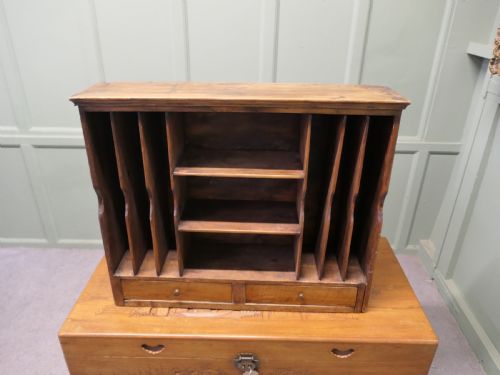
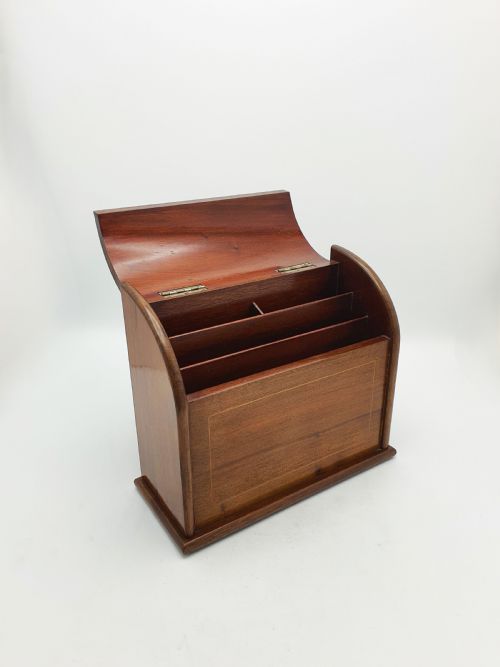


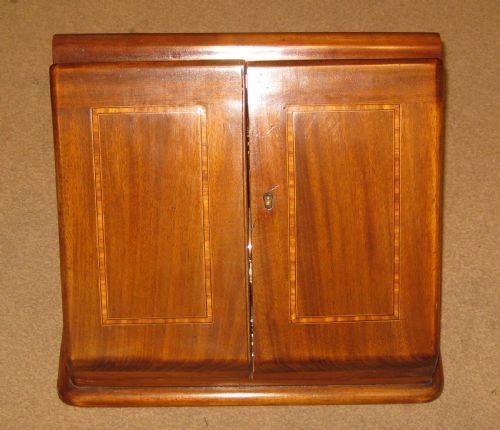
Brown Wooden Letter Rack
A brown wooden letter rack keeps your correspondence sorted with traditional desk organisation.
Brown Wooden Letter Rack
A brown wooden letter rack is a practical desk accessory designed for sorting correspondence and papers, appearing across periods from the Georgian era through to the 1920s. These pieces include simple desk tidies, fitted stationery boxes with hinged lids or drop fronts, and larger tabletop cabinets.
You are most likely to encounter oak and mahogany examples from the Victorian and Edwardian periods on this page. These desk accessories range from open compartment racks to enclosed cabinets featuring secret drawers and inlaid detail.
Functionality meets craftsmanship in these desk organizers, which were essential furniture items for home studies and offices. Makers utilised rich timbers to ensure the pieces were both durable for daily use and visually striking.
Materials and Construction
The primary timbers used in these pieces are oak and mahogany, often complemented by decorative elements in boxwood, satinwood, and brass. Cabinetmakers shaped solid wood and applied fine veneers to create durable stationery boxes and desktop racks.
Detailing on these items frequently includes inlaid woodwork and metal hardware such as brass hinges and mounts. Skilled hands constructed hinged lids, drop fronts, and secret drawers to keep important papers secure and organised.
Brown Wooden Letter Rack Retail Price Guide 2026
Typical asking prices for brown wooden letter rack among the pieces listed under this phrase on Sellingantiques today, from the lower quarter to the upper quarter. They describe what is for sale here now, not the wider market.
Some antique oak desk boxes feature hidden secret drawers, offering a delightful surprise compartment for secret correspondence.
Assessing Quality and Craftsmanship
Quality in a brown wooden letter rack rests upon the selection of timber and the precision of the joinery. Superior pieces display carefully matched grain patterns, tight dovetail joints, and well-fitted internal compartments.
Decorative embellishments separate standard items from finer examples. Subtle inlaid details, high-grade brass hardware, and clever hidden mechanisms like secret drawers elevate the character and desirability of the piece.
The Brown Wooden Letter Rack Glossary
- Stationery Cabinet
- A desktop box with doors, a drop front, or a hinged lid designed for storing writing paper and envelopes. These enclosed units often feature multiple internal dividers.
- Desk Tidy
- A compact organizer for holding pens, small accessories, and incoming mail close at hand. They keep writing surfaces clear of clutter.
- Inlaid Detail
- Ornamental patterns of contrasting wood, such as boxwood or satinwood, set flush into the primary timber surface. This technique requires considerable woodworking skill.
- Secret Drawer
- A concealed compartment built into a desk box or cabinet to secure valuables. Finding these hidden spaces adds a layer of discovery for the collector.
Brown Wooden Letter Rack: Frequently Asked Questions
What is a brown wooden letter rack?
A brown wooden letter rack is a desktop accessory designed to hold incoming mail, envelopes, and papers upright and within easy reach. They range from simple open wooden slots to elaborate enclosed cabinets.
These pieces were standard desk furniture in studies and offices during the nineteenth and early twentieth centuries. They combine practical paper sorting with decorative woodwork.
How were stationery cabinets used?
Stationery cabinets served as dedicated storage for writing paper, envelopes, and important documents before the digital age. People kept them on top of desks or writing tables for daily correspondence.
Enclosed versions often featured drop fronts or hinged lids to protect paper from dust. Some included specialised slots for stamps and pens alongside letter compartments.
How do I date an antique letter rack?
Dating these items involves looking at the timber, construction methods, and stylistic cues of the period. Georgian and Victorian pieces often show heavier oak construction, while Edwardian items may feature lighter inlays.
Hardware styles, such as brass hinges and handles, also provide clues to the manufacturing era. Cabinet design shifted from utilitarian boxes to more decorative tabletop furniture over time.
How do I care for wooden desk accessories?
Wooden desk accessories require minimal maintenance to keep them in good condition for daily use. Keep them away from direct sunlight and extreme temperature changes to protect the timber and veneer.
An occasional application of a suitable wax polish helps nourish the wood and maintain its sheen. Avoid harsh chemical cleaners that can damage the antique finish.