




Brown Teak Table
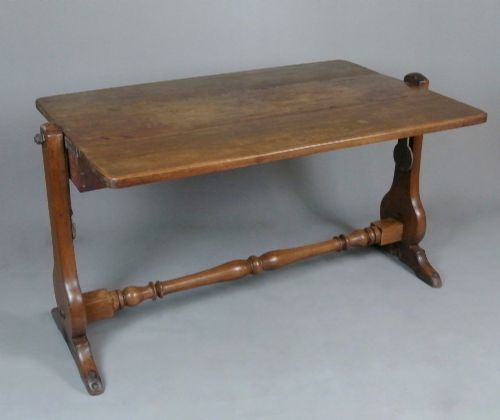
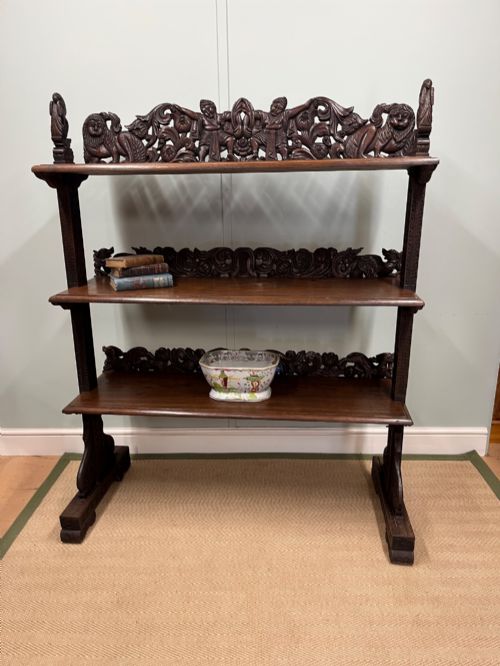
A brown teak table brings rich regional carving and dense colonial timber into an interior.
Brown Teak Table
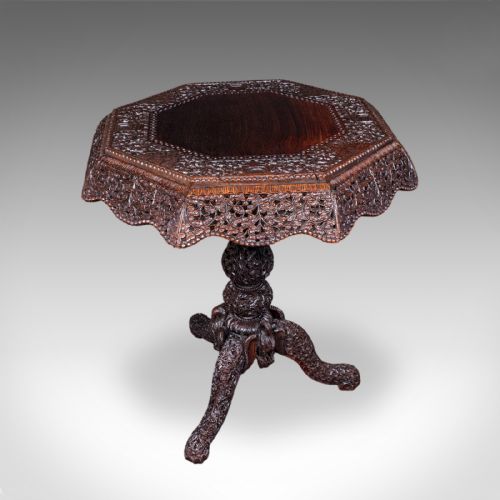
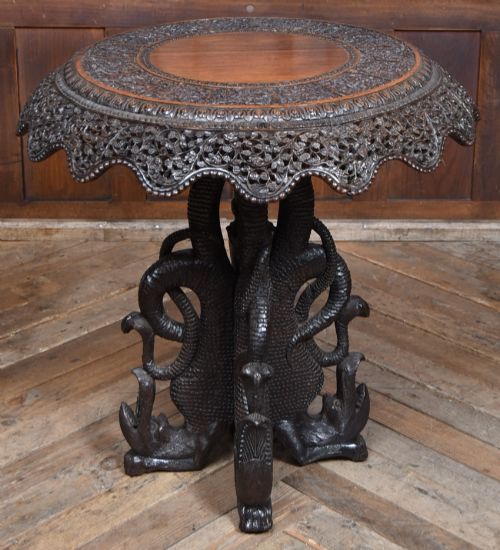
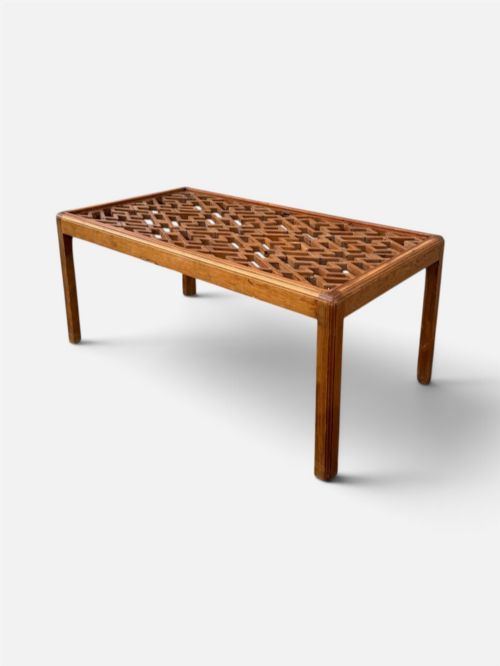
A brown teak table encompasses various forms originating from British colonial trade, particularly Anglo-Indian and Burmese workshops dating from the eighteenth century through to the early twentieth century. Buyers seeking this brown teak table encounter low coffee tables, occasional tables, and occasional side pieces defined by deep relief carving.
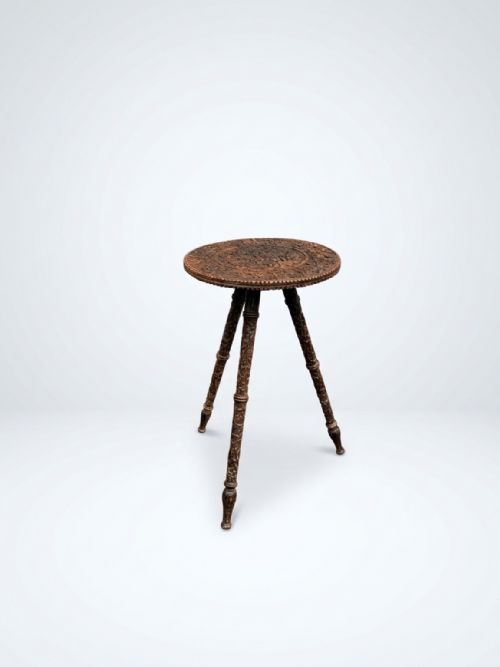
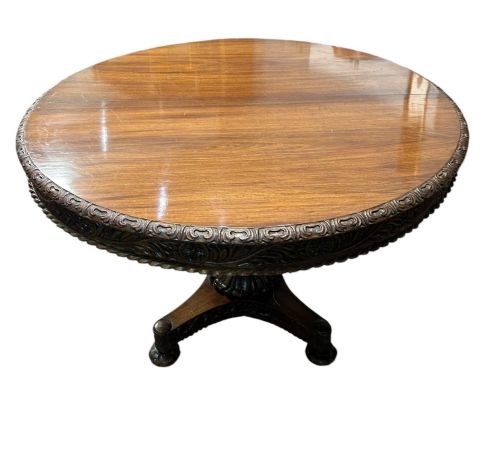
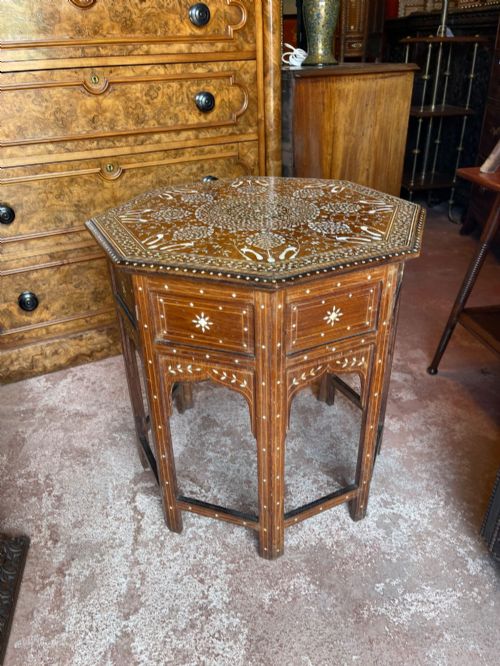
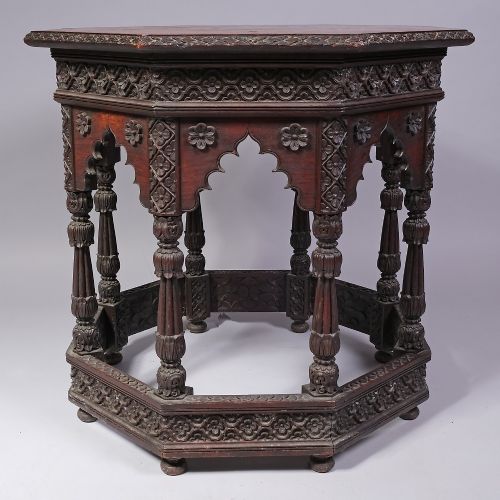
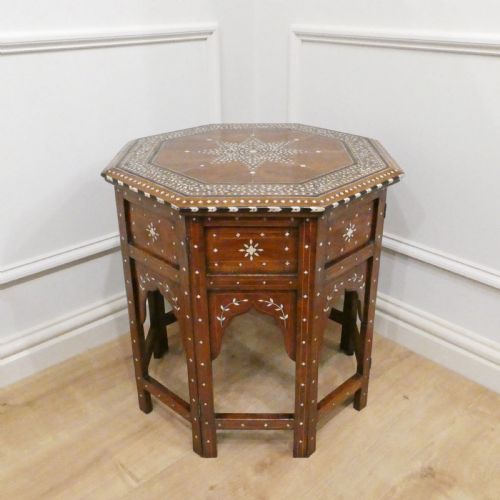
Octagonal occasional tables and circular tripod designs dominate the selection, often featuring folding or removable tops alongside dense floral and animal motifs. These pieces reflect distinct regional aesthetics from centres such as Hoshiarpur and Bombay, utilising robust tropical hardwoods suited to intricate hand-chizzling.
Materials and construction methods
Makers utilised solid teak and related hardwoods for their durability and capacity to hold microscopic detail under hand-carving tools. Surface enrichment frequently incorporated contrasting materials, embedding bone, brass, and rosewood into the dense timber grain.
Construction techniques balanced portability with stability, evident in folding bases, tier arrangements, and ship's campaign formats. Joints were pegged or pegged-and-tenoned to accommodate climatic shifts without warping the heavy timber.
Brown Teak Table Retail Price Guide 2026
Typical asking prices for brown teak table among the pieces listed under this phrase on Sellingantiques today, from the lower quarter to the upper quarter. They describe what is for sale here now, not the wider market.
Several tables feature miniature carved elephants supporting the surface, ready to hold a quiet cup of tea.
Assessing quality and craftsmanship
The distinction between standard execution and superior craftsmanship lies in the depth and crispness of the hand-carved relief. Fine examples display intricate undercutting and sharply defined animal or foliage elements rather than shallow, mechanical stamping.
The integration of secondary materials such as bone and brass inlay separates exceptional items from simpler counterparts. Precision in the fit of folding mechanisms and the overall weight of the seasoned timber further signal superior workshop output.
The Brown Teak Table Glossary
- Hoshiarpur
- A district in Punjab known for intricate woodcarving and inlay work using brass and bone.
- Takhat
- A low Indian seating platform or table form adapted for domestic use.
- Campaign table
- Portable furniture designed for travel, featuring folding stands and removable tops.
- Tip-top table
- A round or octagonal occasional table with a hinged top that pivots vertically for storage.
Brown Teak Table: Frequently Asked Questions
Where were these tables made?
These pieces originated in colonial workshops across India and Burma during the nineteenth and early twentieth centuries.
Local artisans produced them for export to British markets, incorporating regional flora and fauna into traditional furniture forms.
How do I care for teak furniture?
Teak requires minimal maintenance due to its natural oil content, which prevents excessive drying.
Dust with a dry cloth and avoid placing the timber near direct heat sources or strong sunlight to preserve the finish.
Are the table tops removable?
Many octagonal and occasional designs feature a detachable top that rests on a folding or collapsible wooden base.
This construction method originally facilitated transport and storage for travellers and colonial officials.
What motifs appear on these tables?
Carvings frequently depict elephants, camels, peacocks, and dense foliate scrolls inspired by regional wildlife and architecture.
More elaborate examples combine these figural elements with geometric brass and bone inlay work.