

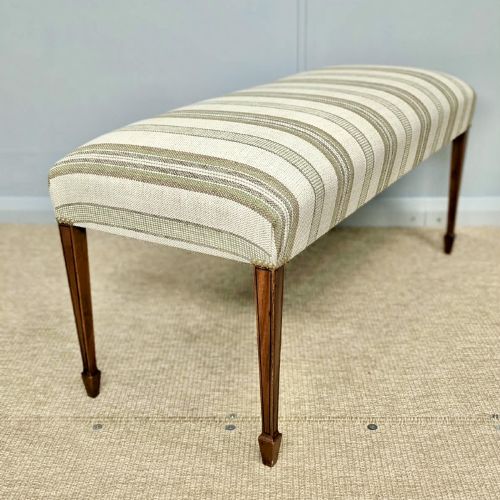
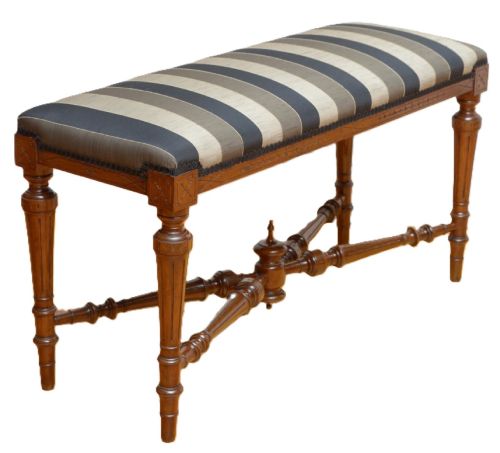
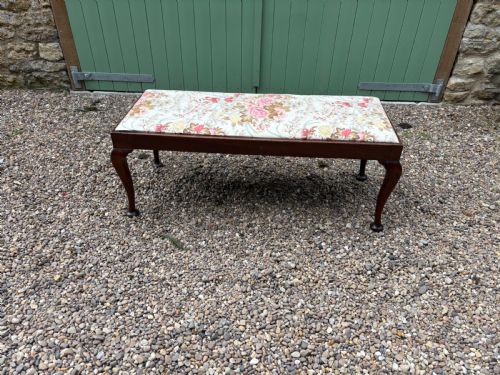
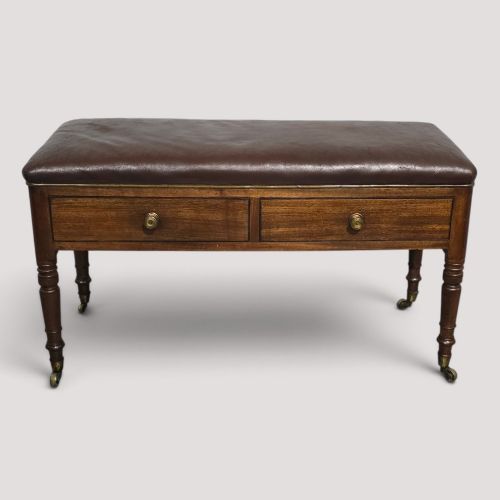
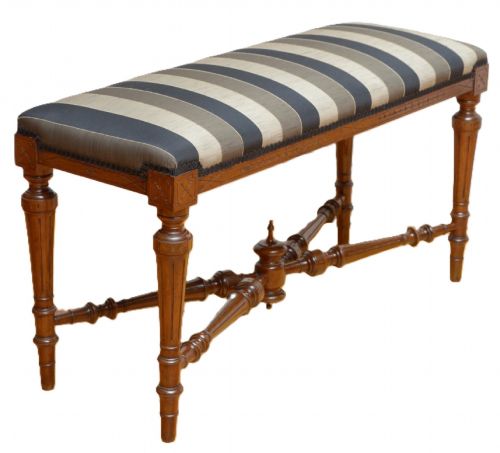


Brown Piano Bench
A brown piano bench brings functional seating and period timber to a room, offering practical storage or duet capacity alongside classic craftsmanship.
Brown Piano Bench
A brown piano bench serves as dedicated music room seating, often incorporating hinged seats, fall fronts, or extended duet proportions. When searching for a brown piano bench, buyers encounter diverse forms ranging from single seats to long window benches and duet stools.
The pieces span multiple eras including the Georgian, Victorian, Edwardian, and Art Deco periods. Mahogany and walnut dominate the structural timbers, frequently paired with upholstered tops in leather, fabric, or textile.
Origin points vary from English workshops to Canadian makers of the early twentieth century. Styles encompass Arts and Crafts simplicity alongside revival aesthetics such as Sheraton, Queen Anne, and George III interpretations.
Materials and construction methods
Makers utilised solid hardwoods like mahogany, walnut, and oak to build sturdy frames capable of withstanding regular use. Timber surfaces were polished or inlaid to highlight the natural grain.
Upholstery techniques combined traditional stuffing with top layers of leather, fabric, or textile. Brass hardware frequently appeared on hinges, handles, and adjustable mechanisms.
Joinery methods varied from simple pegged joints in Arts and Crafts pieces to carved cabriole legs and detailed marquetry on Edwardian and Georgian examples.
Brown Piano Bench Retail Price Guide 2026
Typical asking prices for brown piano bench among the pieces listed under this phrase on Sellingantiques today, from the lower quarter to the upper quarter. They describe what is for sale here now, not the wider market.
Periods represented span from Georgian and Regency eras through Victorian, Edwardian, and Art Deco times.
Differentiating quality across examples
The standard of carving and inlay work distinguishes standard utility seating from finer workshop output. Crisp detail in cabriole legs and polished timber surfaces indicate superior craftsmanship.
Mechanisms for storage compartments and height adjustments operate smoothly in well-made pieces. The original integrity of the upholstery base and frame stability also separate exceptional survivors from heavily altered items.
The Brown Piano Bench Glossary
- Duet stool
- A wider bench designed to seat two players side by side at a keyboard. These often include long hinged seats or extended frames.
- Fall front
- A hinged vertical panel that drops forward to reveal interior storage for sheet music. This mechanism appears frequently on Victorian walnut examples.
- Cabriole leg
- A furniture leg that curves outward and then tapers inward with a pad foot, common on Victorian and Queen Anne revival pieces.
- Inlay
- A decorative technique where contrasting woods or materials are inserted into recessed portions of the base timber to form patterns.
- Window seat
- A long stool or bench style sometimes utilised for dual purposes near windows or instruments. These pieces often feature upholstered tops without backrests.
Brown Piano Bench: Frequently Asked Questions
What is a piano bench used for?
A piano bench provides comfortable seating at the keyboard while keeping the player at the correct height. Many versions also include internal compartments for storing sheet music and books.
These pieces function equally well as standalone occasional seating or window benches in living spaces.
How do I identify a Victorian piano bench?
Victorian examples typically feature dark walnut or mahogany timbers with solid construction. Look for characteristic details such as carved cabriole legs or fall-front storage compartments.
Upholstery from this era often utilises traditional textiles or buttoned leather surfaces.
Are Edwardian piano benches different?
Edwardian pieces frequently display lighter mahogany frames with delicate inlay work reflecting Sheraton revival styles. They emphasise refined lines rather than heavy carving.
Many Edwardian examples date from the opening decades of the twentieth century.
What materials are common?
Mahogany and walnut form the primary structural timbers across most periods. Oak appears more frequently in Arts and Crafts designs.
Seating surfaces utilise leather, fabric, or textile upholstery over padded interiors.