



Brown Oak Open Shelves
Brown oak open shelves combine rich timber tones with accessible storage, making them a practical choice for displaying books and collections in any room.
Brown Oak Open Shelves
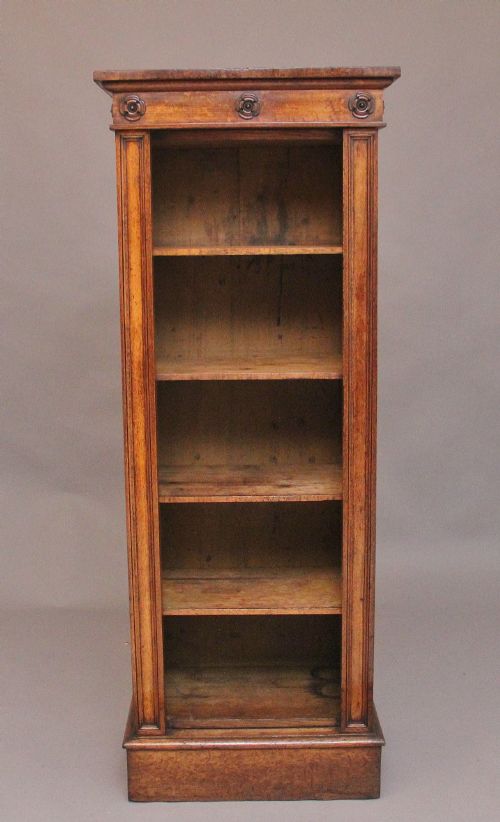
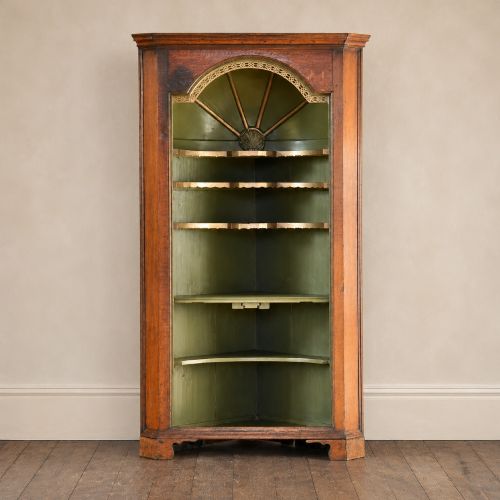
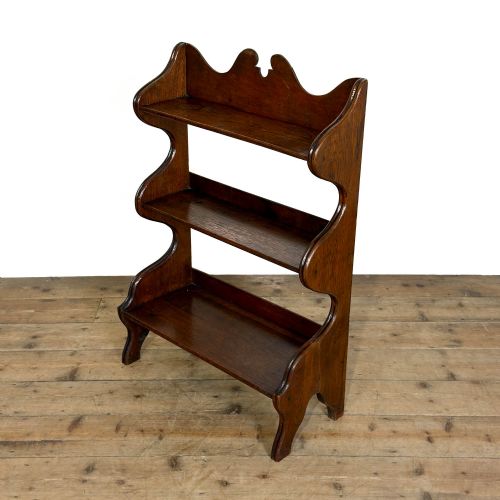
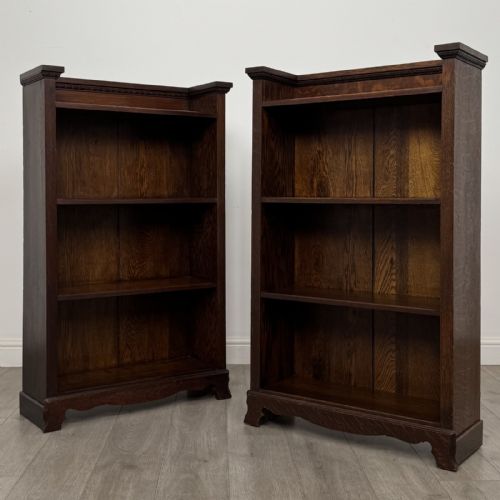
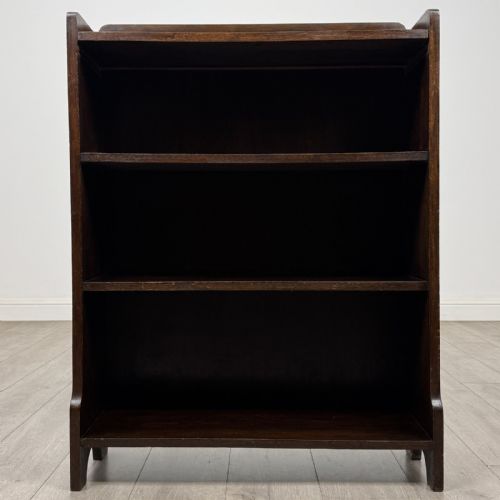
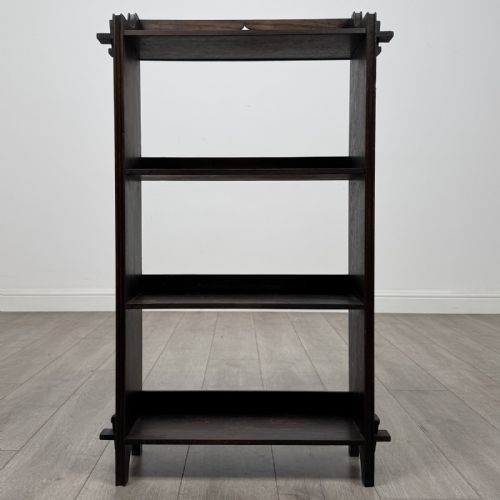
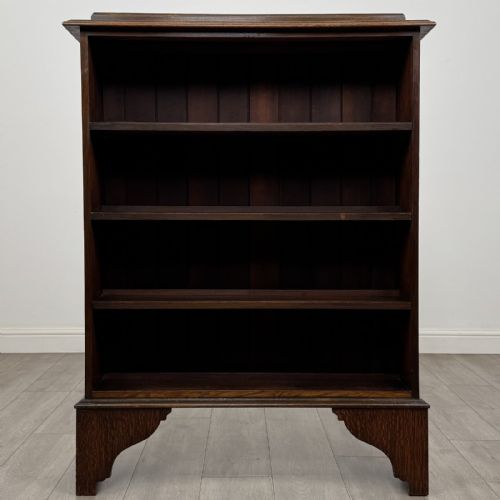
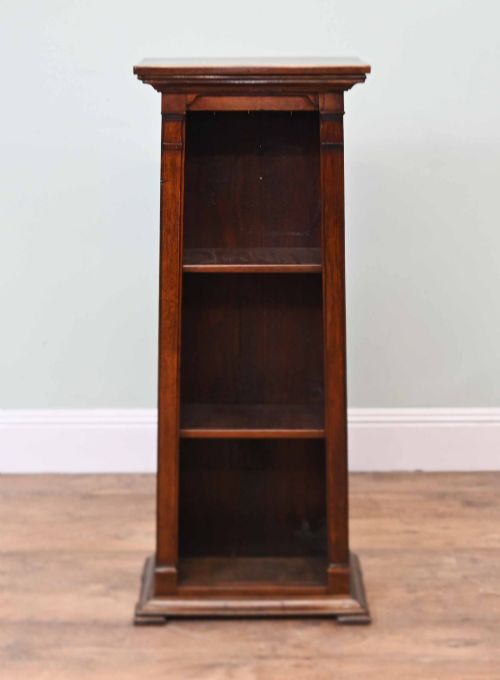
When you search for brown oak open shelves, you are looking at practical storage furniture designed to hold books and display objects without enclosing them behind doors. These pieces range from compact wall units and small bookcases to taller library shelving and country dressers featuring open plate racks.
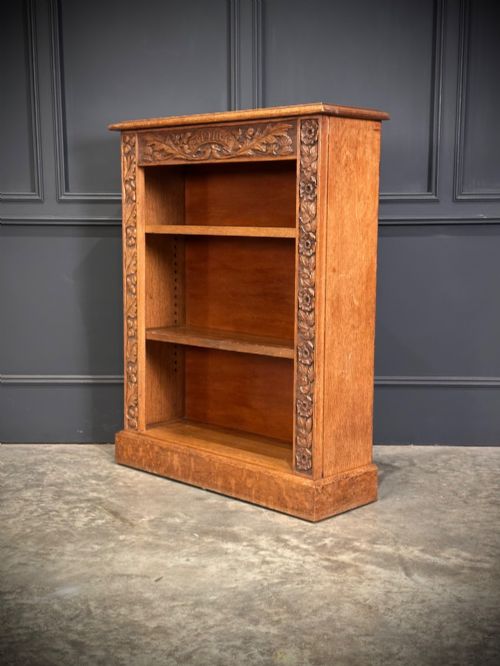
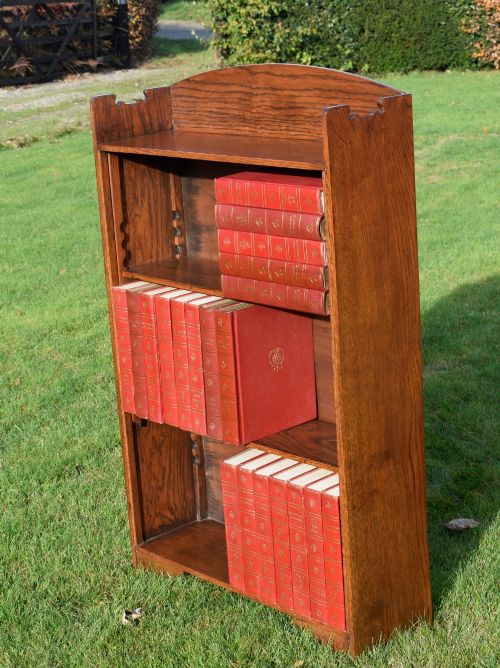
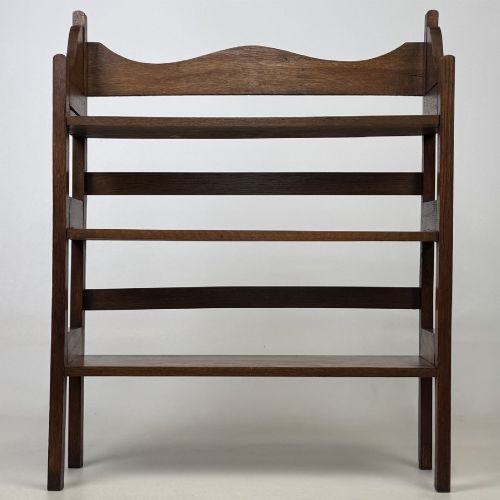
The versions you are most likely to meet on this page date from the Victorian and Edwardian eras, alongside pieces from the 1920s and 1930s. Styles span simple utilitarian forms, Arts and Crafts designs, Gothic Revival, and early twentieth-century interpretations of Jacobean revival.
Makers utilised solid timber alongside wood veneer and plywood in later twentieth-century iterations, sometimes incorporating brass or iron hardware and leather top surfaces. Forms extend from straightforward bookcases with adjustable shelves to Welsh dressers with open upper sections.
Materials and construction methods
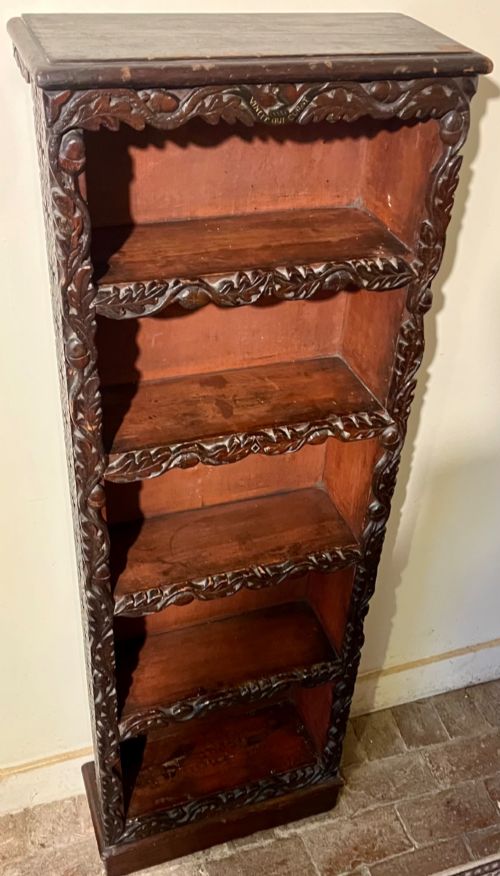
Makers relied primarily on oak, categorised in listings as solid oak, brown oak, or simply oak, complemented by occasional elements of brass and iron for hinges, brackets, or handles. Timber was selected for durability and pronounced grain patterns, frequently enhanced through carving or beaded edges.
Construction techniques evolved from heavy Victorian joinery featuring substantial cornices and carved panels to lighter Arts and Crafts frameworks and later 1930s production methods. Adjustable shelving mechanisms appeared in various forms, allowing owners to alter shelf heights using wooden supports or metal pins.
Brown Oak Open Shelves Retail Price Guide 2026
Typical asking prices for brown oak open shelves among the pieces listed under this phrase on Sellingantiques today, from the lower quarter to the upper quarter. They describe what is for sale here now, not the wider market.
One unexpected variant includes a leather top surface, suggesting the top shelf once doubled as a compact writing desk.
Evaluating quality in brown oak open shelves
Quality rests in the selection of the timber and the integrity of the joinery rather than ornamentation alone. Superior examples display dense, figured oak grain with tight joints, sturdy backboards, and well-executed decorative details such as carved mouldings or clean chamfered edges.
Utility also dictates standing, as pieces featuring functional additions like adjustable shelving systems or integrated cupboards show greater versatility. Heavier Victorian library bookcases demonstrate robust framing, whereas Arts and Crafts examples rely on honest construction methods that highlight the natural qualities of the wood.
Heals·Wylie Lochhead of Glasgow·E.A. Taylor
The Brown Oak Open Shelves Glossary
- Open bookcase
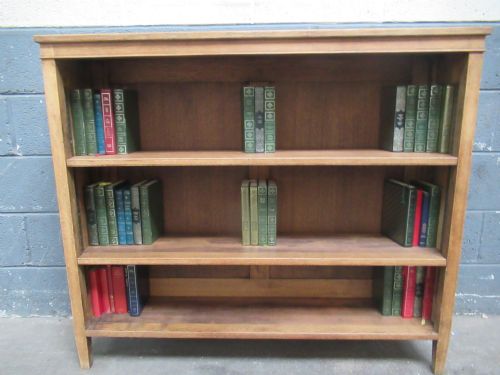
- A piece of furniture consisting of horizontal shelves supported by vertical sides without doors enclosing the front. This format allows immediate access to stored volumes.
- Plate rack
- A grooved wooden shelf or tiered framework designed to hold plates upright against a wall or the back of a dresser. They commonly feature in country dining arrangements.
- Arts and Crafts
- A design movement spanning the late nineteenth and early twentieth centuries that prioritised traditional craftsmanship and simple forms. Pieces from this era often show exposed joinery and minimal ornamentation.
- Waterfall bookcase
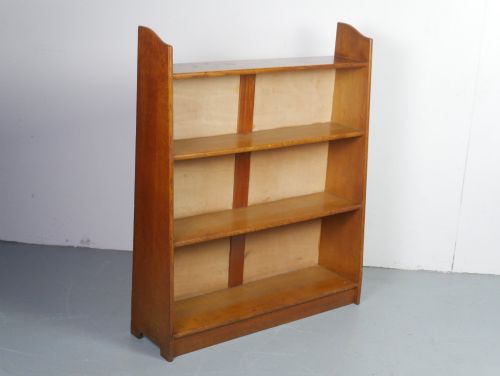
- A shelving unit where each successive shelf is narrower than the one below, creating a stepped profile reminiscent of cascading water. These units were popular during the Edwardian period.
- Pot board
- A lower open shelf fitted beneath a dresser base or sideboard, traditionally used for storing pots and heavy kitchen utensils. They provide structural stability to the base of the furniture.
Brown Oak Open Shelves: Frequently Asked Questions
What periods do these shelves date from?
The pieces span from the late nineteenth century through the Edwardian era and into the 1920s and 1930s. You will encounter Victorian interpretations alongside Arts and Crafts designs and later twentieth-century pieces.
Construction styles reflect these shifting dates, moving from heavy carved timber to lighter modernist or industrial-influenced formats.
Are the shelves adjustable?
Many examples feature adjustable shelves, particularly those originating from Victorian and Edwardian libraries. This adaptability allowed owners to accommodate books of varying heights.
Fixed shelving also appears frequently, especially in smaller country pieces, dressers, and simpler utilitarian bookcases.
How were these pieces used originally?
They served primarily for storing and displaying books in studies, libraries, and parlours. Taller versions housed extensive private collections, while smaller units sat beneath windows or in hallways.
Dressers with open upper sections combined book storage or plate display with enclosed cupboard space below for household linens and tableware.
How do I identify an Arts and Crafts piece?
Arts and Crafts pieces emphasise the natural grain of the oak and honest construction methods. They typically feature clean lines, minimal carving, and sometimes pegged joints.
Workshops from this movement focused on utility and handcrafted quality rather than historical revival styles.