



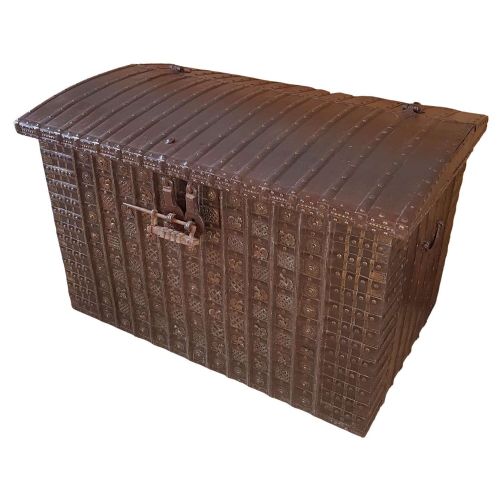


Brown Metal Box
A brown metal box brings weight and purpose to a room, offering robust storage shaped by centuries of practical trade and travel.
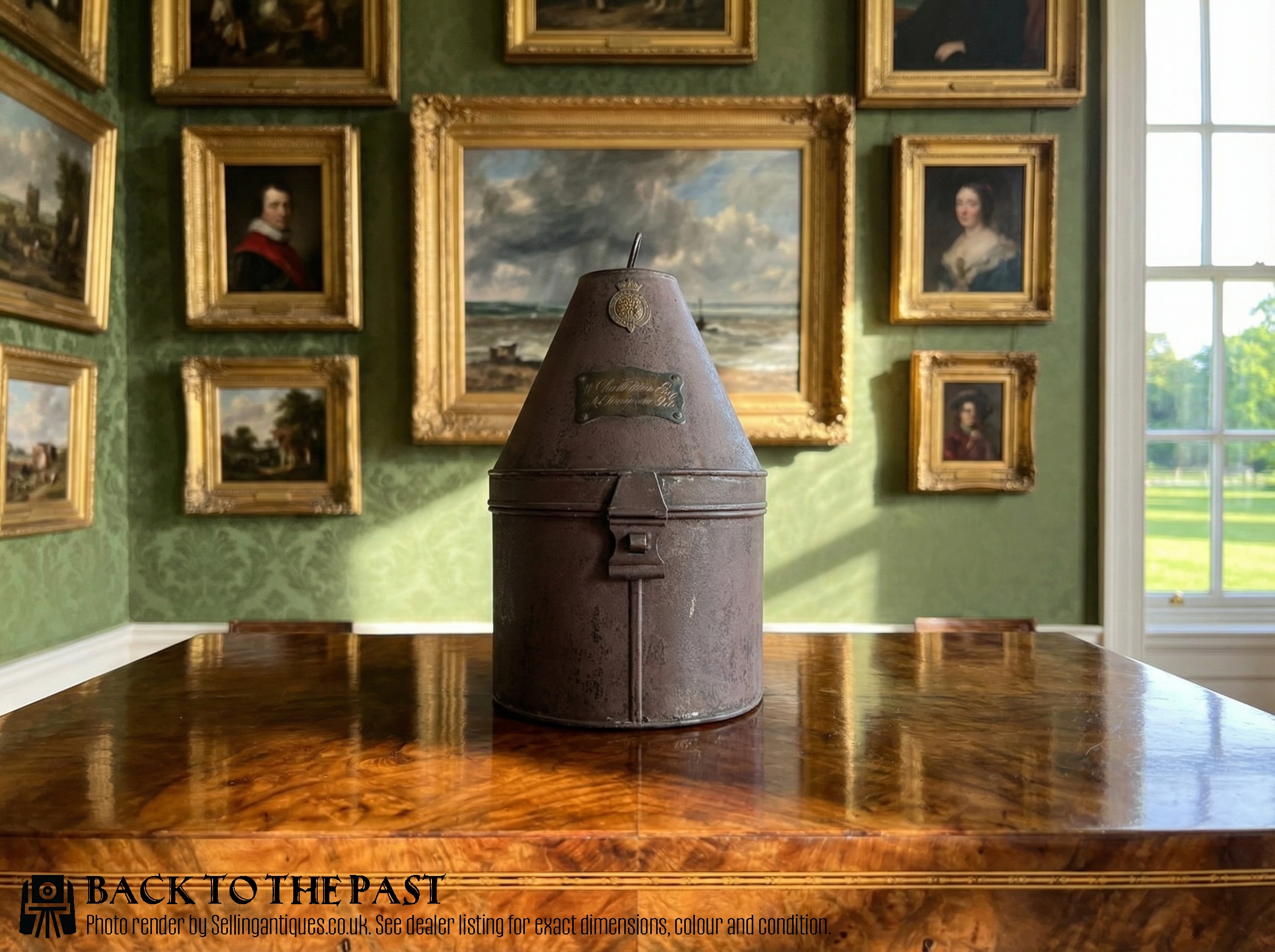
Brown Metal Box
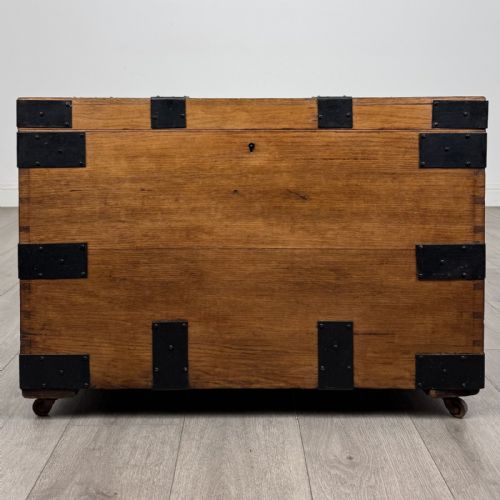
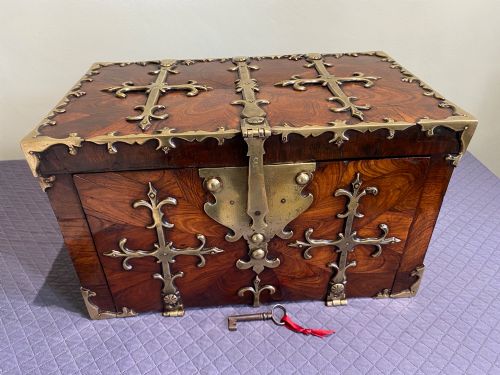
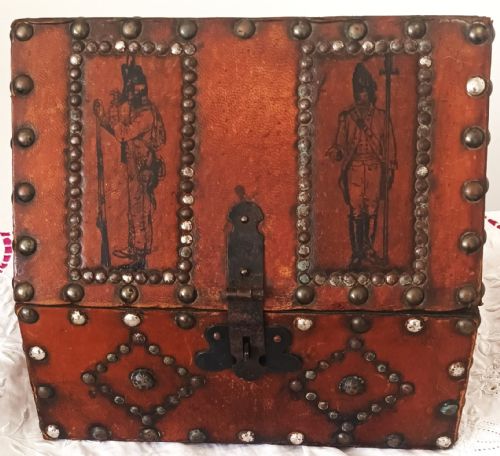
When you search for a brown metal box, you encounter a varied class of receptacles designed for secure transport, currency, or domestic storage. These pieces range from substantial 19th century campaign trunks and iron-banded dowry chests to smaller toleware containers and specialised deed safes.
The materials span cast iron, toleware, zinc, and brass, often combined with timber frames, leather bindings, or painted surfaces. Surviving examples reflect periods from the 17th century through the Edwardian era, bearing the practical marks of military campaigns, country houses, and long-distance travel.
You are most likely to meet Victorian metal-bound travelling trunks or utilitarian tin hat boxes on this page. These items showcase the robust industrial methods of the period, combining sheet metal, iron straps, and riveted construction to withstand hard use.
Materials and construction methods
Makers constructed these pieces using heavy iron plates, brass hardware, and sheet metal panels riveted or soldered to internal wooden frameworks. Iron bands and corner brackets reinforced the structure for transit, while internal linings of zinc, leather, or painted paper protected the contents from moisture.
Surface finishes involved dark patination, japanning, or painted decoration applied over iron and tinplate. Lock mechanisms were frequently integrated directly into the body, utilising complex lever systems and heavy cast iron or brass latch plates to ensure security.
Brown Metal Box Retail Price Guide 2026
Typical asking prices for brown metal box among the pieces listed under this phrase on Sellingantiques today, from the lower quarter to the upper quarter. They describe what is for sale here now, not the wider market.
Listings feature storage forms ranging from 17th century coffer forte designs to Edwardian novelty biscuit tins and Victorian campaign chests.
Assessing quality and execution
Quality rests in the integrity of the original construction, the heft of the metalwork, and the preservation of internal fittings such as trays, compartments, and maker-stamped locks. Superior examples retain their original hinges, handles, and operational keys without significant structural replacement.
Finer boxes display careful hand-riveting, refined corner reinforcement, and intact surface treatments like japanning or leather upholstery. Pieces that retain working locks by recognised makers or specialised hardware demonstrate a higher grade of original manufacture.
Samuel Pratt·Lochmanns·Milners of Liverpool·Peek Frean and Co·Hunter and Palmer·Thomas Harris and Son·Hawkes and Co·JH Browne·John Grinsell and Sons
The Brown Metal Box Glossary
- Toleware
- Lacquered or enamelled metalware, typically tin or sheet iron, painted with decorative finishes. This technique was widely used for domestic buckets, military hat boxes, and small storage containers during the 19th century.
- Campaign trunk
- A portable chest or box built for military officers or travellers on extended journeys. These pieces feature recessed brass handles, reinforced corners, and durable metal bindings to endure rough transport.
- Coffre forte
- A heavy security chest or strongbox originating in earlier European traditions. These pieces rely on thick iron bands, complex internal locking mechanisms, and robust metal construction to safeguard valuables.
- Japanning
- A European imitation of East Asian lacquer work created by applying layers of dark heat-cured varnish to metal or wood. It provides a durable, glossy protective finish found on various Victorian and Edwardian metal boxes.
- Silver chest
- A heavy storage box lined with baize, felt, or zinc, specifically designed to hold domestic silver flatware and hollowware. They incorporate reinforced oak or pine bodies wrapped in iron bands for security and weight management.
Brown Metal Box: Frequently Asked Questions
How were metal boxes used originally?
These containers served functional roles in transport, security, and domestic organisation. Owners utilised them to move personal wardrobe, safeguard legal documents, or store household valuables during long journeys.
Larger trunks travelled with regiments on campaign or accompanied families on ocean liners, while smaller boxes remained in libraries, kitchens, or offices to protect money and papers.
Are original keys usually included?
Original working keys are uncommon due to centuries of displacement during moves and estate changes. Many surviving boxes retain their complex internal locks even when the key has been lost to time.
Specialist locksmiths can often cut replacement keys for historic lever locks if access to the interior is required. The presence of an original stamped key adds notable interest to a piece.
How do I date an iron-bound trunk?
Dating relies on examining construction techniques, fasteners, and material handling methods. Hand-forged iron straps and dovetailed timber inner cores point towards earlier periods, while machine-rolled sheet metal and standardised rivets indicate the late 19th century.
Maker's marks, stamped lock plates, and the style of interior paper linings also provide reliable clues for narrowing down the decade of production.