



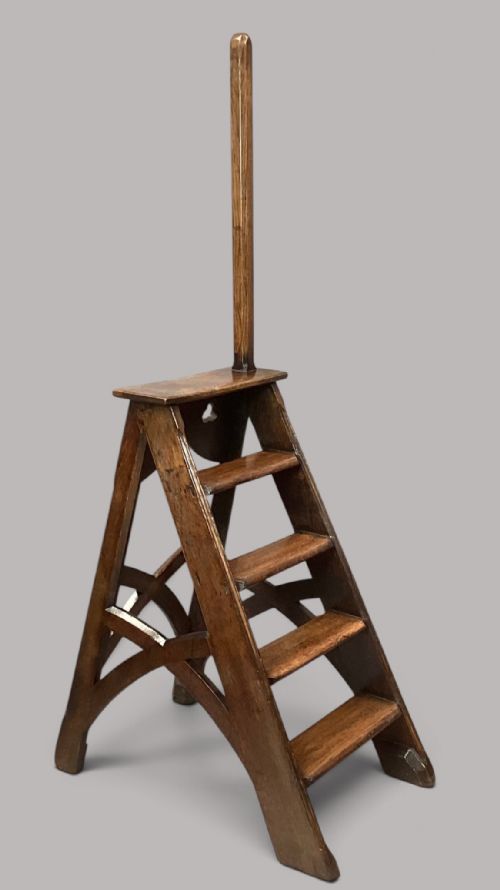


Brown Library Ladder
These brown library ladder designs offer practical height and traditional charm, spanning periods from the Georgian era through to the twentieth century.
Brown Library Ladder
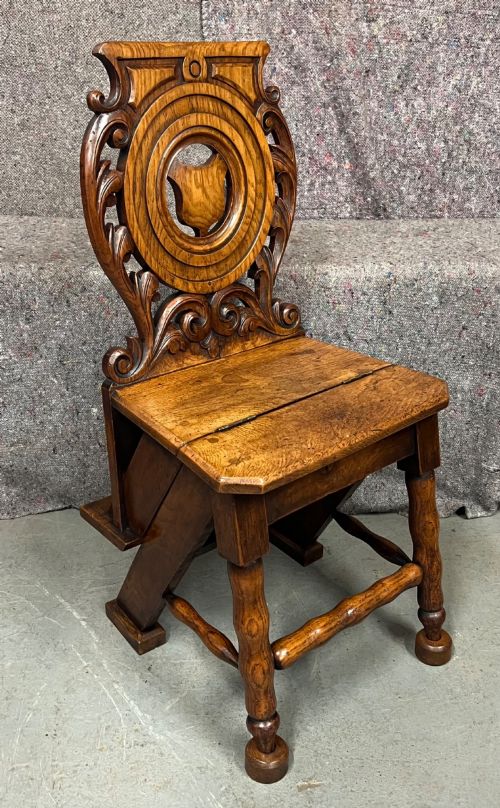
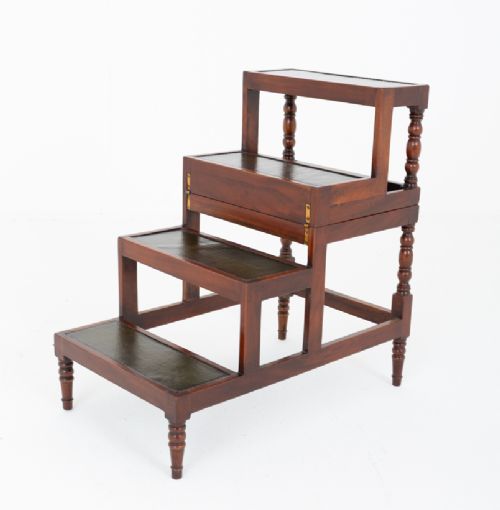
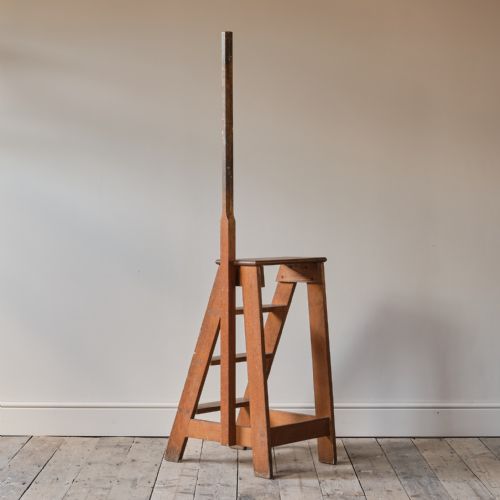
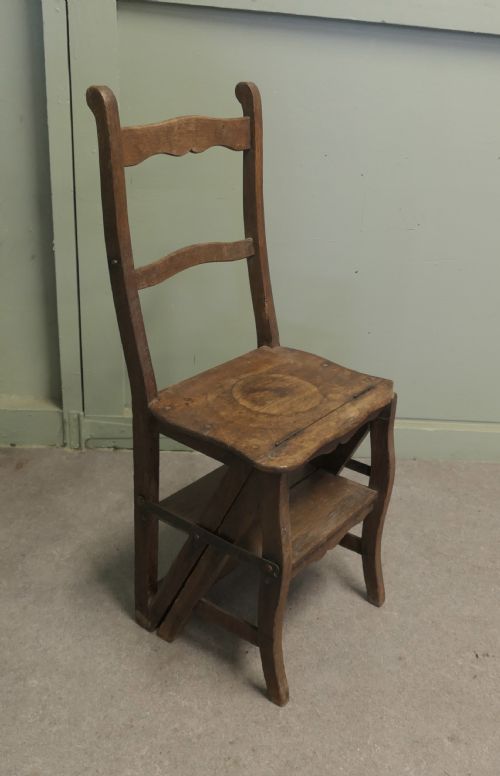
A brown library ladder provides functional access to high shelves and tall bookcases using traditional timber construction. When you search for a brown library ladder, you encounter various formats including folding steps, tall wooden loft ladders, and metamorphic chair combinations.
The pieces listed here date from the Georgian era, Victorian period, and into the early twentieth century. Oak and mahogany examples dominate the selection, often accompanied by pine, fruitwood, and iron hardware.
Forms range from simple straight ladders to spiral library steps and ingenious metamorphic armchairs that transform into flights of steps. You are most likely to meet sturdy oak or mahogany folding steps originating from the nineteenth century.
Materials and Construction
Cabinet makers utilised dense hardwoods like mahogany, oak, and fruitwood to ensure stability under weight. Pine and mixed woods appear in more rustic or utilitarian pieces intended for shop and domestic use.
Hinges, brackets, and support rods forged from brass and iron facilitate folding mechanisms and metamorphic transformations. Leather inserts occasionally top individual treads to provide grip and protection during use.
Brown Library Ladder Retail Price Guide 2026
Typical asking prices for brown library ladder among the pieces listed under this phrase on Sellingantiques today, from the lower quarter to the upper quarter. They describe what is for sale here now, not the wider market.
Oak and mahogany are the primary timbers recorded across the listings, spanning the Georgian, Victorian, and early twentieth-century periods.
Assessing Quality and Craftsmanship
Superior examples demonstrate precise joinery that maintains rigidity across folding joints and multi-tiered steps. The choice of timber grain and the integration of functional metalwork distinguish finer workshop productions from utility items.
Ingenuity of design separates standard steps from metamorphic pieces that seamlessly convert between armchairs and stair flights. Original leather treads and well-preserved turning work elevate the standing of individual pieces.
The Brown Library Ladder Glossary
- Metamorphic
- Furniture designed to transform from one object into another, such as an armchair converting into a set of library steps.
- Treads
- The horizontal surfaces or steps that a person places their feet upon when climbing the ladder.
- Gothic Revival
- A nineteenth-century style incorporating medieval architectural motifs, pointed arches, and heavy tracery into wooden furniture.
- Aesthetic Movement
- A late nineteenth-century design approach emphasising visual beauty and craftsmanship over excessive ornamentation.
Brown Library Ladder: Frequently Asked Questions
How do metamorphic library chairs work?
These clever pieces conceal a flight of steps beneath a seat or within a backrest, allowing a chair to unfold into a set of stairs.
Craftsmen engineered pivoting hinges and sliding tracks so the transformation occurs smoothly without compromising the structural support needed for sitting or climbing.
Were these ladders only used in libraries?
While designed for high bookcases in private libraries and grand institutions, similar step structures served in shops, kitchens, and domestic lofts.
Utilitarian pine versions handled everyday household chores, whereas mahogany and oak variants belonged in formal study spaces.
How can I tell a Victorian step from a Georgian one?
Georgian pieces often utilise rich mahogany with restrained classical lines, whereas Victorian examples frequently showcase heavier oak construction and Gothic Revival or Aesthetic Movement details.
Proportion and turning styles on the upright supports also shift according to the prevailing design tastes of each respective century.
Are folding library steps stable enough to use?
Sturdy hardwood construction and robust brass or iron locking hinges allow these steps to support weight securely when fully opened.
Checking that the support arms and locking brackets engage correctly ensures the ladder remains rigid during use.