





Bronze Venus Sculpture
A bronze venus sculpture brings classical form into a room, capturing the timeless goddess in cast metal and marble.
Bronze Venus Sculpture
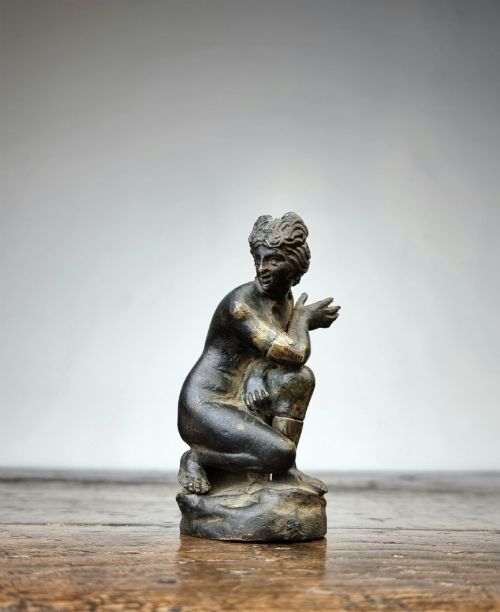
A bronze venus sculpture represents the classical goddess of love, beauty and fertility, rendered in metal through various historical revivals. Buyers seeking this subject will find figures ranging from small Grand Tour souvenirs to large foundry reductions.
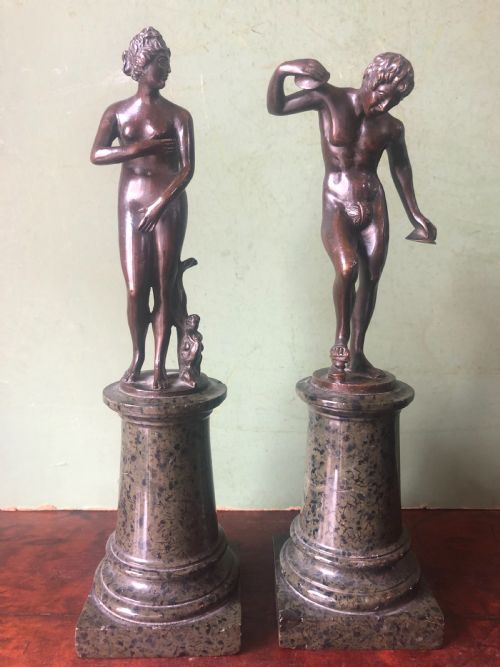
The pieces appearing on this page span the seventeenth, nineteenth and twentieth centuries, showing subjects such as the Venus de Milo, Venus Pudica and Venus Bathing. Nineteenth century French and Italian examples dominate the selection, often cast after antique models.
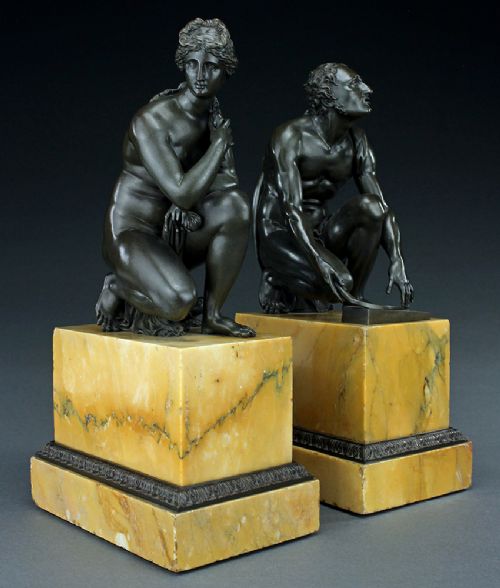
Many of these sculptures incorporate stone bases, using materials like Siena marble to support the patinated metal figures. Whether large statuettes or miniature desk ornaments, these works reflect the enduring European fascination with classical sculpture.
Materials and Casting Techniques
The primary material across these works is bronze, often shaped through casting and finished with a dark patination or parcel gilt highlights. Some works combine cast bronze and brass components, mounted directly onto turned or slab marble bases.
Foundries utilised traditional lost wax or sand casting methods to capture the fine anatomical details of the subject. Skilled artisans then chased the cooled metal surface and applied chemical patinas to achieve varied tonal depths.
Bronze Venus Sculpture Retail Price Guide 2026
Typical asking prices for bronze venus sculpture among the pieces listed under this phrase on Sellingantiques today, from the lower quarter to the upper quarter. They describe what is for sale here now, not the wider market.
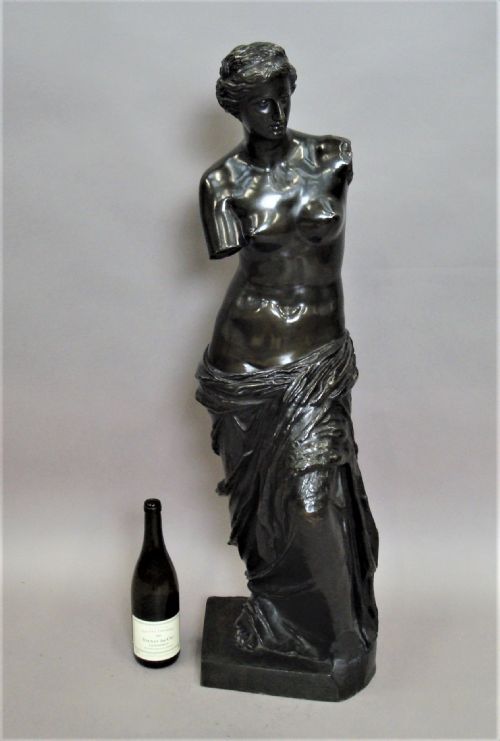
Even without arms, the goddess still manages to command the entire mantelpiece.
Factors Determining Quality
The sophistication of the patination and the quality of the supporting marble base further distinguish superior pieces. Works bearing the marks of established foundries or identified makers demonstrate higher standards of nineteenth century production.
Ferdinand Barbedienne·Ferdinando de Luca·Etienne-Maurice Falconet
The Bronze Venus Sculpture Glossary
- Grand Tour
- A traditional trip through Europe undertaken by upper-class young men in the seventeenth through nineteenth centuries to study classical art. Souvenirs from these travels included small bronze sculptures of antique statues.
- Reduction
- A scaled-down copy of a large classical sculpture, achieved through mechanical pantograph devices in nineteenth century foundries. This technique allowed private collectors to own manageable bronze versions of museum masterpieces.
- Patination
- The chemical or natural treatment applied to the surface of bronze to alter its colour and protect the metal. Dark brown, green and black patinas are common on nineteenth century examples.
- Parcel-Gilt
- A decorative technique where specific areas of a bronze sculpture are highlighted with applied gold leaf or gilding. This method draws the eye to details like hair ornaments or drapery borders.
- Siena Marble
- A distinctive yellow Italian marble featuring dark grey or purple veining, frequently used for the bases of nineteenth century bronzes. It adds colour and weight to the display of the sculpture.
Bronze Venus Sculpture: Frequently Asked Questions
What is a Grand Tour bronze?
A Grand Tour bronze is a small souvenir sculpture purchased by travellers visiting European cultural centres during the nineteenth century. These pieces reproduced famous classical statues for domestic display.
Such sculptures allowed collectors to bring museum antiquities into private libraries and drawing rooms.
How do I identify a Venus de Milo sculpture?
A Venus de Milo sculpture depicts the famous Hellenistic statue characterised by missing arms and draped garments falling around the lower limbs. Nineteenth century reductions often capture this exact pose.
Foundry marks and the quality of the bronze cast help distinguish production periods from later reproductions.
Why are marble bases used on these bronzes?
Marble bases provide structural stability and visual weight to metal statuettes, preventing them from tipping. Materials like Siena marble also introduce contrasting colour to the dark patinated bronze.
Many nineteenth century souvenir bronzes were specifically designed to be mounted on such stone plinths.
What does patinated bronze mean?
Patinated bronze refers to metal that has undergone a chemical treatment to produce a stable surface colour, such as deep brown or greenish tones. This finish protects the underlying alloy and enhances sculptural depth.
Artisans carefully managed the patination process during the casting of nineteenth century figures.