



Bronze Patinated Spelter
Bronze patinated spelter figures and decorative objects bring accessible French flair to a room, mimicking solid bronze through a dark metallic finish.
Bronze Patinated Spelter
When you search for bronze patinated spelter, you encounter decorative objects and sculptures cast from a zinc-based alloy and given a dark finish to resemble traditional bronze. These pieces range from Victorian figural mantel pieces to sleek Art Deco animal groups and lamps.
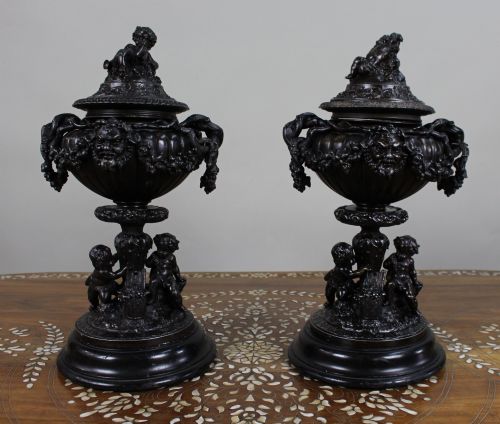
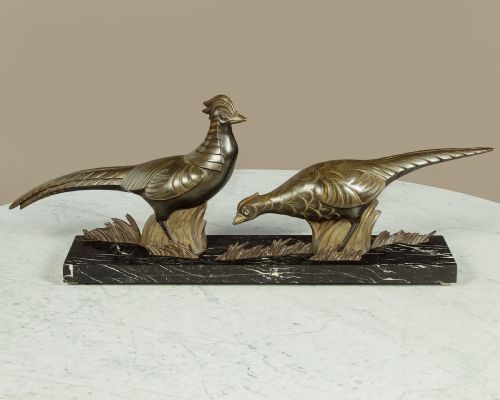
The version you are most likely to meet on this page is a French figure, urn, or animal sculpture dating from the late nineteenth century or the nineteen-thirties. Makers utilised this versatile metal to produce everything from Gothic Revival candlesticks to streamlined greyhounds and dancers.
Objects appear mounted on marble or onyx bases, or integrated into functional items like table lamps, bookends, and clocks. The selection spans periods from eighteen sixty through to nineteen thirty, with French pieces dominating the inventory.
Materials and casting techniques
Spelter, an inexpensive zinc-rich alloy, is poured into moulds to capture fine details such as drapery, facial expressions, and animal musculature. Because the metal is softer than bronze, casting allows for intricate ornamentation on items like campana urns and figural lamp bases.
Manufacturers apply a chemical patination over the base metal to simulate the aged appearance of bronze. This dark surface coating is often combined with other materials including marble plinths, onyx, and glass elements.
Materials paired with the metal include carved marble, onyx, and coloured glass components.
Assessing quality in cast figures
The integration of secondary materials defines the better tier of objects. Solid marble or onyx bases and well-preserved glass components elevate a sculpture above simple mass-produced items.
P. Sega·Geo Maxim·H. Bal·Chiparus·Auguste Moreau
The Bronze Patinated Spelter Glossary
- Spelter
- A zinc-based metal alloy used as a cost-effective alternative to bronze for nineteenth and twentieth-century figures and decorative objects. It accepts patination well to mimic heavier metals.
- Patination
- The surface treatment or chemical coating applied to metal to create an aged bronze appearance. This finish varies from dark brown to greenish hues.
- Campana urn
- A bell-shaped vessel with a flared rim, frequently cast in metal during the nineteenth century for decorative display. These often sit on stepped plinth bases.
- Spelter group
- A multi-figure sculptural composition cast in zinc alloy, depicting animals, human figures, or narrative scenes together. Examples include deer, dancers, and hunting motifs.
Bronze Patinated Spelter: Frequently Asked Questions
What is bronze patinated spelter?
It is a zinc-based alloy treated with a dark chemical finish to imitate the appearance of traditional bronze sculpture.
Found in nineteenth and twentieth-century French decorative arts, it provided an affordable medium for domestic ornamentation.
How do I care for spelter objects?
Dust gently with a soft dry cloth and avoid liquid cleaners that can strip the delicate patinated surface.
Keep pieces away from direct moisture and bright sunlight to preserve the finish.
Are these pieces French?
Many examples originate from French foundries and artists working across the nineteenth and twentieth centuries.
French pieces frequently feature detailed figural work, clock garnitures, and stylized Art Deco animal groups.
How do I distinguish spelter from bronze?
Spelter is lighter in weight than bronze and tends to feel softer when scratched, though the surface patination often masks the base metal underneath.
Examining the underside or base often reveals the lighter, greyish colour of the zinc alloy.