
Bronze Candle Lights
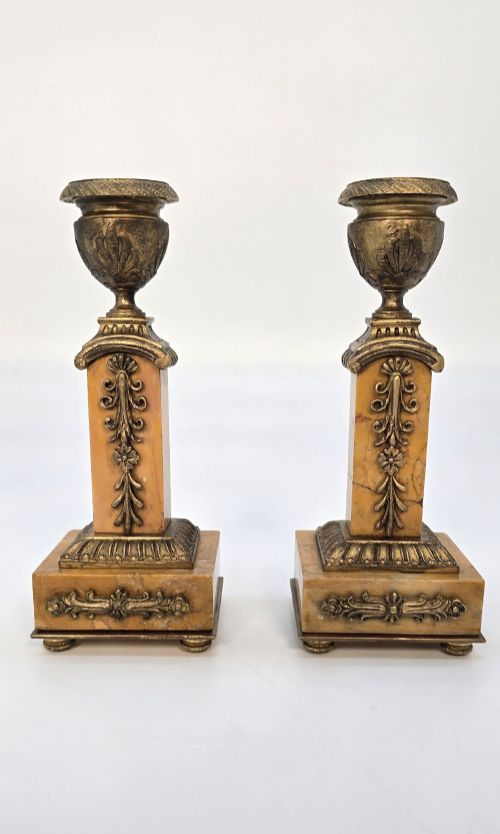
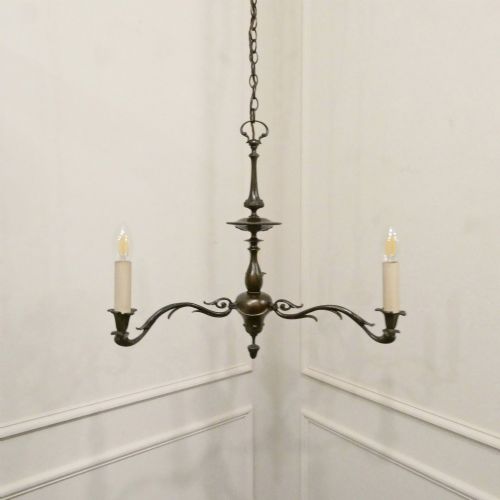
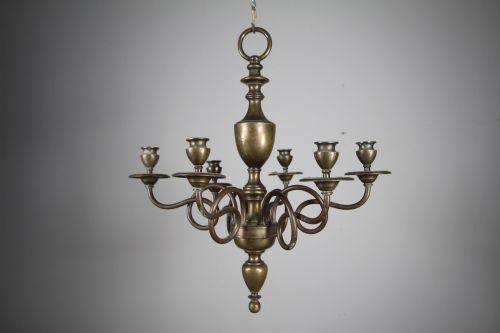
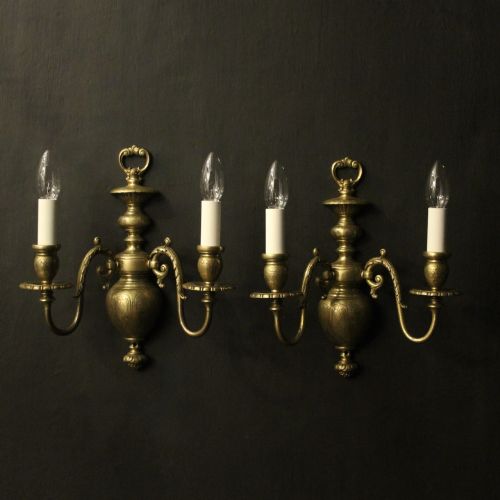
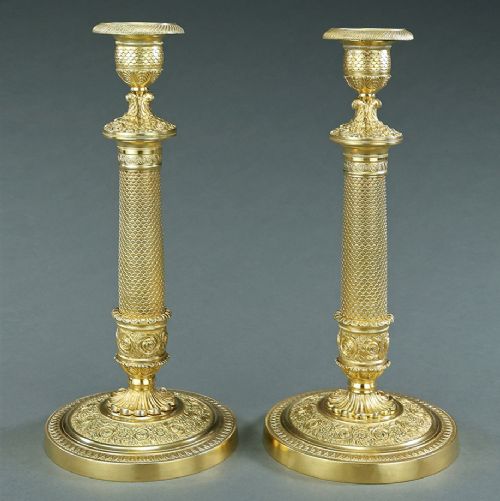
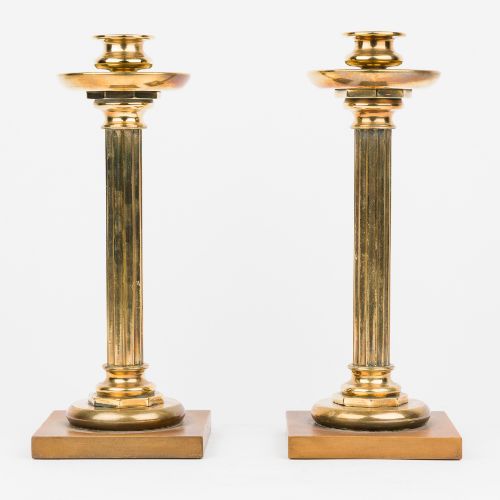
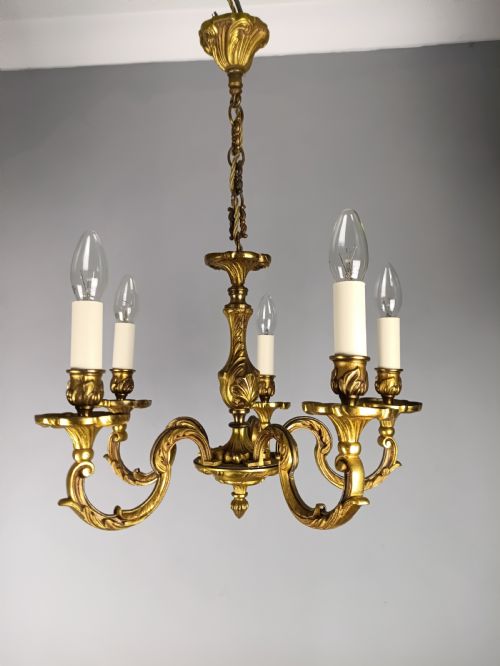
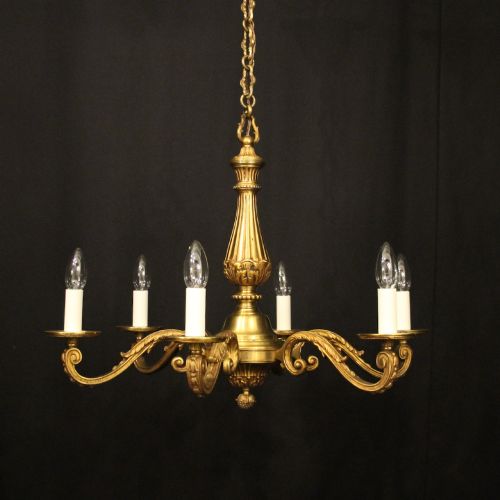
These bronze candle lights bring weighty metal and warm illumination into rooms, spanning French and English workshops from past centuries.
Bronze Candle Lights
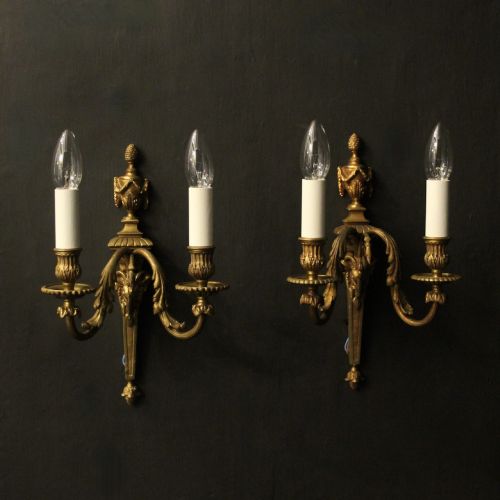
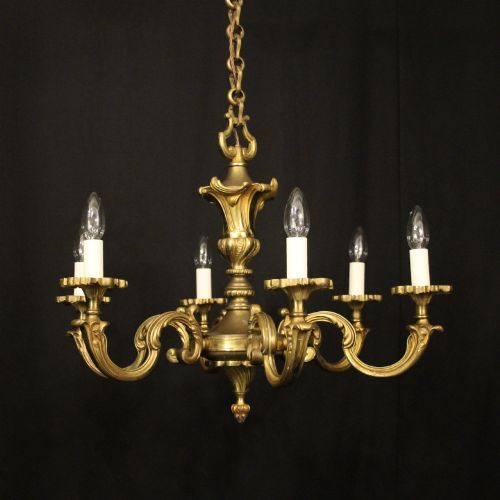
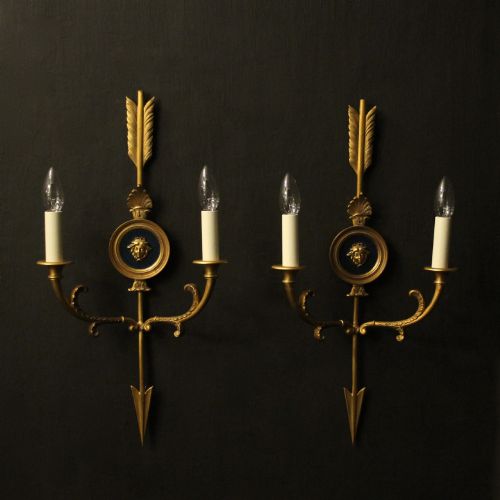
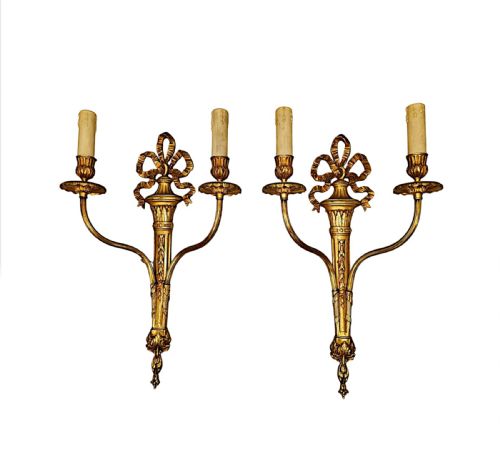
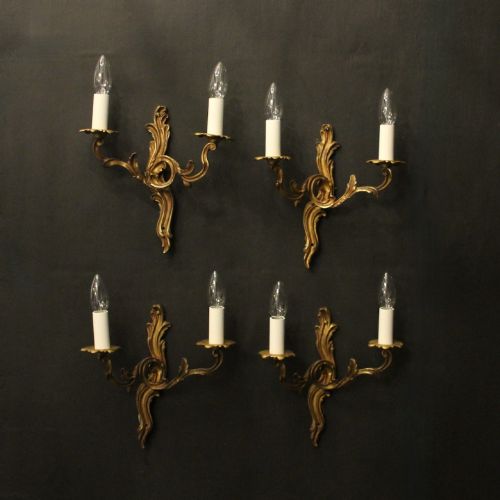
Bronze candle lights encompass a broad range of domestic illumination from wall sconces and chandeliers to table candlesticks and multi-branched candelabra. When searching for bronze candle lights, buyers most frequently encounter pairs of French wall lights and chandeliers dating from the nineteenth and early twentieth centuries.
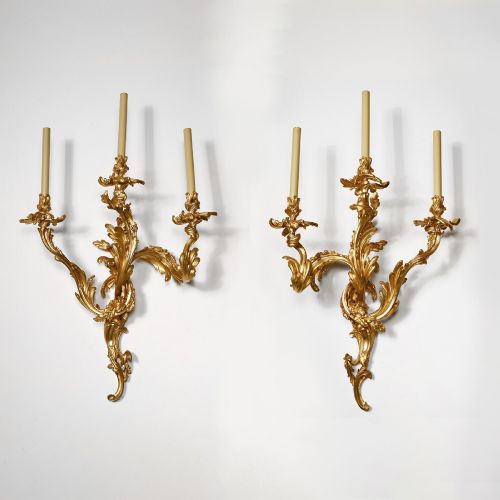
The selection here includes diverse forms such as hanging lanterns, girandoles, and pricket candlesticks spanning the Regency period through to the 1930s. Makers drew upon established decorative repertoires, resulting in pieces reflecting French Rococo, Empire, Louis XVI, and Gothic revival styles.
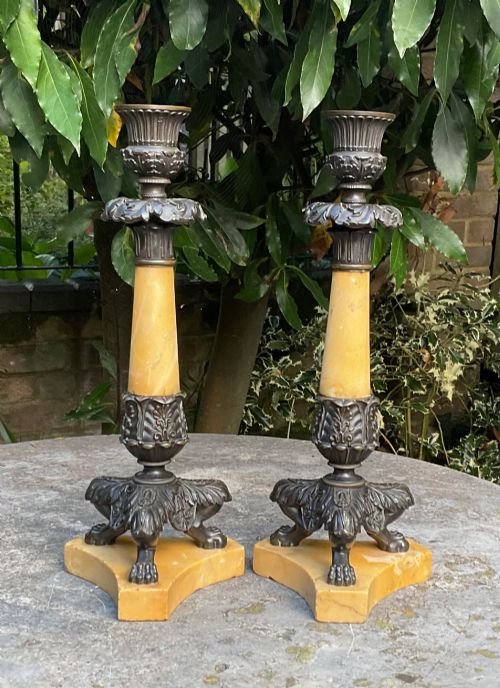
Many examples incorporate mixed media alongside metalwork, pairing patinated or gilded bronze with marble bases, glass elements, or fluorspar. These fixtures served both practical lighting needs and formal decorative schemes in period interiors.
How they were made
Foundries utilised traditional casting methods to shape bronze, brass, and ormolu into structural arms, drip pans, and ornate backplates. Artisans then finished the raw metal surfaces through chased detailing, patination, or the application of gold leaf to create gilded bronze.
Construction frequently combined heavy cast components with screwed joints, allowing complex multi-branch candelabra and chandeliers to be assembled securely. Details such as ribbon motifs, figural putti, and floral bobeches were cast separately before being hand-finished and fitted together.
Black Forest bronze bears double as steadfast candle holders, proving that even woodland predators enjoyed a warm glow.
What varies in quality
Substance and structural integrity also divide the range, with heavier castings providing better balance and durability across multi-arm chandeliers and large wall lights. The integration of supplementary materials, such as finely turned marble plinths or unblemished glass components, further separates exemplary pieces from simpler utilitarian items.
Barbedienne·Francois Redmond
The Bronze Candle Lights Glossary
- Ormolu
- Gilded bronze, where a layer of gold is applied to a bronze object using a mercury amalgam technique or electroplating. This finish provided a durable golden lustre highly prized in French decorative metalwork.
- Candelabra
- A multi-branched lighting fixture designed to hold several candles simultaneously. These pieces often feature removable upper branches to convert them back into single candlesticks.
- Girandole
- An ornamental branching candlestick or wall-mounted sconce equipped with a reflecting backplate. The reflective surface amplified the light cast by the candles into the room.
- Pricket candlestick
- A specific type of candlestick featuring a sharp metal spike at the top rather than a socket. The base of the wax candle is impaled directly onto this spike to hold it upright.
- Bobeche
- A small disc or saucer fitted beneath the candle nozzle to catch melting wax. It protected the arms and lower structure of the light fixture from dripping wax.
Bronze Candle Lights: Frequently Asked Questions
How do I clean bronze candle lights?
Dust the metal gently with a soft, dry brush to remove surface particles without disturbing the underlying patina or gilding. Avoid using abrasive metal polishes or chemical cleaners, which can strip historic finishes from the bronze.
For stubborn grime, use a slightly damp cloth with mild soap, drying the surface thoroughly immediately afterwards. Preserving the original aged finish maintains the character and historical integrity of the piece.
Were these lights converted to electricity?
Many period wall lights and chandeliers have undergone electrical conversion to function safely in modern homes. Original oil or wax fittings are frequently adapted to house internal wiring and lamp holders.
Buyers should examine the wiring closely and consult a qualified electrician to ensure compliance with current safety standards. Unconverted pieces retain their original mechanical configurations for purely decorative display or ceremonial candle use.
How do I identify French Empire style?
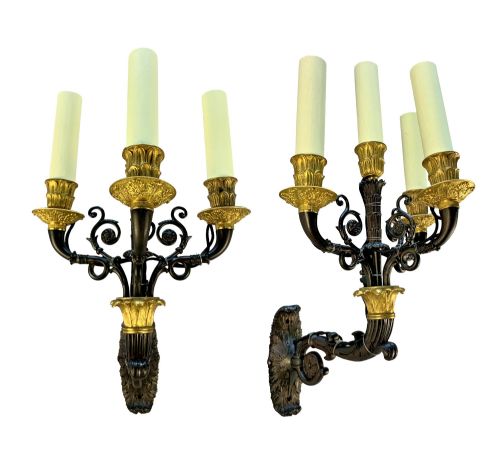
French Empire style pieces rely heavily on classical antiquity, military motifs, and symmetrical geometric designs. Look for restrained use of laurel wreaths, Napoleonic eagles, sphinxes, and dark patinated bronze contrasted with bright ormolu mountings.
These designs emerged during the early nineteenth century and project a heavy, monumental architectural presence. The emphasis rests on formal dignity and archaeological revival rather than flowing Rococo curves.
What is the difference between brass and bronze?
Bronze is an alloy primarily composed of copper combined with tin, resulting in a dense, durable metal well suited to fine casting. Brass is an alloy of copper and zinc, typically possessing a brighter, more golden natural tone when unpolished.
In antique lighting, these terms sometimes overlap in historical descriptions, though bronze generally yields a heavier casting capable of holding finer chased detail. Both metals accept patination and gilding treatments to alter their final surface appearance.