

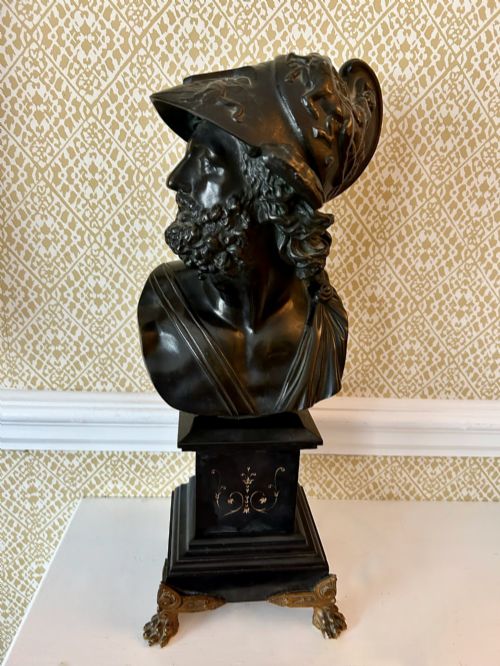
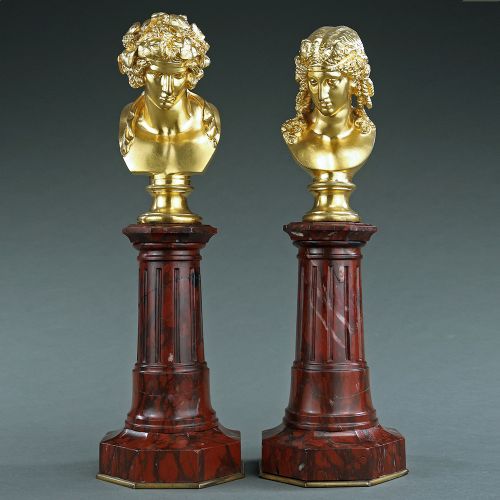
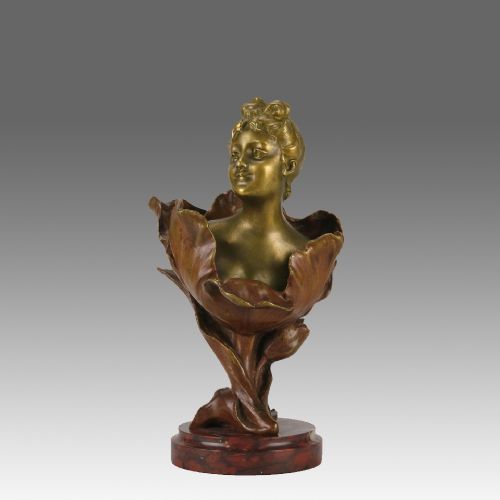
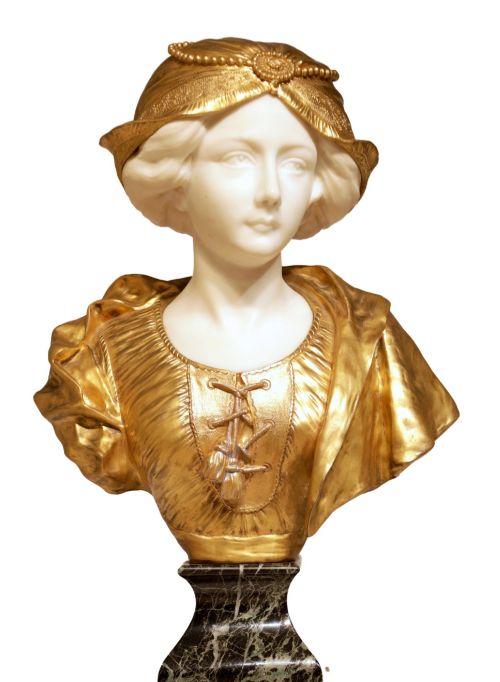


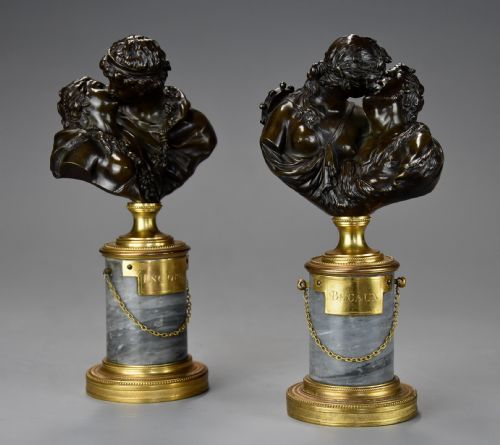
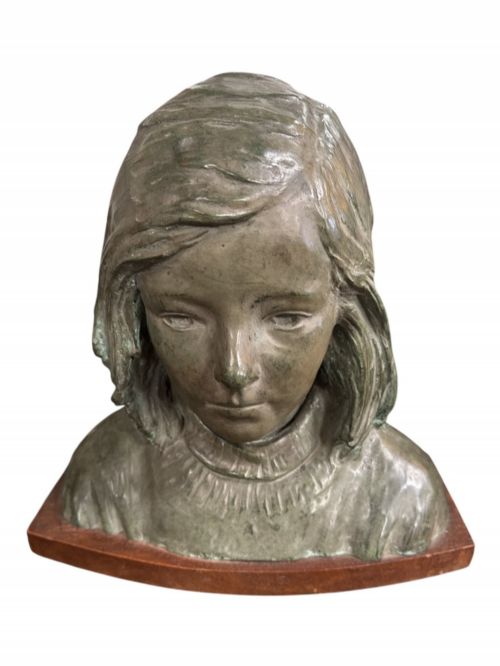
Bronze Bust Statue
A bronze bust statue captures human character and classical form, offering a sculptural presence suited to a desk or mantelpiece.
Bronze Bust Statue
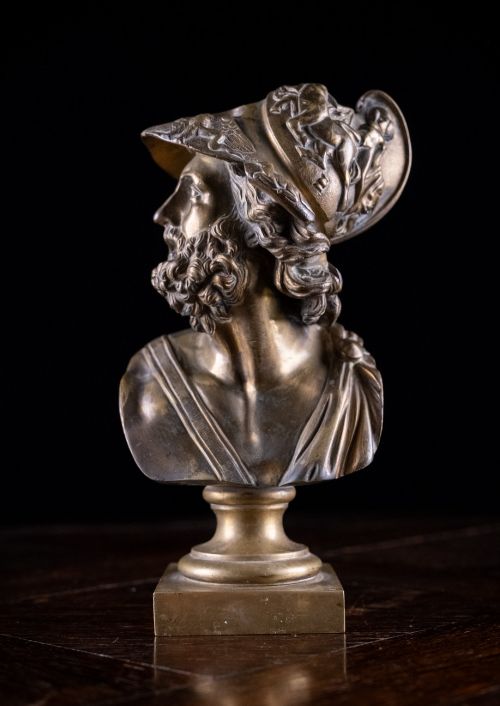
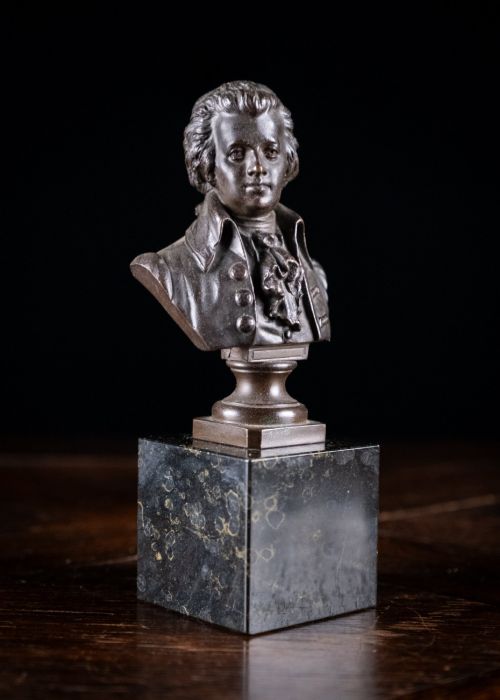
When you search for a bronze bust statue, you encounter portrait sculptures and classical figures spanning the nineteenth and early twentieth centuries. These works include French Grand Tour souvenirs, classical deities, historical rulers, and literary figures cast in metal.
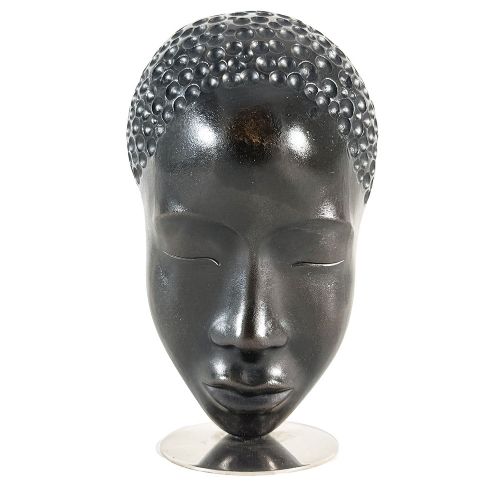
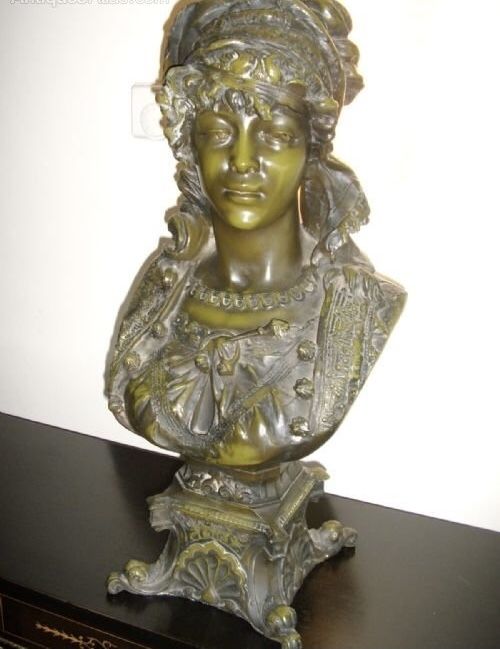
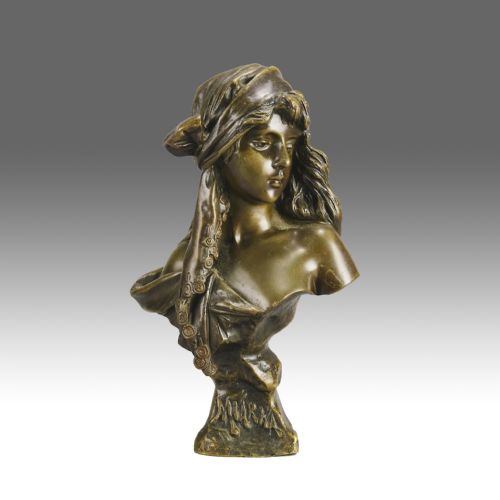
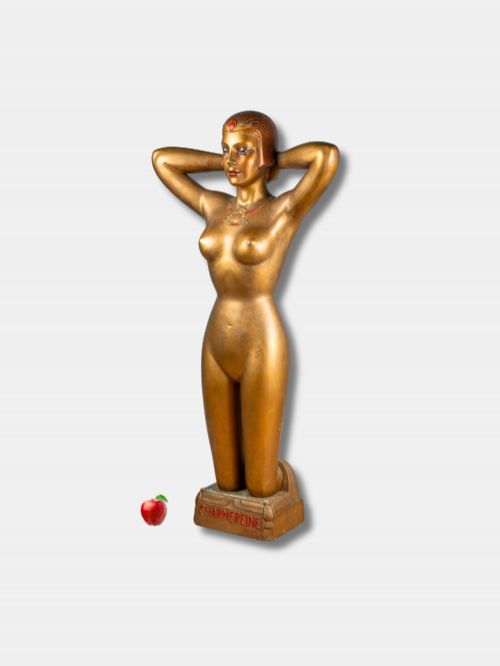
The pieces on this page range from Victorian portrait studies and Art Nouveau female allegories to geometric Art Deco creations. Many examples are mounted on marble or stone bases, reflecting the formal presentation typical of their period of origin.
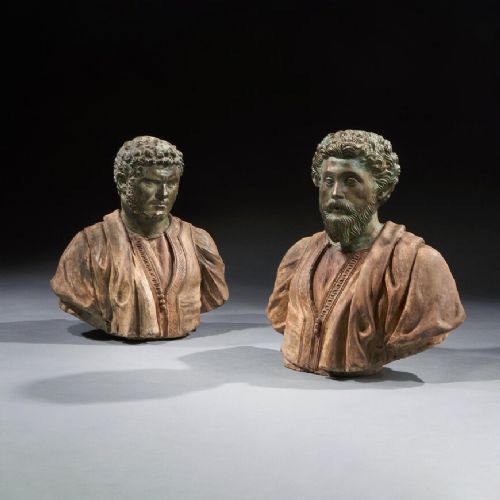
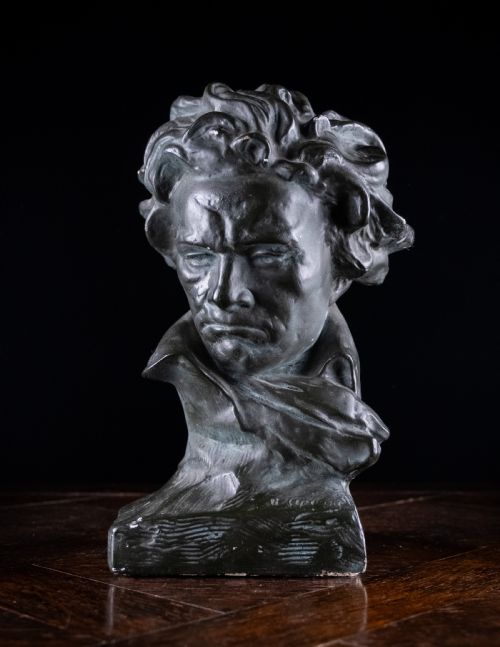
Subjects stretch from Roman emperors and mythological figures like Hypnos and Antinous to named contemporary sitters, musicians, and literary characters. These sculptures vary from cabinet miniatures to large, imposing library pieces.
Materials and Casting Methods
The objects recorded here utilise patinated bronze, gilt bronze, or ormolu, frequently combined with marble bases or plinths. Alternative materials appearing alongside metal include painted plaster, terracotta, and bronzed metal.
Casting methods produced detailed facial expressions and textured drapery, often finished with hand-chiselling and patination. Artisans applied varied chemical patinas to achieve dark brown, green verdigris, or polished golden tones on the metal surface.
Bronze Bust Statue Retail Price Guide 2026
Typical asking prices for bronze bust statue among the pieces listed under this phrase on Sellingantiques today, from the lower quarter to the upper quarter. They describe what is for sale here now, not the wider market.
You can acquire the God of Sleep, a Roman Emperor, or a Paris lingerie mannequin all in the same afternoon.
Distinctions in Quality
Superior examples display crisp chasing in the metalwork, where hair, eyes, and fabric folds retain sharp definition without softening from worn moulds. The integration between the bust and its marble or stone base also indicates the standard of manufacture.
Artist signatures, foundry stamps, and contemporary casting marks elevate a piece by confirming its origin. The depth of the patina and the weight of the metal distinguish superior sculptural casts from lighter decorative productions.
Eugen Bormel·Hagenauer·Affortunato Gory·E Villanis·Henri Godet·Emile Jespers·Georges-Charles Coudray·Antonio Merente·Giuseppe Moretti·Sir Thomas Brock·Hans Müller·Mathurin Moreau·Adolphe Jean Lavergne
The Bronze Bust Statue Glossary
- Patina
- The surface coloration and sheen developed naturally over time or applied chemically by the founder. This finish protects the metal and gives depth to the skin tones and drapery of the portrait.
- Grand Tour
- A nineteenth-century tradition where wealthy travellers collected classical antiquities and miniature bronze replicas across Europe. These souvenir sculptures frequently reproduced famous statues from Italian museums.
- Ormolu
- Finely ground gold-mercury amalgam applied to a bronze base. This decorative technique creates a bright, durable golden surface seen on select nineteenth-century portrait pieces.
- Terracotta
- Fired unglazed clay moulded into sculptural forms. This material appears in several portrait pieces recorded on this page.
- Plaster
- A composition material poured into moulds to create sculptural studies. Painted plaster versions provide the form of a metal cast at a different weight and texture.
Bronze Bust Statue: Frequently Asked Questions
What periods do these busts cover?
The listings span from the nineteenth century through the Art Nouveau and Art Deco eras up to the mid-twentieth century. Victorian examples sit alongside French bronzes and early twentieth-century modernist works.
Most pieces date from the height of European foundry production in the late 1800s and early 1900s. Classical subjects often replicate much older ancient Greek and Roman prototypes.
How were these statues displayed originally?
In the nineteenth century, bronze busts occupied libraries, studies, and drawing rooms as displays of classical learning and refined taste. Grand Tour pieces commemorated travels through Italy and Greece.
Large examples sat upon dedicated columns or heavy mahogany desks. Smaller cabinet busts stood among book collections and mantel ornaments.
Are these pieces solid bronze?
Many bronze sculptures are hollow-cast using traditional foundry techniques to save weight and metal while maintaining structural integrity. Other items utilise alternative substances such as terracotta, plaster, or bronzed metal over a core.
Base materials often include heavy marble or slate plinths that anchor the lighter metal upper portion. Examining the underside usually reveals the casting method and inner core material.
How do I identify a cast after an antique?
Pieces described as 'after' an artist or classical work are later reproductions of famous sculptures rather than original nineteenth-century casts from the primary hand. Foundry marks and surface wear help determine the age of the cast.
Stylistic details and the crispness of the chasing separate period foundry productions from twentieth-century decorative copies. Signatures on the base or shoulder frequently name the sculptor responsible for the original model.