


Bronze and Crystal Fitting
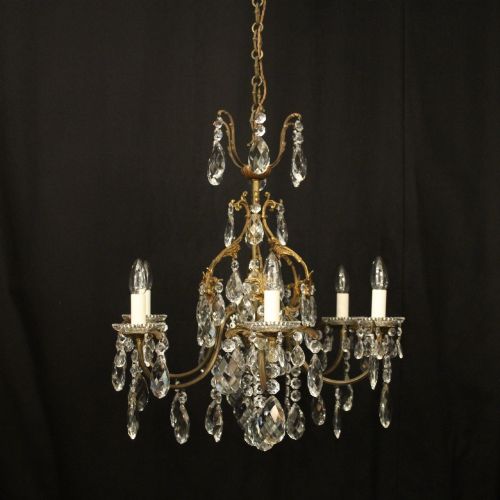
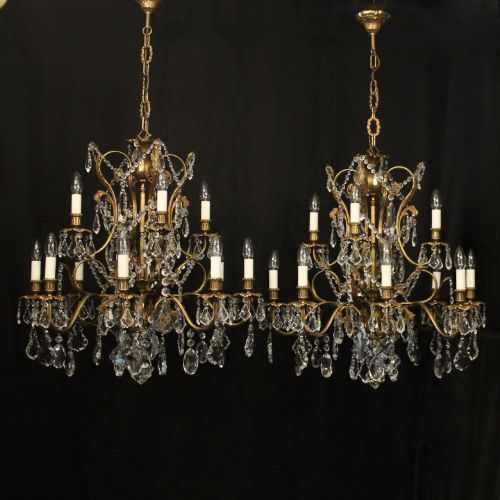
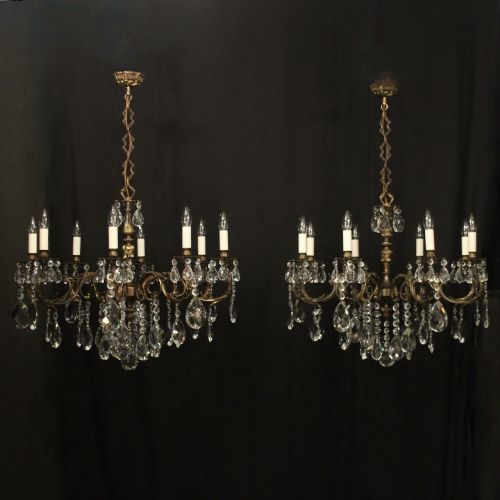
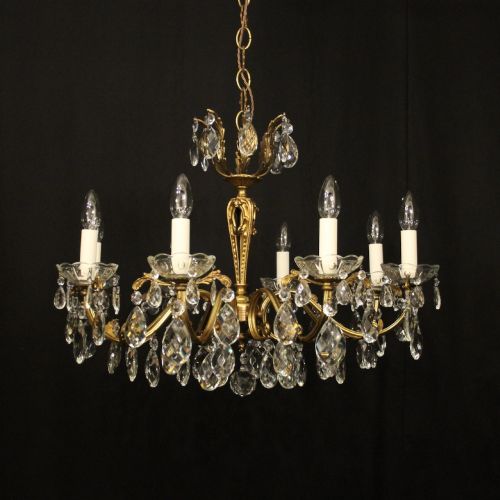
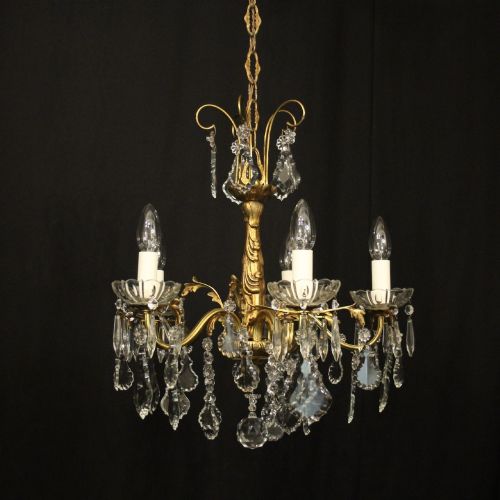
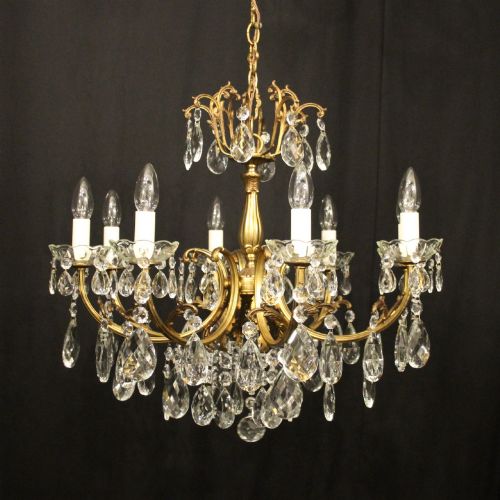
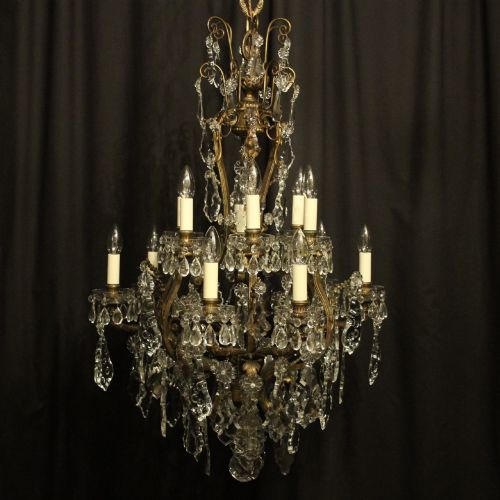
A bronze and crystal fitting brings brilliant illumination and stately presence to a room through heavy metal frames hung with sparkling glass drops.
Bronze and Crystal Fitting
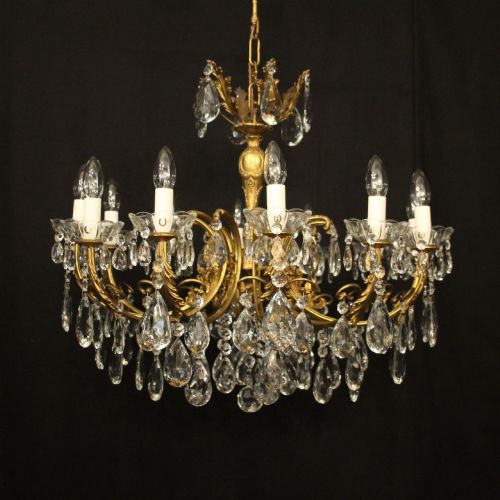
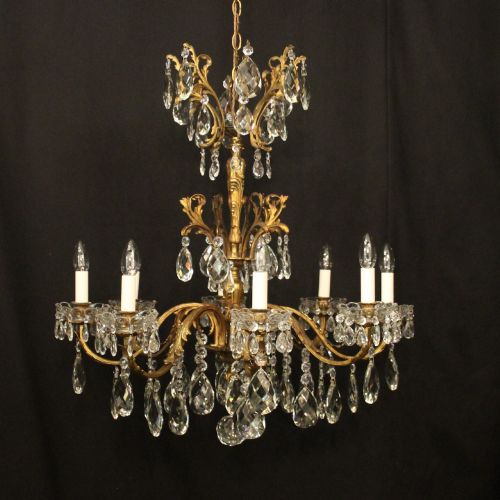
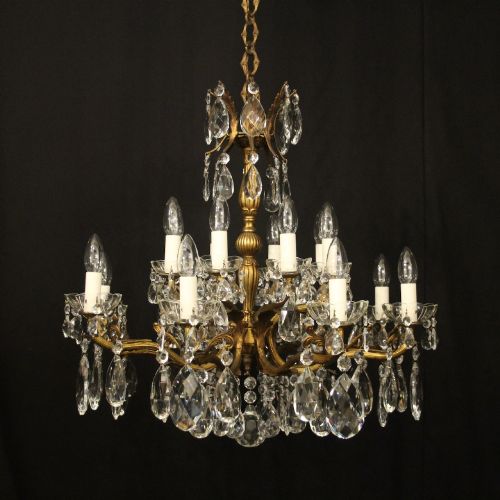
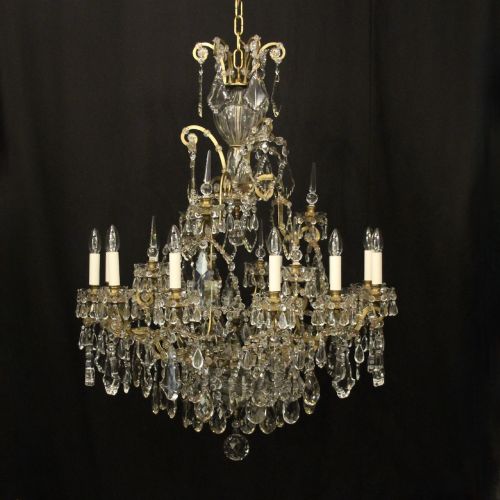
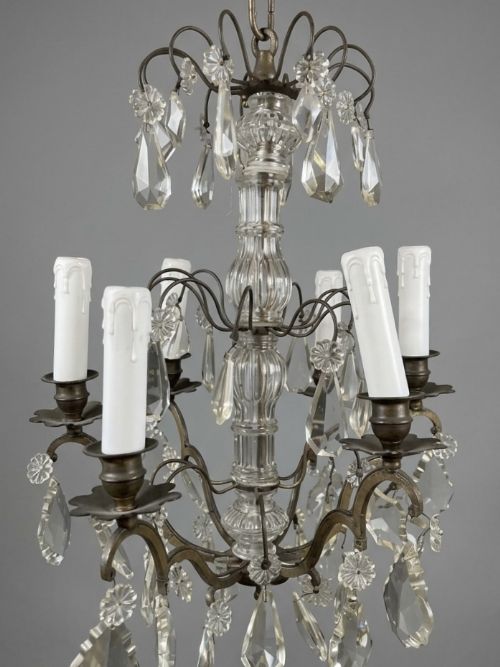
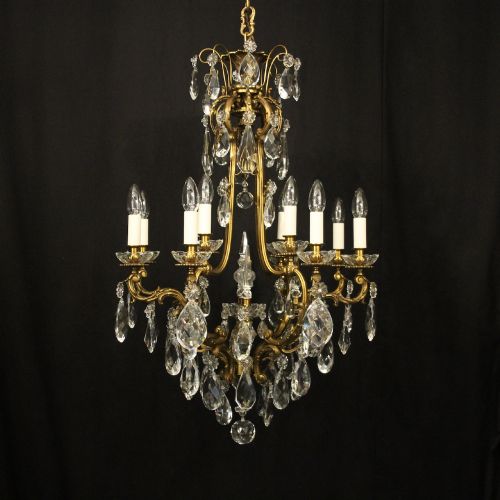
When you search for a bronze and crystal fitting, you discover lighting fixtures designed to anchor grand interiors with structural weight and reflective sparkle. The selection centres heavily on elaborate French chandeliers, alongside ceiling lights, pendant lights, and table lamps.
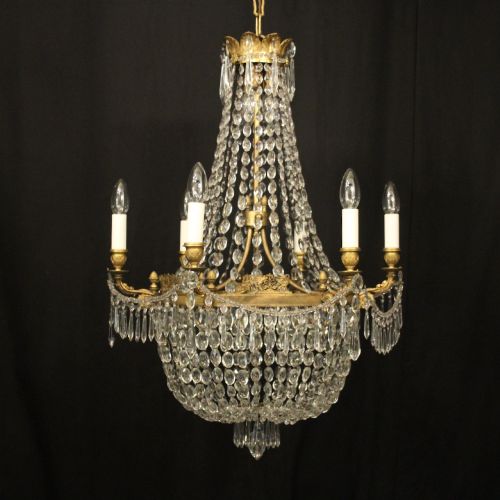
Most examples originate from the nineteenth and early twentieth centuries, spanning periods from the Victorian era through the nineteen-thirties. Forms range from multi-branch chandeliers with tent and waterfall configurations to intimate basket designs and table lamps.
How they were made
Foundations rely on cast metal frameworks utilising bronze, gilt bronze, brass, iron, and spelter to support the heavy components. Metal elements frequently receive surface gilding or silver gilding to enhance the reflective quality under artificial light.
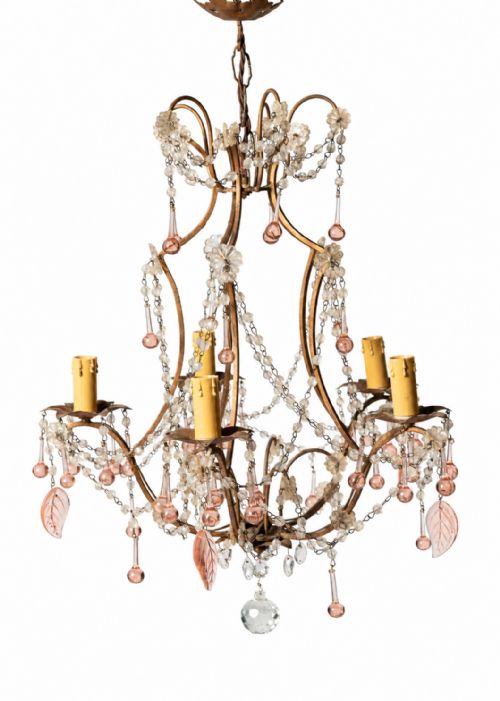
Lighting assemblies incorporate cut crystal, cut glass, and plain glass configured into drops, spikes, and beads. Specialised motifs such as coloured crystal fruits introduce decorative variety to the glass elements.
Bronze and Crystal Fitting Retail Price Guide 2026
Typical asking prices for bronze and crystal fitting among the pieces listed under this phrase on Sellingantiques today, from the lower quarter to the upper quarter. They describe what is for sale here now, not the wider market.
Listings feature items spanning from the eighteen-hundreds through the nineteen-thirties, incorporating Victorian examples alongside French Empire and Rococo revival styles.
What varies in quality
The precision of metal casting defines the distinction between standard and exceptional examples, where finely chiselled bronze details exhibit sharper relief and greater depth than simpler casts. Heavier gauge metal frames provide the structural integrity required to support extensive tiers of glass drops safely.
The clarity and cut of the crystal components govern the optical performance of the piece. Superior fixtures utilise high-lead cut glass that refracts light with intense prismatic brilliance, supported by uniform hand-cut droplets rather than moulded substitutes.
Baccarat
The Bronze and Crystal Fitting Glossary
- Tent and waterfall
- A chandelier construction featuring an upper conical canopy of strung crystals dropping down to a wider bowl or ring below. This arrangement creates a cascading curtain of reflective glass.
- Birdcage
- A rounded metal frame skeleton resembling an aviary, densely hung with crystal drops and beads. The internal candle arms sit shielded within the glittering glass enclosure.
- Spelter
- A zinc alloy frequently utilised as a substitute for bronze in casting figural components and decorative mounts. It takes gilding well but possesses a lighter weight and softer surface.
- Gilt bronze
- Bronze metal treated with a thin layer of gold applied through fire-gilding or electroplating. This finish protects the underlying metal while providing a rich golden lustre.
Bronze and Crystal Fitting: Frequently Asked Questions
How do I clean a crystal chandelier?
Maintenance requires gentle hand-washing of individual glass drops using a mild solution of warm water and professional glass cleaner. Technicians support the metal frame while cleaning to prevent strain on historical soldered joints.
Leaving components attached risks damage to the delicate brass pins securing the glass. Dry each drop thoroughly with a lint-free cloth before rehanging.
Can these chandeliers be rewired for modern homes?
Professional electricians adapt internal wiring to meet contemporary safety standards without altering the external historical appearance. Rewiring involves replacing perished fabric or rubber cables with modern insulated flex.
Existing candle tubes receive upgrades to accommodate standard lamp bases. The structural metal framework remains unmodified during this process.
How do I determine the correct size?
Proportion dictates selection by balancing the diameter and drop length against the ceiling height and floor area of the room. Large multi-tier arrangements require substantial vertical clearance to hang properly.
Smaller basket lights suit lower ceilings and intimate spaces where expansive branch configurations overwhelm the room. Measuring the ceiling height prevents purchasing fixtures with excessive drop.
What indicates a nineteenth-century origin?
Dating relies upon examining the casting methods, fastener types, and hand-cut facets on the crystal elements. Nineteenth-century frames utilise heavy hand-finished bronze castings fastened with threaded pins rather than modern screws.
Glass drops from this era feature hand-polished pontil marks and irregular facet cuts. Period assembly techniques distinguish these pieces from later revival items.