



British Hunting Art
British hunting art captures the pageantry, dogs, and horses of the field across canvas, paper, and watercolour.
British Hunting Art
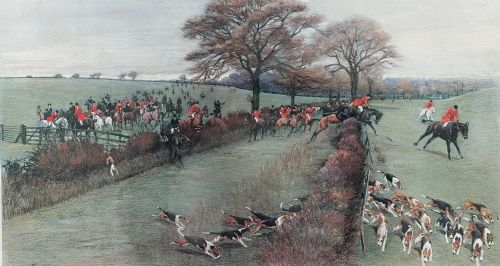
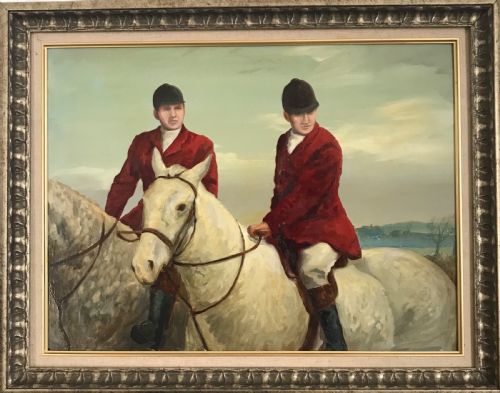
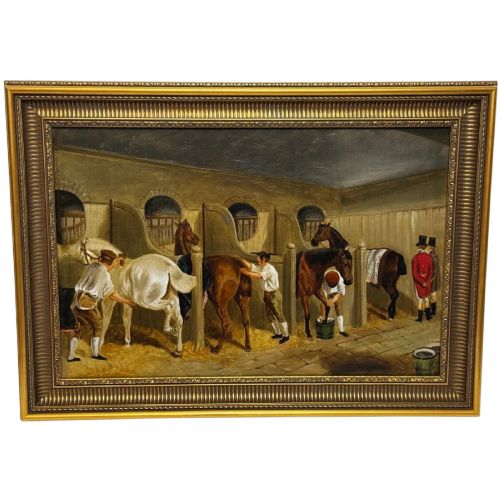
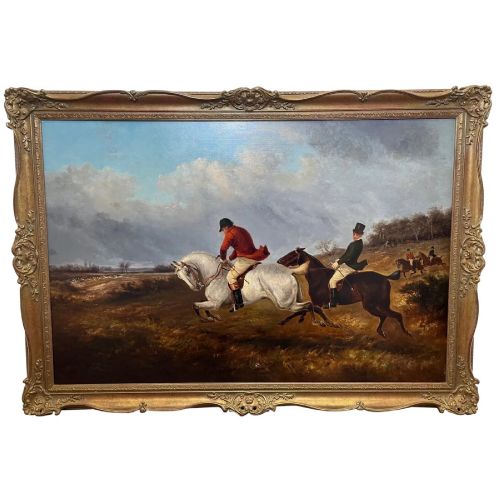
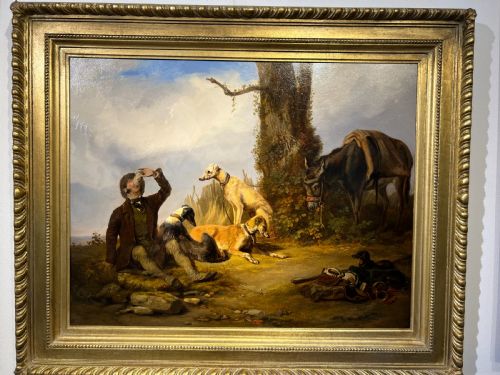
When you search for british hunting art, you encounter a specialised tradition recording horses, hounds, and countryside pursuits from the nineteenth and twentieth centuries. These works range from large oil paintings on canvas depicting galloping packs to detailed watercolours and original prints of individual hounds and riders.
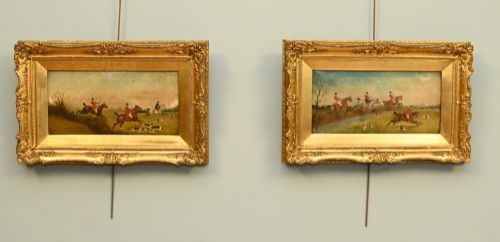
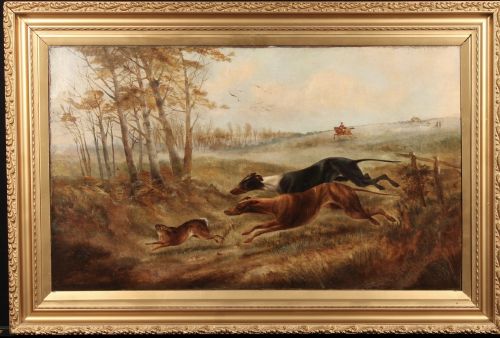
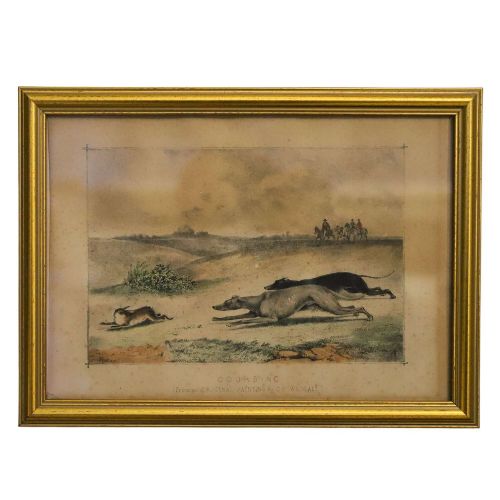
The most common pieces on this page stem from the Victorian and Edwardian eras, spanning framed watercolours, lithographs, and oil paintings. Subjects frequently centre on fox hunting scenes, hare coursing, and equestrian portraits framed in wood and gilt wood.
Materials and methods
Artists relied primarily on oil paint applied to canvas, and watercolour or ink on paper, often finished with protective glass and framed in wood or gilt wood. Printmakers produced original lithographs and engravings to distribute popular sporting scenes widely.
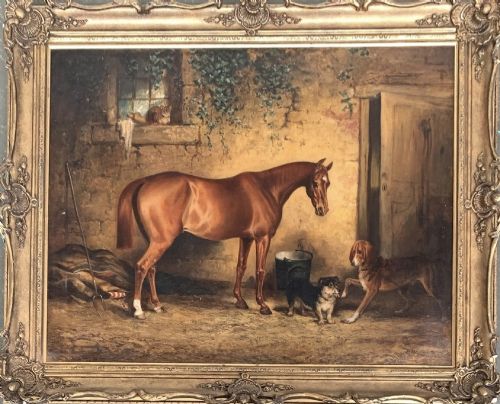
Technique focused on accurate anatomical rendering of horses, greyhounds, spaniels, and hounds, set against expansive country landscapes and rural backgrounds.
British Hunting Art Retail Price Guide 2026
Typical asking prices for british hunting art among the pieces listed under this phrase on Sellingantiques today, from the lower quarter to the upper quarter. They describe what is for sale here now, not the wider market.
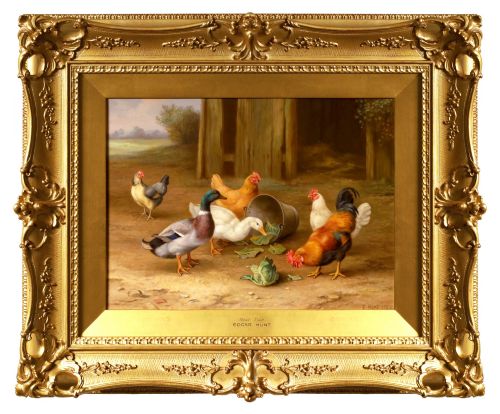
Canine subjects range from working spaniels at mealtime to packs of hounds named across hunting prints.
Assessing quality
Quality rests upon the artist's command of movement and anatomy, particularly in capturing the dynamic tension of horses galloping and hounds in full cry. Finer works display meticulous brushwork in the animal coats and landscape details, alongside balanced composition.
The integrity of the original framing, the preservation of the paper or canvas, and the clarity of lithographic prints or watercolours distinguish the finer examples from standard decorative pieces.
Henry Barraud·Thomas Smythe·Edgar Hunt·Sir Edwin Henry Landseer·Charles Johnson Payne Snaffles·Arthur Wardle·George Wright·Philip Henry Rideout·George Armfield·John Sanderson Wells·Herbert Dicksee·Thomas Ivester Lloyd·Heywood Hardy·George Goodwin Kilburne·Frank Algernon Stewart·Godfrey Douglas Giles
The British Hunting Art Glossary
- Lithograph
- A print produced by drawing on limestone or a metal plate with a greasy substance, allowing ink to adhere to the drawn areas for transfer onto paper.
- Watercolour
- A painting method where fine pigment is suspended in a water-soluble binder, commonly applied to paper to achieve translucent tones.
- Equestrian
- Pertaining to horses, horse riding, and the representation of horses within art and portraiture.
- Sporting art
- A genre dedicated to the depiction of field sports, including hunting, racing, shooting, and associated animals.
- Chromolithograph
- A colour lithograph produced using multiple stones or plates, one for each colour applied to the print.
British Hunting Art: Frequently Asked Questions
What periods do these paintings span?
The works on this page span from the nineteenth century through the Edwardian period and into the mid-twentieth century.
Victorian and Edwardian pieces dominate the selection, alongside items from the nineteen-tens, twenties, and up to nineteen-sixty.
How were these artworks framed?
Period pieces are typically housed in wooden frames, frequently featuring ornate gilt wood finishes that complement the traditional subject matter.
Original watercolours and prints generally sit beneath protective glass to safeguard the paper surface.
What subjects feature most often?
Fox hunting scenes, including full cry and hunt suppers, appear repeatedly alongside portraits of hunters, spaniels, hounds, and hare coursing.
Coaching scenes and rural countryside landscapes also form a core part of the available imagery.
How do prints differ from original paintings?
Original paintings feature direct applications of oil or watercolour by the artist's hand onto canvas or paper.
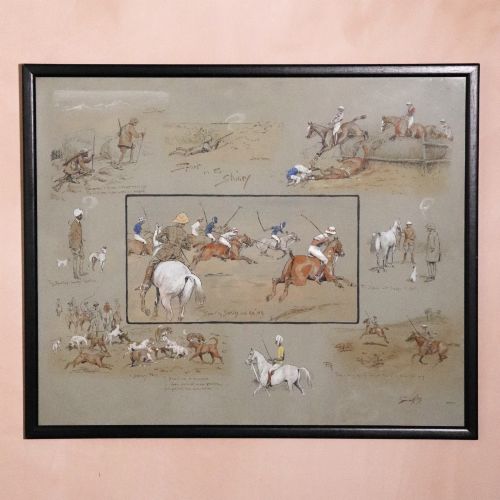
Prints and lithographs, such as those by Snaffles, are reproduced works that were often published in limited editions for collectors.