



Brass Two Branch Sconces
Brass two branch sconces bring warm metalwork and balanced double arms to period interiors.
Brass Two Branch Sconces
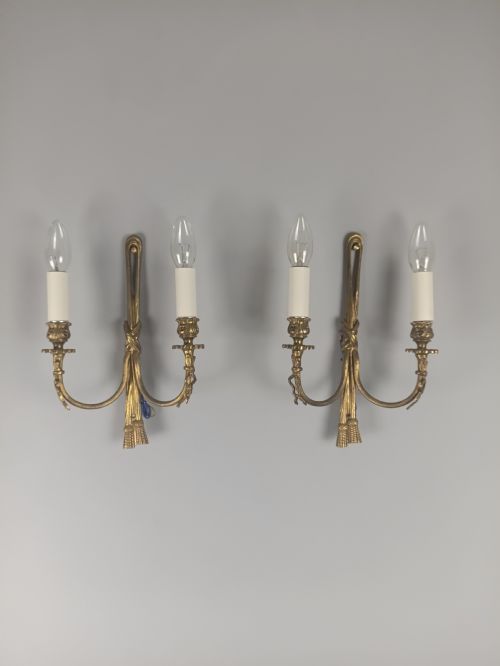
Brass two branch sconces are twin arm wall lights designed to hold candles or electric bulbs, mounting directly to timber or plaster surfaces. When collectors search for brass two branch sconces, they encounter pairs and sets originating from French, English, and Dutch workshops across the nineteenth and early twentieth centuries.
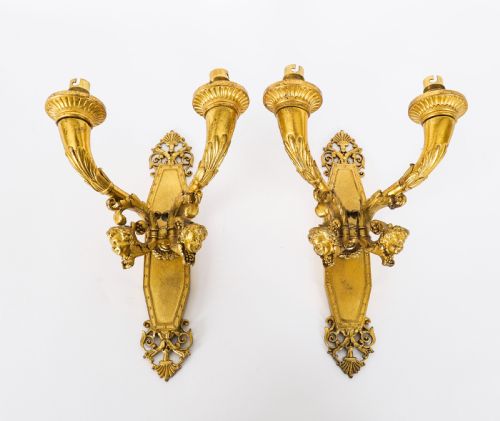
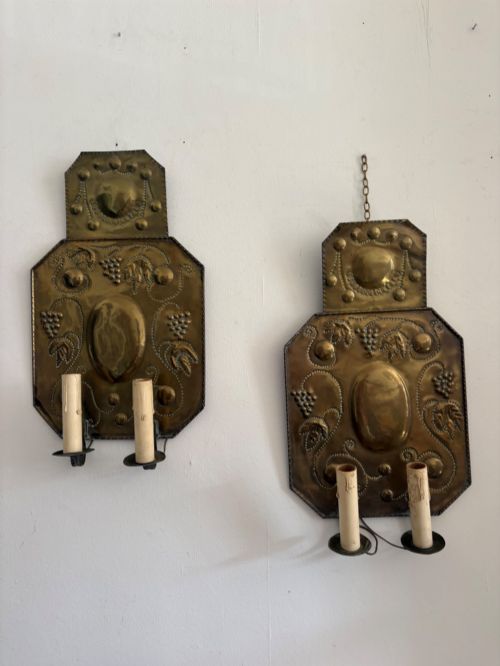
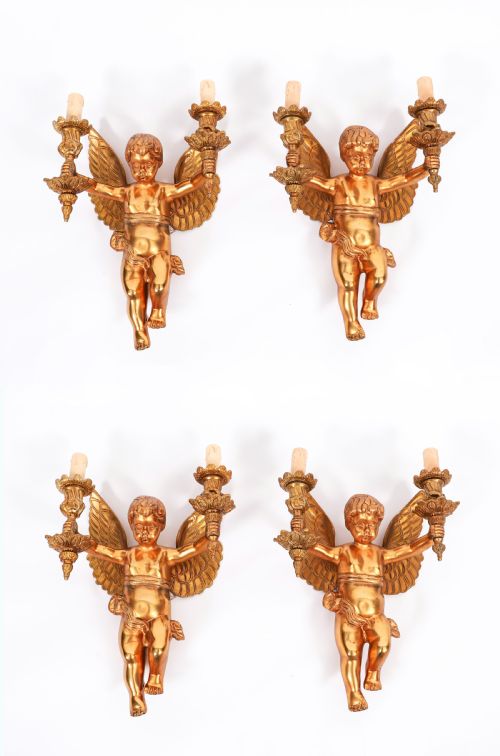
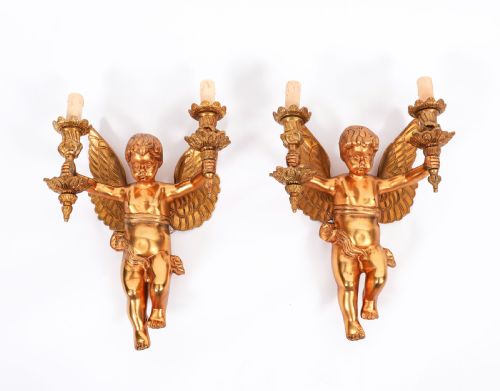
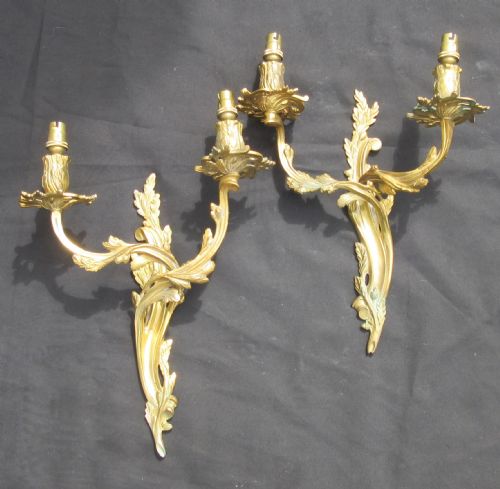
The typical examples on this page span revival aesthetics including Louis XIV, Louis XVI, Rococo, and Adam styles, featuring cast backplates and dual candle arms. Formats range from plain brass and repousse work to elaborate ormolu and gilded bronze castings populated by cherubs and floral motifs.
Materials and construction methods
The primary material is cast brass, often finished with gilt layers, ormolu, or gold leaf to enrich the surface texture and catch the light. Workshops also utilised bronze and metal alloys, shaping backplates and arms through sand casting before hand-chasing the finer details.
Repousse techniques appear on Dutch pieces, where sheet brass is hammered from the reverse to create raised decorative relief patterns. Components are typically joined via threaded fixings or brazing, supporting the twin candle branches projecting from the central wall plate.
Several pairs enlist small cast cherubs to peek out from beneath the candle branches, keeping watch over the parlour walls.
Assessing quality in period wall lights
The weight and gauge of the brass or bronze indicate the structural integrity of the sconce, with heavier castings providing rigid support for the dual arms. Surface finishes also differentiate pieces, from durable fire gilding and ormolu to simpler applied lacquers.
The Brass Two Branch Sconces Glossary
- Ormolu
- Gilded bronze produced by applying a mercury and gold amalgam to a bronze object and heating it to drive off the mercury. This technique creates a rich, durable golden surface seen on high-end French revival lighting.
- Repousse
- A metalworking technique where the artisan hammers sheet metal from the reverse side to form a raised design in relief. It is characteristic of traditional Dutch brasswork.
- Girandole
- An ornamental branched wall light or sconce fitted with reflective backplates or mirrors to amplify the light. The term denotes pieces designed to hold multiple candles.
- Backplate
- The flat or shaped metal section of a sconce that fastens securely to the wall. It supports the projecting candle branches and often carries the primary decorative style.
- Louis XIV Revival
- A nineteenth-century design movement copying the heavy, symmetrical, and ornate grandeur of the late seventeenth-century French court. Pieces in this style feature formal classical motifs.
Brass Two Branch Sconces: Frequently Asked Questions
How do I wire old sconces?
Most period sconces require modern internal wiring to meet current safety standards, which involves threading heat-resistant flex through the arms and backplate. Professional electricians can adapt the lampholders to suit standard modern bulbs without altering the exterior brass.
When working with antique metalwork, care must be taken not to damage historic patination or force threaded components that have settled over decades.
Were these originally for candles?
Many nineteenth-century sconces were manufactured specifically to hold wax candles before being converted to gas or electricity in later decades. The drip pans and shallow nozzles on the arms indicate their original function for containing melting wax.
Conversion to electricity often involves inserting slim candle tubes over modern lamp fittings to preserve the traditional visual balance of the twin arms.
How do I clean brass sconces?
Dusting with a dry, soft cloth is sufficient for routine maintenance to prevent grime buildup in the chased recesses of the metal. Aggressive metal polishes should be avoided on gilt brass and ormolu, as abrasive compounds strip away the historic gold surface layers.
Warm soapy water on a damp cloth can remove stubborn grease, provided the piece is dried thoroughly afterwards to prevent spotting.
How do I date these wall lights?
Dating relies on examining the casting methods, screw threads, fixing types, and stylistic indicators that align with specific revival periods. Hand-cut screws and heavy sand-casting marks generally point towards nineteenth-century production, while lighter stamped components suggest twentieth-century manufacture.
Comparing the decorative vocabulary, such as Rococo asymmetry or Adam neoclassical urns, against known design periods helps narrow down the decade of origin.