


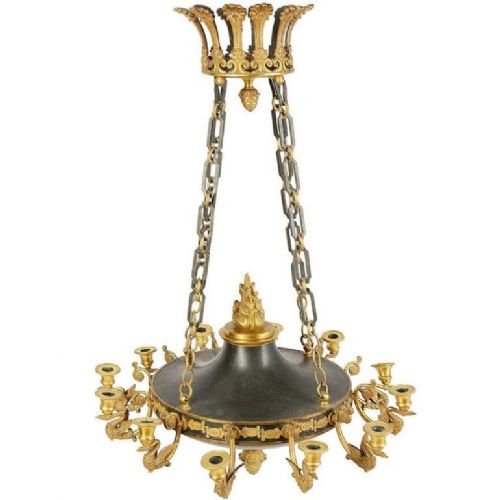


Brass Lustre Chandelier
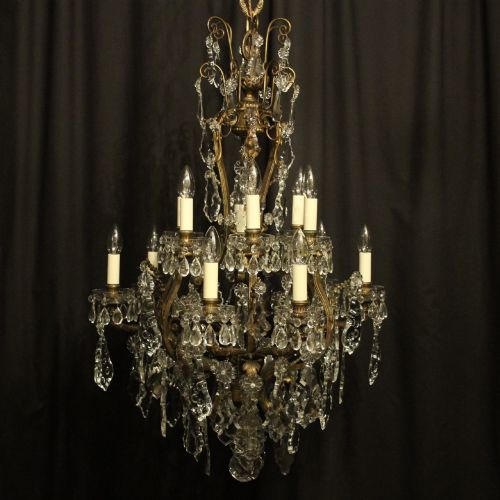
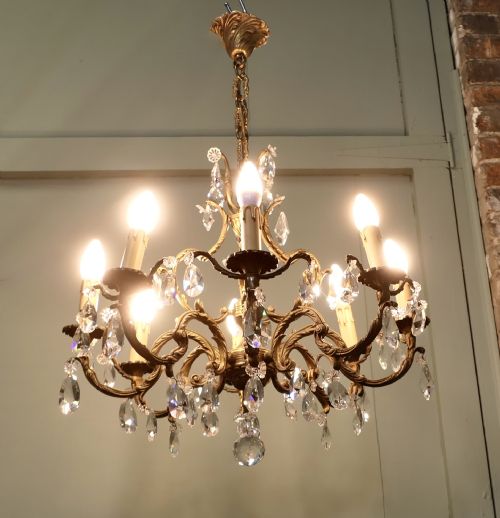
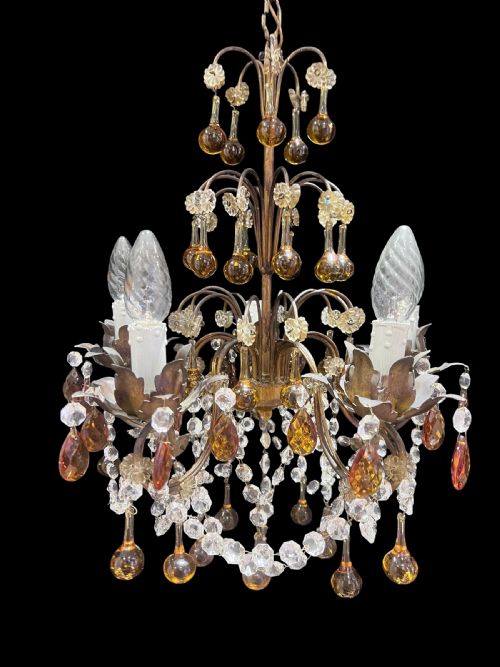
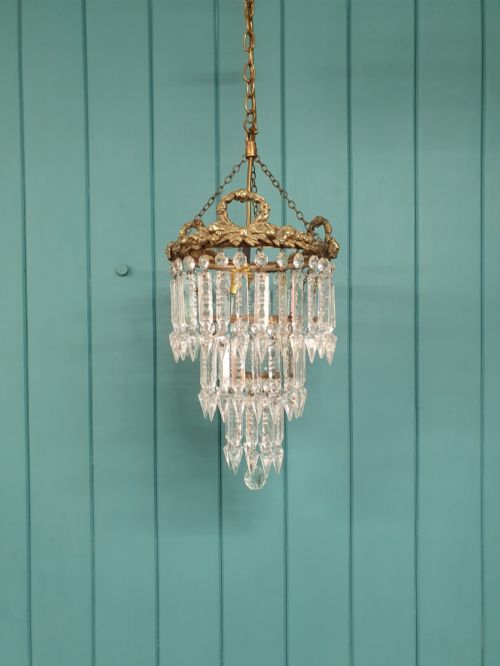
A brass lustre chandelier catches the room's light through cut glass drops and brings period elegance to a ceiling.
Brass Lustre Chandelier
A brass lustre chandelier combines a metallic frame with suspended glass or crystal drops designed to reflect and multiply candlelight or electric illumination. When you search for a brass lustre chandelier, you are looking at fixtures spanning the nineteenth century through the nineteen-thirties, with early twentieth-century and Edwardian examples appearing frequently on this page. These pieces often draw on French Chateau, French Empire, and Italian antique styles.
The forms range from compact nine-inch small chandeliers to substantial multi-armed fixtures carrying eight, nine, or twelve lights. Alongside ceiling lights, the selection includes related forms such as table lustre candelabras hung with cut glass drops. Origins lean toward French and Italian workshops, bringing distinct decorative vocabularies to the brass and bronze frameworks.
How they were made
Frames rely on brass, gilt brass, gilded bronze, gilt metal, and nickel-plated brass to provide a sturdy structural skeleton. Metal components are cast, chased, or plated before assembly into arms and central stems.
Lustres, drops, and crystals made from glass or crystal glass are hand-hung from the metal armatures using wire or pinned connections. This combination of cast metalwork and suspended refractive glass defines the construction of these fixtures.
Brass Lustre Chandelier Retail Price Guide 2026
Typical asking prices for brass lustre chandelier among the pieces listed under this phrase on Sellingantiques today, from the lower quarter to the upper quarter. They describe what is for sale here now, not the wider market.
Materials across these listings span brass, gilt brass, gilded bronze, gilt metal, nickel-plated brass, glass, crystal, and crystal glass.
What varies in quality
Quality rests in the crispness of the metal casting and the depth of the gilding or plating on the brass and bronze framework. Finer pieces display sharply defined ornamentation and heavier metal gauges that support multiple lights securely.
The cut and clarity of the crystal or glass drops also separate tiers of production, with hand-cut facets catching light more sharply than moulded alternatives. The integration between the hanging lustres and the main body shows the care taken during initial manufacture.
The Brass Lustre Chandelier Glossary
- Lustre
- A pendant drop of cut glass or crystal suspended from a lighting fixture to refract light. These drops hang in quantity around the arms and crown.
- Gilded Bronze
- Bronze metal coated with a thin layer of gold leaf or applied gold amalgamation. This material offers a rich surface texture seen on nineteenth-century frames.
- Nickel Plated Brass
- A brass base metal coated with a layer of nickel for a silvery, corrosion-resistant finish. Edwardian makers utilised this plating for a brighter metallic tone.
- Candelabra
- A branched candlestick holder designed for multiple light sources. Some pieces double as table lustres with hanging glass drops.
- French Empire
- A neoclassical design style characterised by military motifs, classical symmetry, and rich ornamentation. Lustres from this influence favor structured geometry.
Brass Lustre Chandelier: Frequently Asked Questions
How do I clean a lustre chandelier?
Cleaning requires removing the glass drops individually and washing them in warm soapy water before drying with a lint-free cloth. The brass frame can be dusted gently with a soft brush.
Avoid harsh chemical cleaners on the gilded or plated metal surfaces to preserve the original finish.
Can these chandeliers take modern wiring?
Most antique fixtures accept rewiring by a qualified electrician to meet current safety standards. The internal channels or central tubes accommodate modern flex.
Retaining the original sockets is sometimes possible, but modern lamp holders ensure safe daily use.
How do I date an Edwardian chandelier?
Edwardian pieces often feature nickel-plated brass or lighter brass frames influenced by early twentieth-century tastes. The proportion of the arms and the cut of the glass drops align with the period between nineteen-aught and nineteen-ten.
Comparing the mounting hardware to known examples helps confirm the decade of manufacture.
Are all glass drops original?
Replacement drops are common due to breakage over a century or more of use. Examining the wear around the hanging holes reveals age consistency across the glass.
Matched cuts and uniform glass tinting indicate a cohesive set of lustres.