





Brass Hallway Furniture
Brass hallway furniture brings together utilitarian metalwork and robust timbers to organise the entrance of a home.
Brass Hallway Furniture
When you search for brass hallway furniture, you encounter a selection of umbrella stands, hall stands, console tables, and benches dating from the eighteenth century to the early twentieth century. These practical items were designed to handle wet weather and visitors' belongings in the entrance hall of a period property.
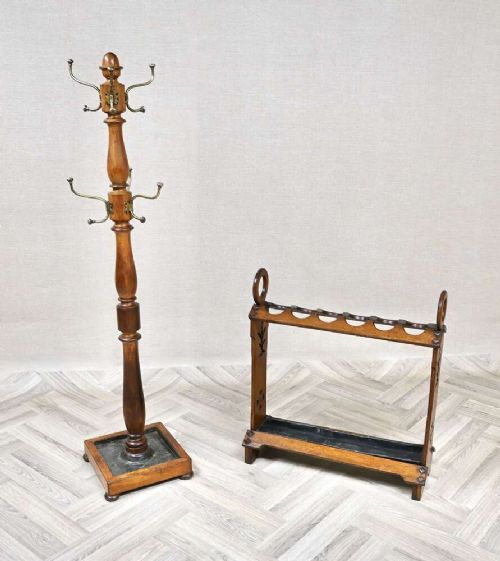
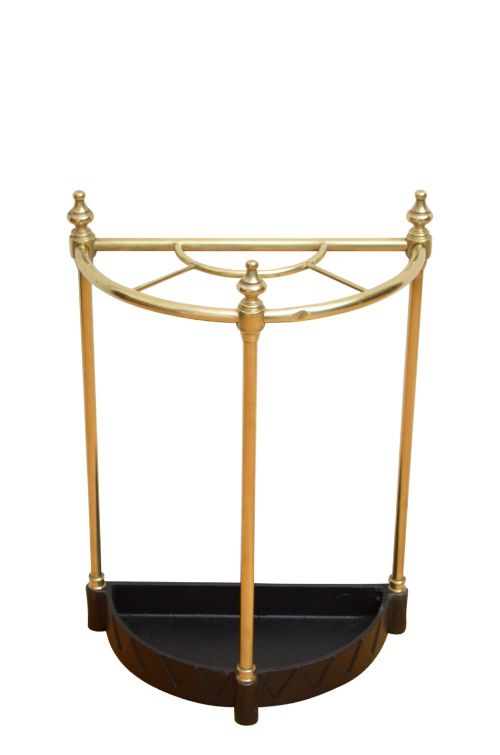
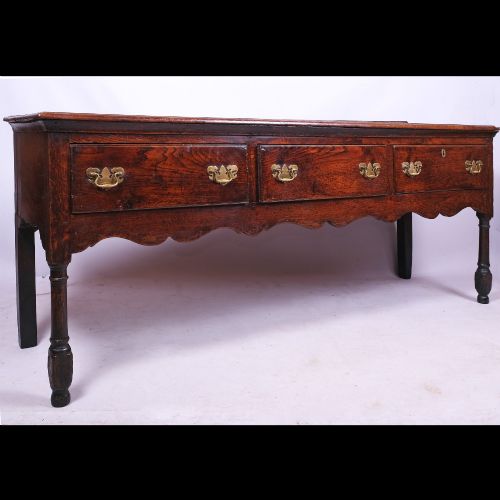
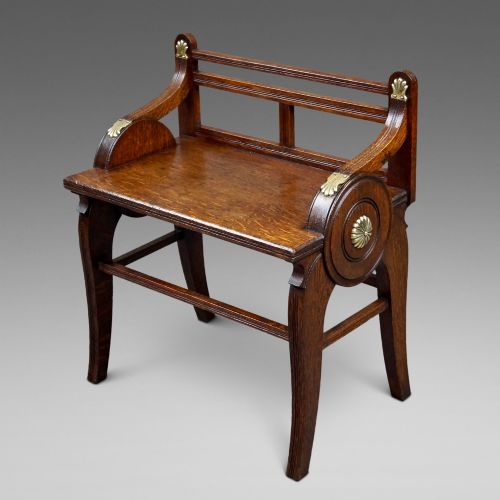
The most common forms on this page combine heavy oak, mahogany, or walnut with polished brass trays, hooks, and mounts. Pieces range from cast brass umbrella stands with dog tooth trays to large Victorian oak hall stands fitted with coat hooks and mirrors.
Materials and construction methods
Items in this category rely heavily on hardwoods such as oak, mahogany, and walnut, paired with cast and sheet brass for structural mounts, hooks, and drip trays. Iron and ceramic components also appear alongside wood to manage moisture from umbrellas and walking sticks.
Joinery methods reflect the domestic requirements of the period, utilising sturdy frames, panelled backs, and secure brass fixings designed to withstand daily use. Metal elements are frequently cast, turned, or mounted directly onto timber surfaces with threaded screws.
Brass Hallway Furniture Retail Price Guide 2026
Typical asking prices for brass hallway furniture among the pieces listed under this phrase on Sellingantiques today, from the lower quarter to the upper quarter. They describe what is for sale here now, not the wider market.
Several umbrella stands include patent numbers cast directly into the metal, proving that Victorian inventors took puddle management very seriously indeed.
Distinguishing quality in hall pieces
The distinction between tiers of quality rests on the selection of timber and the weight of the metal hardware. Heavy brass mountings, thick gauge drip trays, and dense quarters of oak or mahogany signal a higher standard of manufacture.
Subtlety of proportion and the integrity of the original fittings determine the desirability of a piece. Examples retaining their patent numbers, original bevelled mirror plates, and matched brass hooks hold greater interest than those with replaced hardware.
James Shoolbred & Co.
The Brass Hallway Furniture Glossary
- Umbrella stand
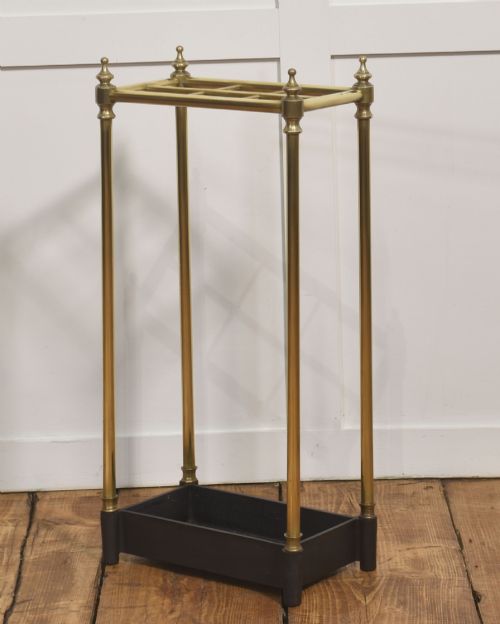
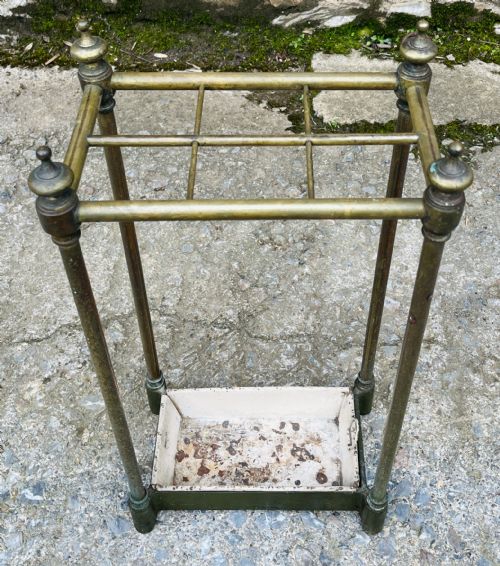
- A receptacle designed to hold wet umbrellas and walking sticks, often featuring a metal tray at the base to catch water. These are commonly constructed from cast brass, iron, or timber with brass mounts.
- Campaign style
- Furniture designed to be portable for military officers, typically featuring brass corner brackets, flush handles, and collapsible frames. This aesthetic appears on mahogany console tables and sideboards.
- Hall stand
- A tall piece of entrance furniture combining a mirror, coat hooks, umbrella storage, and occasionally a small seat or central cupboard. They are frequently executed in carved Victorian oak or walnut.
- Drip tray
- A shallow metal basin placed at the base of an umbrella or stick stand to protect flooring from moisture. In better pieces, these are removable for cleaning.
Brass Hallway Furniture: Frequently Asked Questions
What is brass hallway furniture?
Brass hallway furniture encompasses utilitarian items designed for the entrance of a home, combining solid timbers with brass hooks, trays, and structural mounts. These include umbrella stands, hall seats, console tables, and coat racks.
Such pieces were made to handle the practical demands of everyday coming and going, providing a dedicated place for wet weather gear and outerwear.
How were umbrella stands used?
Umbrella and stick stands were positioned near the front door to hold walking aids, parasols, and wet umbrellas. The integrated brass or ceramic trays caught dripping water to protect wooden floors.
Many Victorian and Edwardian examples incorporate multiple compartments and heavy cast frames to prevent tipping under the weight of several heavy canes.
How do I date an oak hall stand?
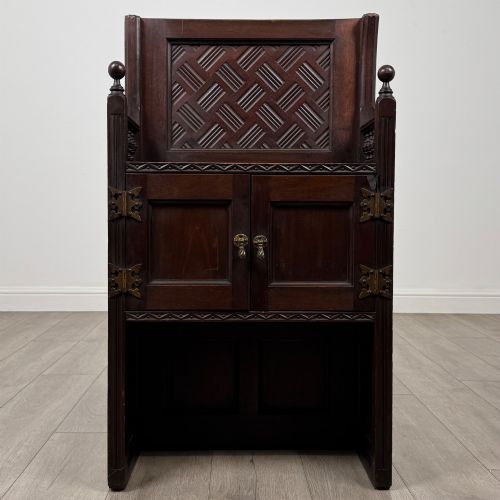
Dating an oak hall stand involves examining the style of carving, the type of hardware, and construction techniques. Pieces from the Victorian era often feature Gothic revival motifs, heavy panelling, and bevelled mirror plates.
Later Edwardian and 1920s examples tend toward simpler lines, while pieces with patent numbers or specific maker marks can be placed within tighter manufacturing decades.
Where should I place a console table?
Console tables and sideboards suit narrow hallways, landings, or entrance passages where floor space is limited. Their shallow depth allows them to sit flat against a wall without obstructing movement.
Pairing a campaign console table with a brass-mounted mirror creates a functional drop zone for keys and post near the front door.