



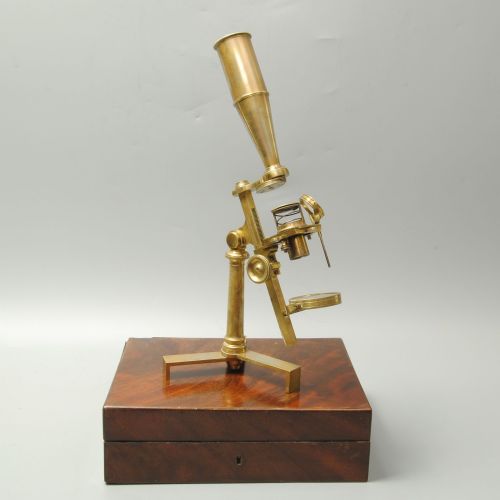


Brass Field Instrument
A brass field instrument delivers precision optics and navigation for use outdoors, built for service in the field.
Brass Field Instrument
When you search for a brass field instrument, you encounter scientific and navigational equipment, pocket spyglasses, microscopes, and medical tools designed for portability.
The pieces on this page span the Georgian, Regency, Victorian, Edwardian Military, and First World War Military periods, originating from the eighteenth, nineteenth, and early twentieth centuries.
Compasses, pocket microscopes, campaign telescopes, and surgeon's saws represent the most common forms you will meet within these listings.
Materials and construction
Makers utilised solid brass for durability and structural integrity, pairing metal frames with glass lenses and silvered metal dials.
Housing and protection relied on fitted mahogany and leather cases, which safeguarded delicate scientific and navigational gear during transit.
Brass Field Instrument Retail Price Guide 2026
Typical asking prices for brass field instrument among the pieces listed under this phrase on Sellingantiques today, from the lower quarter to the upper quarter. They describe what is for sale here now, not the wider market.
Listings incorporate brass, glass, mahogany, leather, nickel, cast iron, steel, and silvered metal across multiple periods.
Distinctions in quality
Quality rests upon the precision of the optics, the crispness of maker engravings, and the integrity of the original fitted case.
Early Georgian and Regency examples often demonstrate finer hand-finishing on brass components compared to later mass-produced military issue pieces.
French Ltd·Cary London·H Hughes and Son London·Maw London·R Field and Son Birmingham
The Brass Field Instrument Glossary
- Verner's Pattern
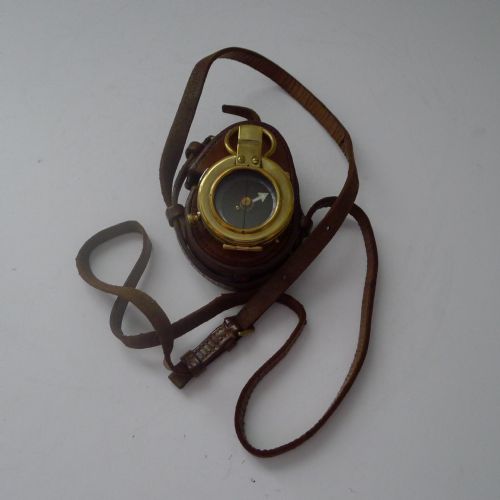
- A standard military compass design utilised by British officers during the First World War. These instruments incorporate sighting mechanisms tailored for field sketching and map reading.
- Campaign telescope
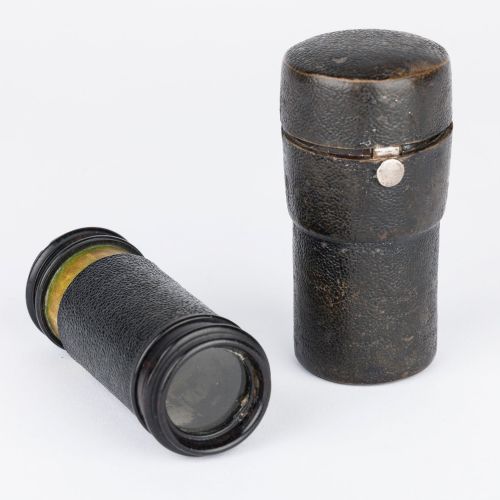
- A portable optical instrument featuring collapsible brass barrel sections designed for field use. They often include leather exterior wraps to protect the metal during transport.
- Pocket microscope
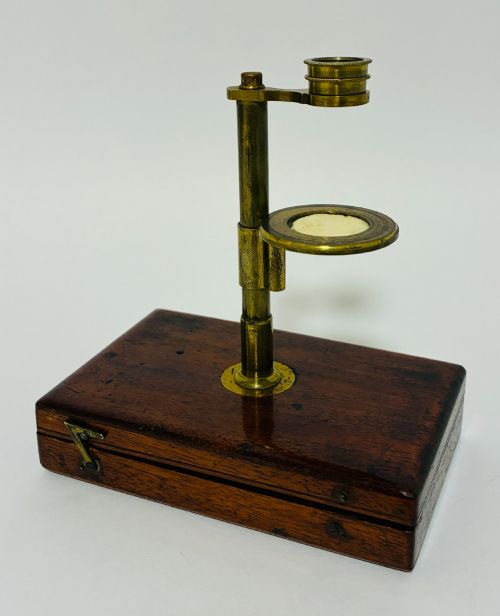
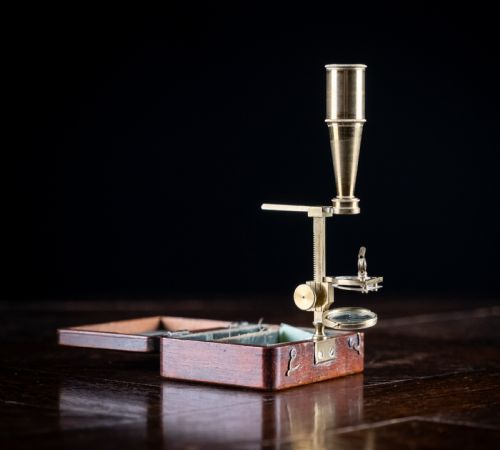
- A compact scientific instrument built for field botanists and medical practitioners. They fold into small cases for portability without sacrificing magnification power.
- Mine's compass
- A specialised directional instrument utilised in geological and subterranean surveying. These pieces feature robust brass construction to withstand rugged working environments.
Brass Field Instrument: Frequently Asked Questions
What is a brass field instrument used for?
These instruments served practical outdoor functions ranging from navigation and troop direction to medical surgery and botanical observation. Officers, scientists, and engineers relied on them for portable measurement and magnified sight.
Today, they function primarily as historic display objects that reflect the technological developments of their respective periods.
How do I identify a military issue piece?
Military pieces often bear specific pattern names, broad arrow marks, or maker inscriptions associated with armed forces contracts. First World War and Victorian campaign items usually feature rugged finishes suited for active service.
Examine the casing and engraving styles to determine if an object was commissioned for official military deployment.
How should I clean brass instruments?
Historic brass benefits from minimal intervention to preserve its original patina and surface character. Avoid harsh chemical polishes that strip away age-appropriate oxidation and maker marks.
A gentle dust with a soft, dry cloth is normally sufficient for ongoing maintenance.
Are these instruments still accurate?
While many mechanical components remain functional, these pieces are collected as historical artefacts rather than reliable modern tools. Compass needles may be sluggish, and optical coatings reflect nineteenth-century standards.
Treat them with care to protect delicate glass lenses and internal pivots.