




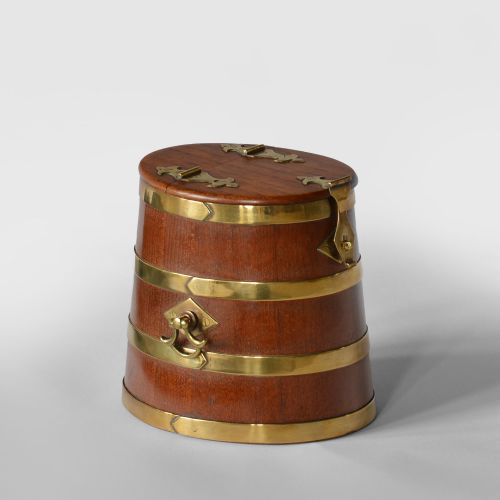


Brass Bound Caddy
When you search for a brass bound caddy, you are looking at timber storage containers reinforced with metal straps that bring practical strength and crisp linear contrast.
Brass Bound Caddy
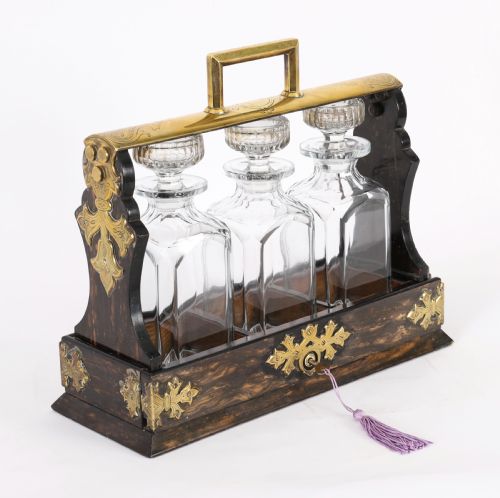
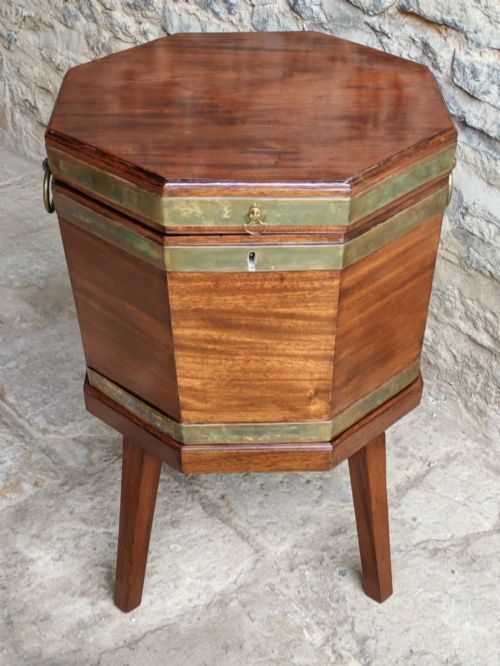
A brass bound caddy brings together timber bodies and metal reinforcement, spanning forms from miniature rum barrels to tea caddies and cellarettes. These items serve as functional storage pieces built to secure contents whilst displaying prominent metal strapping.
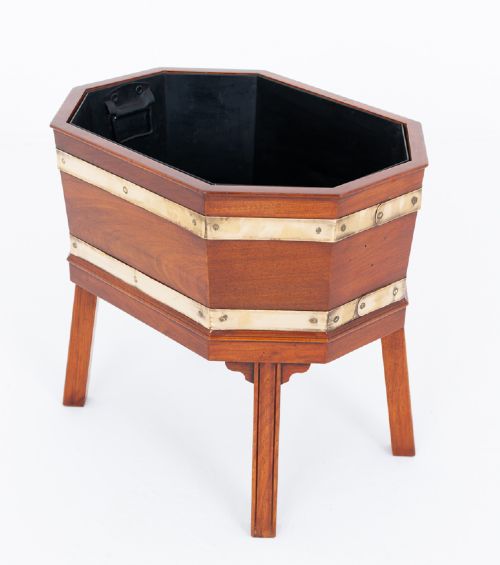
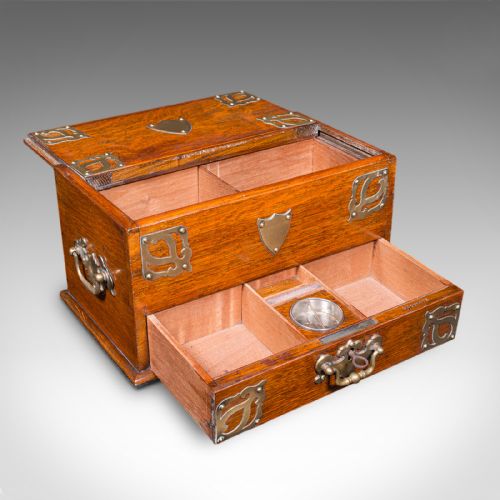
The versions you meet on this page cross multiple eras, including Georgian, Victorian, and Edwardian periods. Examples extend across various shapes such as octagonal wine coolers, oval cellarettes, dome top tea caddies, and smokers boxes.
Makers utilised woods like mahogany, oak, padouk, burr walnut, and coromandel, pairing them with brass mountings and occasional cut crystal decanters. This combination of materials runs through Asian antique lacquer boxes and Regency style revival pieces alike.
How they were made
Construction relies on solid timbers and veneers shaped into boxes, barrels, and octagonal coolers, often employing coopered staves for cylindrical forms. Skilled joinery brings together materials such as mahogany, oak, and exotic woods like coromandel and padouk.
Metalworking techniques shape brass into protective edge bands, corner braces, and carrying handles, secured firmly to the wooden bodies with small fixings. Surface finishes highlight the natural grain of the wood alongside the polished brightness of the metal mounts.
Brass Bound Caddy Retail Price Guide 2026
Typical asking prices for brass bound caddy among the pieces listed under this phrase on Sellingantiques today, from the lower quarter to the upper quarter. They describe what is for sale here now, not the wider market.
Listings feature mahogany, oak, burr walnut, coromandel wood, and padouk, combined with brass mounts across Georgian, Victorian, and Edwardian periods.
What varies in quality
Quality rests in the precision of the joinery and the snugness with which the brass banding follows the contours of the timber body. Heavier gauge metal and select timber veneers like burr walnut or coromandel indicate elevated standards of production.
The integrity of the interior fittings, whether crystal decanters within a tantalus or divided compartments inside a tea caddy, separates standard utilitarian examples from more ambitious workshop output.
The Brass Bound Caddy Glossary
- Cellarette
- A lockable container used for storing wine and bottles, often heavily bound in brass for strength during transport and service.
- Coopered
- Built from vertical wooden staves fitted together with metal bands, much like a traditional barrel.
- Padouk
- A dense tropical hardwood with a rich reddish brown tone, utilised in finer eighteenth century furniture and caddies.
- Tantalus
- A locked stand holding decanters that displays the contents while preventing unauthorised access to the liquor.
- Coromandel
- A heavy, dark decorative timber featuring distinctive contrasting streaks, prized for nineteenth century luxury boxes.
Brass Bound Caddy: Frequently Asked Questions
What is a brass bound caddy?
A brass bound caddy is a wooden container reinforced with metal straps for strength and visual contrast. These pieces range from tea boxes to wine coolers and decorative chests.
They combine timber construction with protective metal mounts to secure valuable contents while remaining portable.
How were these caddies used?
Original uses included holding dry tea leaves, storing wine bottles near the dining table, or keeping smoking accessories together. The locked compartments protected expensive provisions from household staff.
Over time, many of these containers transitioned from utilitarian storage to decorative display items in reception rooms and studies.
How do I date a piece?
Dating relies on observing the timber species, construction methods, and the style of the brass mounts. Eighteenth century examples often feature mahogany and octagonal profiles, while Victorian pieces incorporate coromandel or elaborate crystal.
Comparing the hand cut joinery and the thickness of the brass strapping helps distinguish Georgian production from later nineteenth and twentieth century revivals.
How do I care for wood and brass?
Maintain the timber surfaces with appropriate wax polishes to preserve the natural grain and prevent the wood from drying out. Clean the metal mounts gently to manage tarnish without disturbing the surrounding polish.
Keep these items away from direct sunlight and sudden temperature changes to protect the veneers and prevent warping.