



Brass and Wood Stick Stand
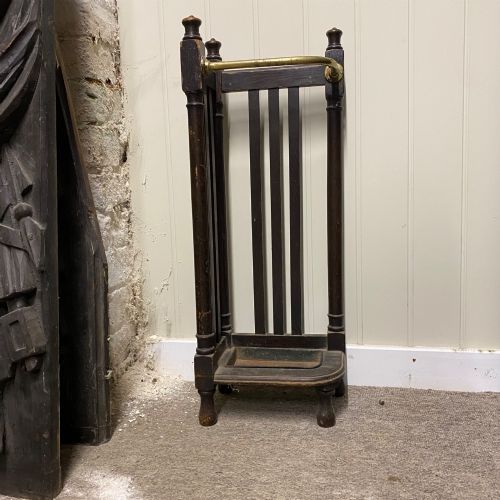
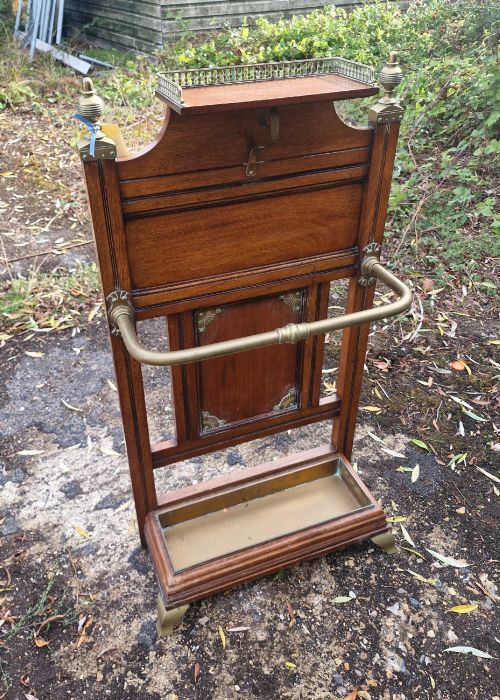
These brass and wood stick stand examples combine sturdy timber with bright metal mounts to organise hallway clutter with period character.
Brass and Wood Stick Stand
A brass and wood stick stand brings together warm timber frames and polished metal elements to hold walking canes, umbrellas and hall furniture. The selection on this page draws primarily from the Victorian and late nineteenth-century eras, alongside Georgian and Edwardian examples.
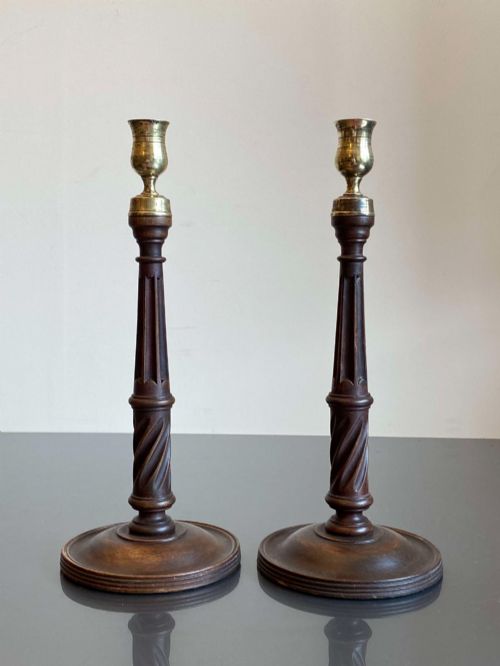
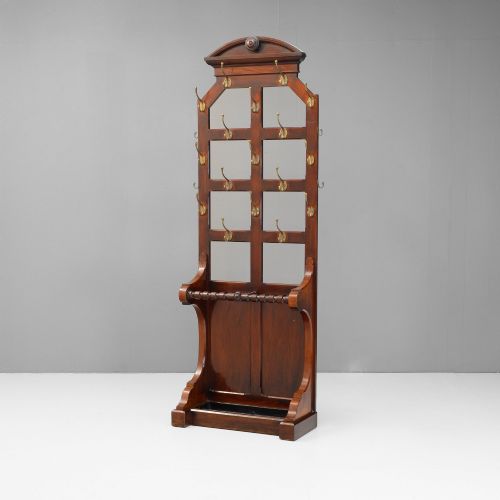
Most entries take the form of coopered barrels, narrow hall stands or dedicated umbrella racks shaped from mahogany and oak. Alongside these, related hall furnishings and turned candlesticks appear in timber mounted with brass details.
Originating largely from nineteenth-century English workshops, these pieces served practical hallway duties in period homes. Buyers will encounter both barrel-shaped variants and upright frame designs utilising robust brass loops and trays.
Materials and construction methods
Makers constructed these pieces using solid timbers such as mahogany and oak, frequently enhanced with coopered staves or turned wooden shafts. Coopered barrels rely on tight-fitting wooden staves bound by heavy brass bands to hold wet umbrellas safely.
Metal components include cast brass mounts, liner trays and umbrella loops that provide structural durability against dripping water. Turned mahogany and oak elements demonstrate traditional joinery and lathe work typical of nineteenth-century cabinet making.
Brass and Wood Stick Stand Retail Price Guide 2026
Typical asking prices for brass and wood stick stand among the pieces listed under this phrase on Sellingantiques today, from the lower quarter to the upper quarter. They describe what is for sale here now, not the wider market.
Some nineteenth-century barrels utilised cooperage techniques originally designed for holding ale, repurposed to keep muddy boots and damp umbrellas off the hallway floor.
Distinguishing quality in period pieces
Quality rests upon the choice of timber and the precision of the brass work integrated into the frame. Heavier gauges of brass and well-figured mahogany or oak distinguish superior pieces from standard utilitarian items.
The integrity of the construction, particularly in coopered barrels and multi-part hall stands, dictates the overall standard. Original metal linings and robust internal drip trays indicate higher craftsmanship.
Shoolbred
The Brass and Wood Stick Stand Glossary
- Coopered
- A method of construction using closely fitted wooden staves bound together with metal bands, traditionally seen in barrels and casks. This technique ensures watertight strength for holding wet walking sticks.
- Hallstand
- A piece of hall furniture combining umbrella storage with hooks for coats and occasionally a mirror or glove box. These tall fixtures organise entranceways using matching wood and metal components.
- Sconce
- A metal socket fitted to the top of a wooden candlestick to hold a wax taper securely. In mixed-media pieces, these brass additions complement the turned timber shafts.
- Turned
- Shaped on a lathe to create symmetrical, rounded profiles on wooden columns or candlestick stems. This decorative woodworking process produces smooth, repeating contours.
- Mahogany
- A dense, reddish-brown tropical hardwood favoured for fine nineteenth-century furniture and hall pieces. Its stability and rich grain make it ideal for polished umbrella stands.
Brass and Wood Stick Stand: Frequently Asked Questions
What woods are most common?
Mahogany and oak dominate the timber used in these pieces, chosen for their strength and rich grain. Walnut also appears occasionally among the nineteenth-century selections.
Both woods tolerate heavy daily use in busy hallways while offering distinct colour tones and finish possibilities.
How were coopered barrels made?
Makers shaped individual wooden staves to fit tightly together in a circle before securing them with heavy brass bands. This traditional barrel-making technique creates a strong vessel capable of holding wet umbrellas.
Water-tight construction protected hallway floors while keeping walking sticks neatly contained.
Are brass mounts original?
Most pieces retain their period brass loops, trays and bands fitted during original manufacture. These metal elements were engineered to withstand constant contact with wet metal umbrella tips.
Examining the fixings and patination helps confirm whether the hardware matches the age of the wooden frame.
Where should I place one?
These stands suit entrance halls, boot rooms and corridors where walking sticks and umbrellas accumulate. Their narrow profiles allow them to fit neatly against walls without obstructing passage.
Placing a tray or dish inside the base protects antique flooring from residual moisture.
How do I date a stand?
Dating relies on observing stylistic markers, construction methods and timber choice typical of Victorian or Georgian production. Cabinet-making details such as hand-turned columns and dovetail joints offer clear chronological clues.
Comparing the hardware design with documented nineteenth-century workshop practices refines the period further.