

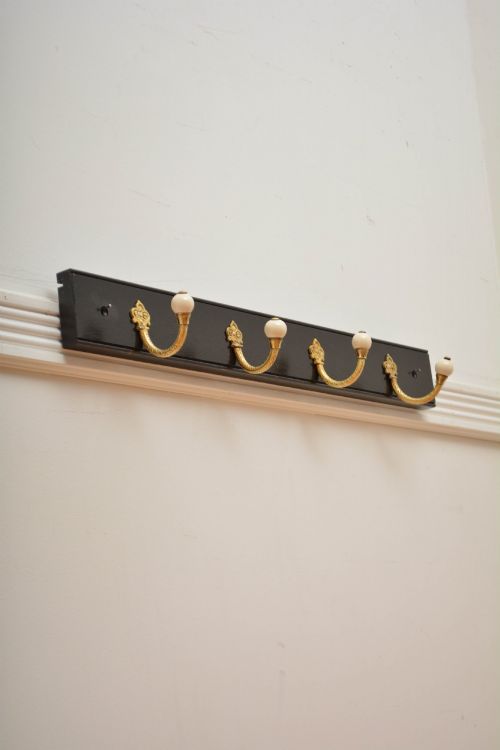


Brass and Wood Coat Hooks
Brass and wood coat hooks combine durable metal fittings with timber mounting boards to organise hallways with practical utility.
Brass and Wood Coat Hooks
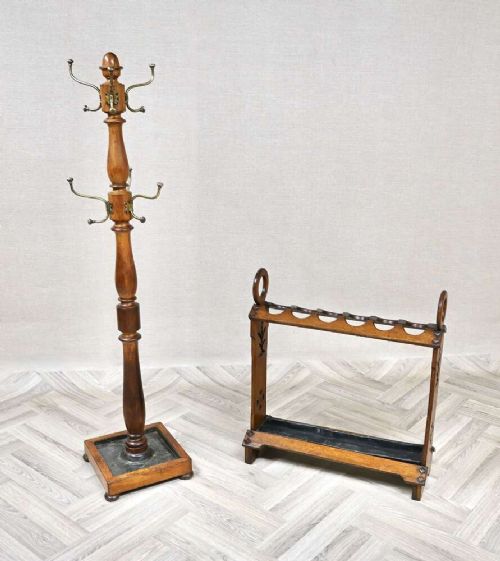
Brass and wood coat hooks encompass wall-mounted racks, hall stands, and hanging rails designed for everyday utility in hallways and boot rooms. The listings show forms primarily from the nineteenth century, including Victorian examples alongside French provincial and aesthetic movement pieces.
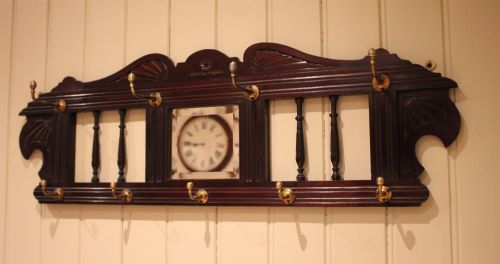
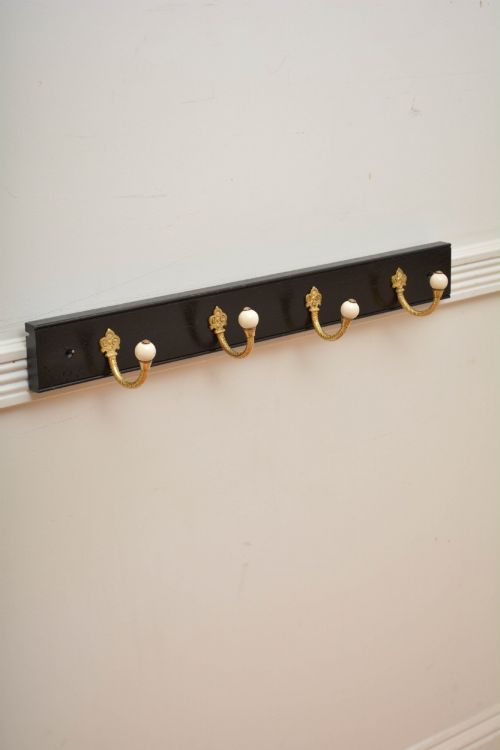
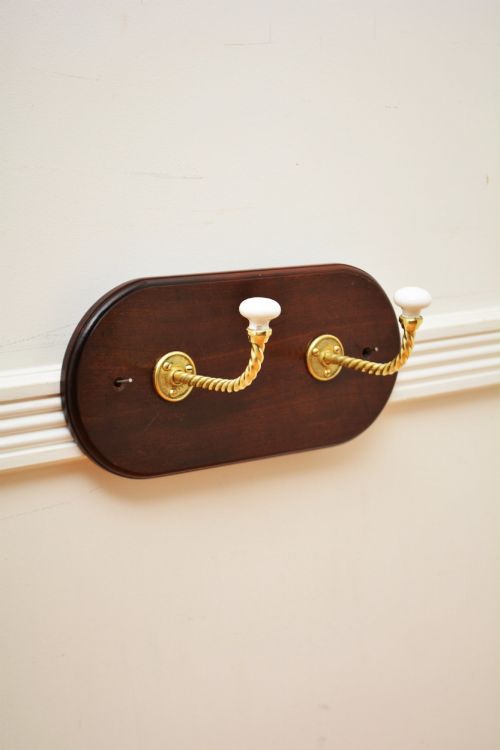
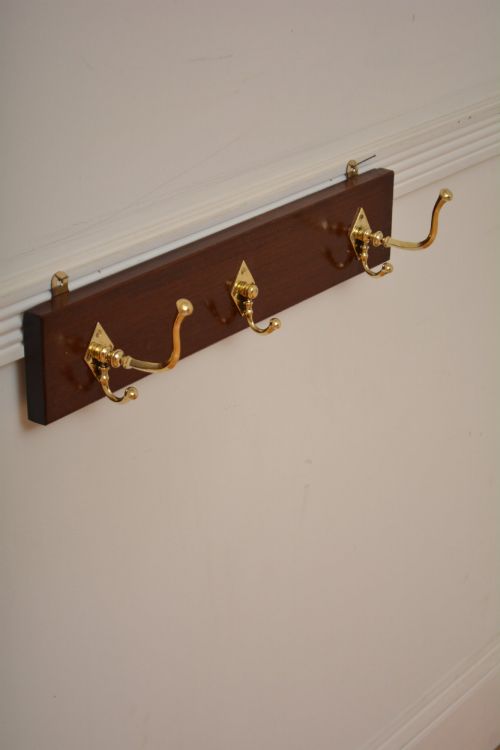
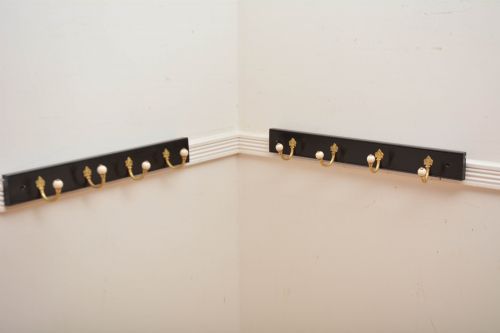
The most common versions encountered here pair polished or patinated brass fixtures with solid timber backplates such as mahogany, oak, walnut, or ebonised wood. These items range from simple multi-hook boards to elaborate hall stands featuring mirrors and umbrella wells.
How they were made
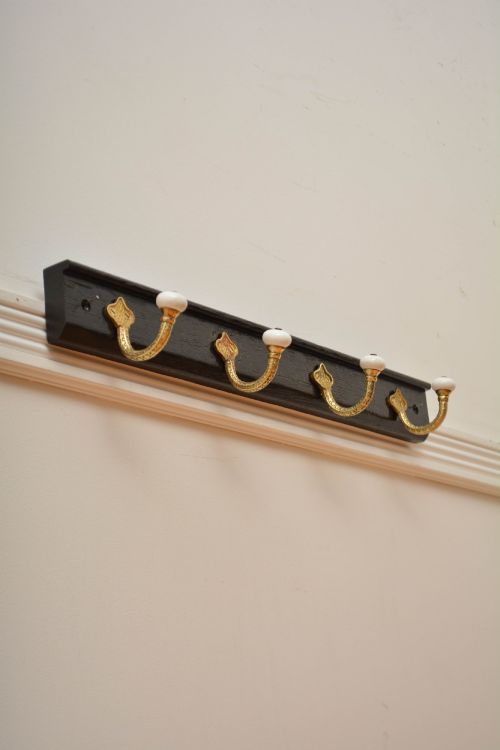
Makers constructed the backplates from dense hardwoods like mahogany and oak, frequently employing ebonisation to achieve a dark, uniform surface finish. Timber mounts were shaped with simple bevelling or carved details to support the hardware securely against the wall.
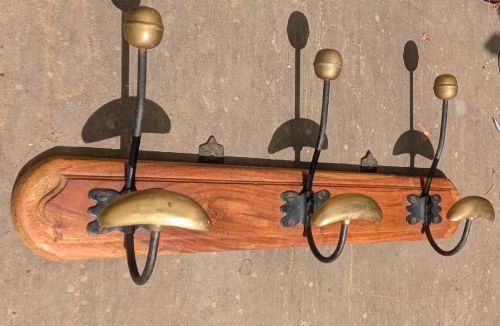
The hooks themselves utilise cast brass, often shaped into double scrolls, horseshoe motifs, or scalloped brackets, sometimes incorporating ceramic or glass elements. These metal components were typically secured to the wooden boards with matching brass screws.
Brass and Wood Coat Hooks Retail Price Guide 2026
Typical asking prices for brass and wood coat hooks among the pieces listed under this phrase on Sellingantiques today, from the lower quarter to the upper quarter. They describe what is for sale here now, not the wider market.
The site listings feature nineteenth-century and Victorian pieces constructed from mahogany, oak, and ebonised wood alongside polished brass.
What varies in quality
Quality rests in the substantial weight of the cast brass fittings and the depth of the timber backplate rather than lightweight alternatives. Finer pieces demonstrate careful hand-finishing in the brass casting and use solid hardwoods rather than veneered panels.
The integration of decorative details, such as bevelled mirror plates, ceramic inserts, or complex ebonised mouldings, distinguishes standard utility racks from more ambitious hall stands and aesthetic movement designs.
The Brass and Wood Coat Hooks Glossary
- Ebonised Wood
- Timber treated with a stain or finish to imitate the dense, dark appearance of ebony wood. This treatment was popular in Victorian joinery to create high-contrast decorative effects.
- Hall Stand
- A large freestanding hallway piece combining coat hooks, a mirror, and often umbrella compartments or a small seat. These pieces anchor the entrance space of a traditional home.
- Aesthetic Movement
- A late nineteenth-century design style focusing on visual beauty and artistic expression rather than narrative storytelling. Pieces from this movement often feature refined proportions and dark woods.
- Portmanteau
- A term used in the evidence to describe an elaborate wall-mounted bracket or rack with multiple hooks and shelf space for hats. These fixtures served as comprehensive hallway storage.
- Bevelled Plate
- A mirror glass panel with angled, polished edges that catch the light. This technique adds depth and refinement to hall stands and mirror-backed coat racks.
Brass and Wood Coat Hooks: Frequently Asked Questions
How do I mount an old coat rack?
Wall-mounted racks require sturdy fixings into wall studs or solid masonry to support the weight of heavy coats hung on the brass hooks.
Ensure the mounting screws match the original pre-drilled holes in the timber backplate to maintain stability.
Were these racks used in bedrooms?
While primarily utilised in hallways and entrance spaces for outer garments, similar hanging rails served in bedrooms and dressing rooms for daily clothing.
Their compact wall-mounted formats suited smaller ancillary rooms just as well as grand entrance halls.
How do I care for the brass hooks?
Brass components benefit from dusting with a soft cloth to preserve the natural patination built up over the centuries.
Avoid harsh chemical polishes that strip away the aged surface character of the metal.
What is the difference between oak and mahogany racks?
Oak boards offer a visible grain pattern with a robust, traditional character often seen in gothic revival and provincial pieces.
Mahogany provides a smoother, reddish-brown surface favoured in refined nineteenth-century domestic interiors.