

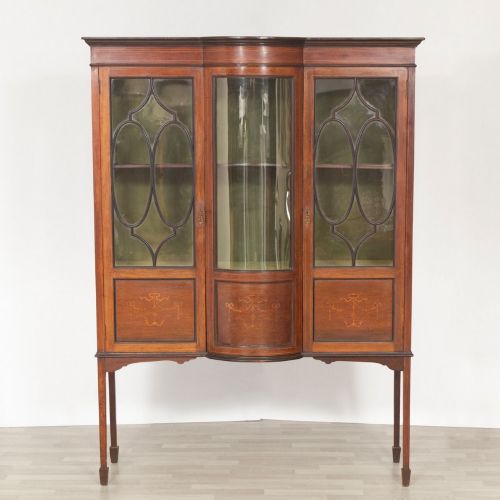


Bowfront Glass Vitrine
These bowfront glass vitrine pieces bring curved glazing and fine timbers into a room, offering a clear view for displayed items.
Bowfront Glass Vitrine
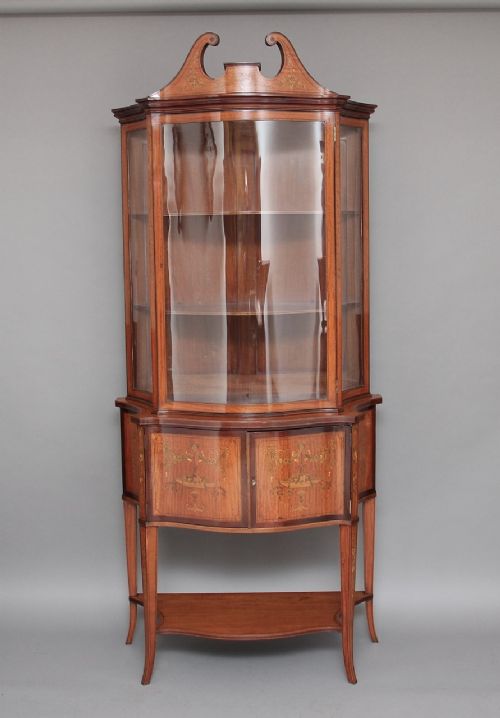
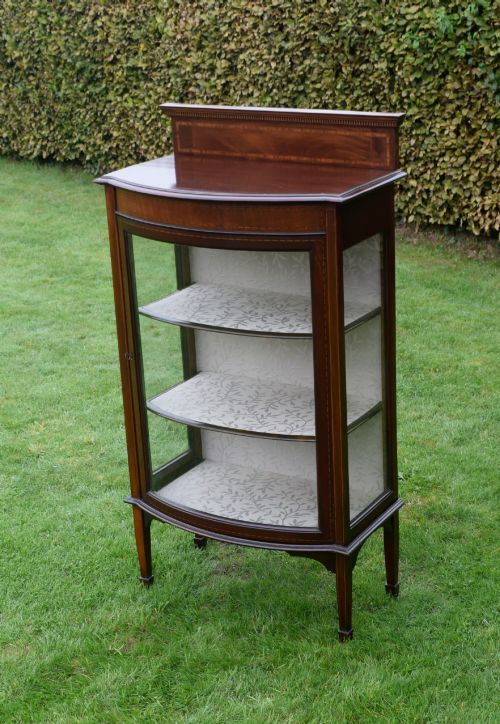
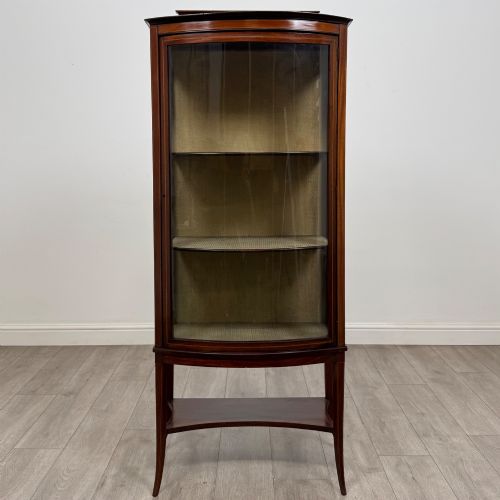
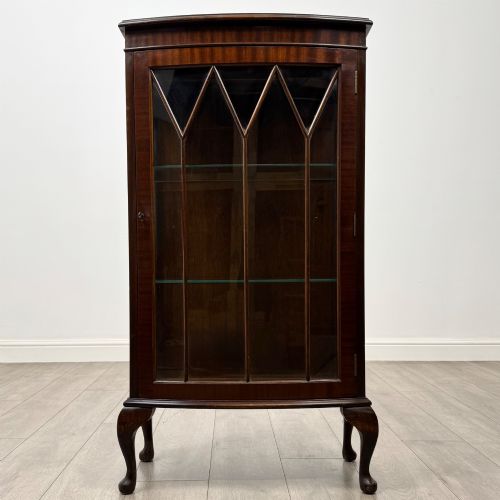
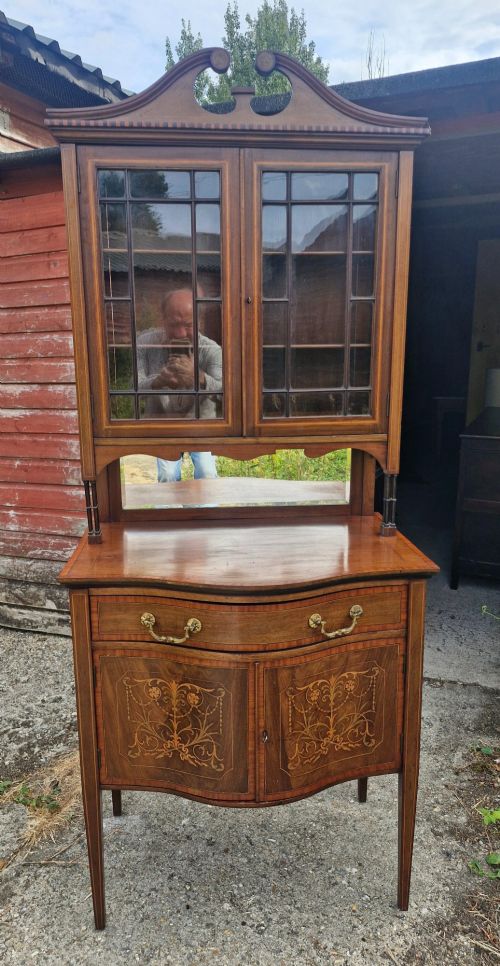
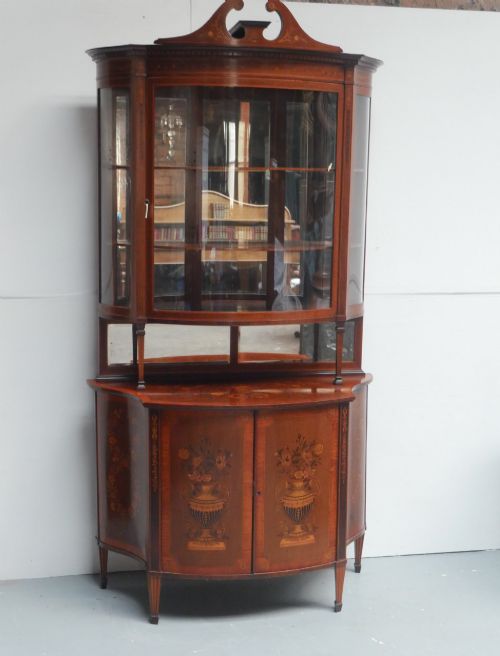
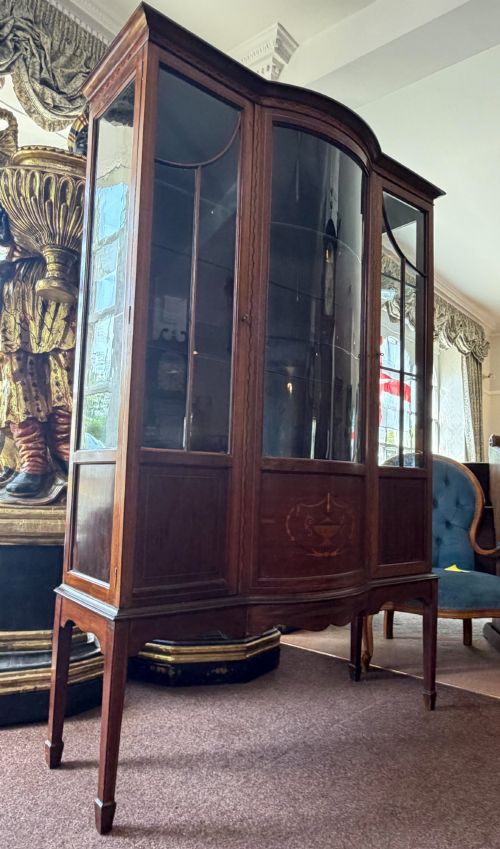
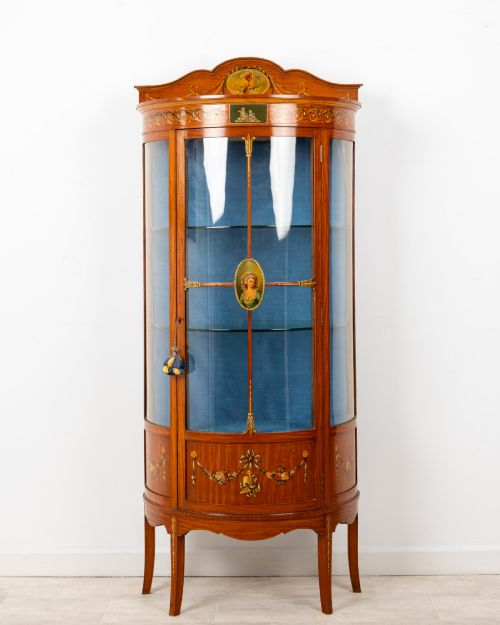
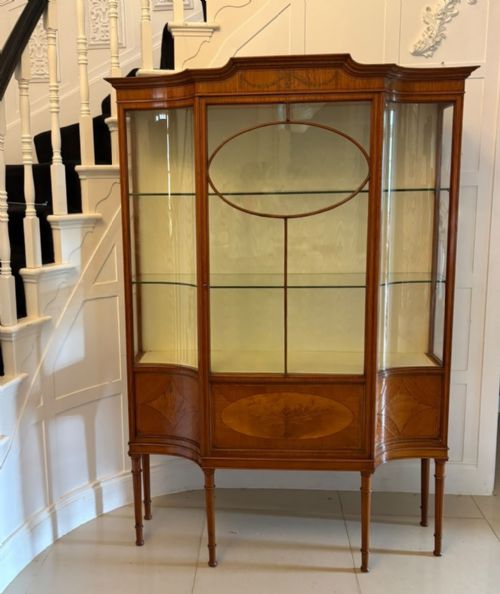
A bowfront glass vitrine is a glazed display cabinet built with a curved front, appearing most often in Edwardian and Victorian forms made from mahogany or satinwood. These cabinets serve to showcase precious objects while protecting them behind curved glass doors.
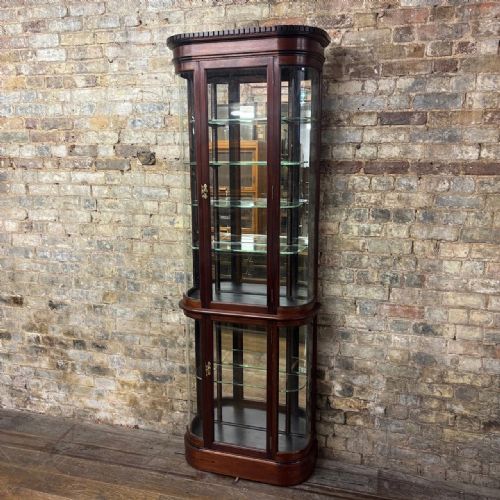
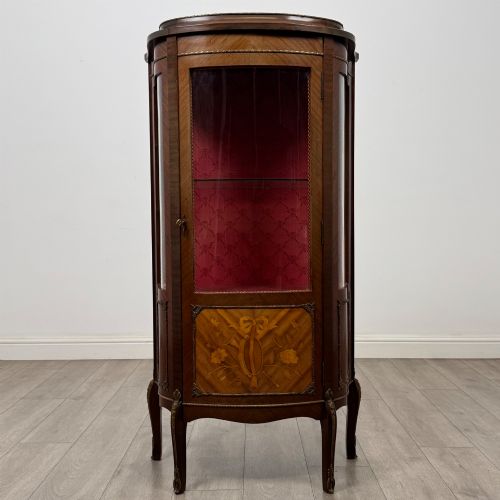
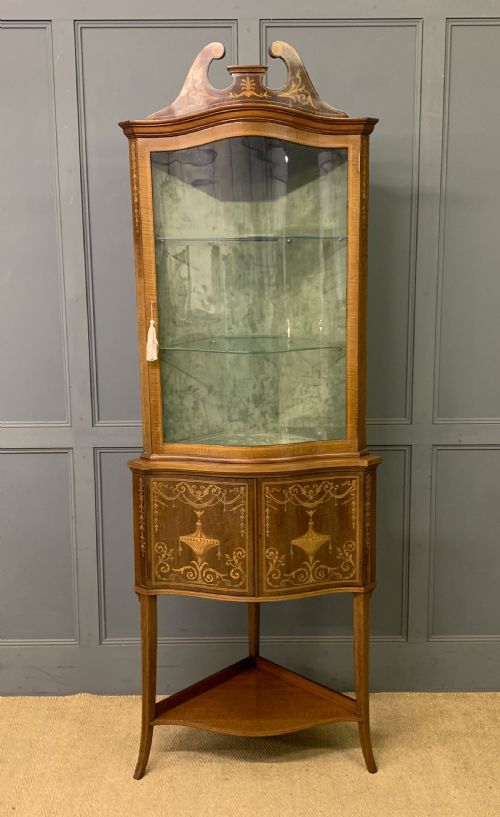
The selection ranges from tall two-part display cabinets to corner cabinets and demi-lune shapes. Styles span from Sheraton Revival and French Belle Epoque to Art Nouveau and Art Deco designs.
How They Were Made
Cabinet makers constructed these pieces primarily using solid and veneered mahogany, burr walnut, and satinwood. Delicate marquetry and satinwood inlay enhance the timber surfaces.
Makers integrated curved glass panels into bowed wooden doors and frames, often accompanied by brass mounts, fabric linings, and mirror backs to reflect light inside the cabinet.
Cabinet styles span Sheraton Revival, Art Nouveau, Art Deco, and French Belle Epoque designs.
What Varies In Quality
Quality rests upon the crispness of the inlay work, the precision of the curved glazing, and the choice of cabinet timbers such as figured burr walnut or painted satinwood. Finer pieces demonstrate careful proportion and sophisticated decorative motifs like floral painting or marquetry.
The distinction between standard production and exhibition quality lies in the subtlety of the brass fittings, the neatness of the joinery, and the overall harmony of the Revival style employed.
Edwards & Roberts·Maurice Adams
The Bowfront Glass Vitrine Glossary
- Bowfront
- A convex curved front profile that projects outward, commonly seen on the doors and frames of these cabinets. It provides a softer silhouette than a flat-fronted case.
- Vitrine
- A glass-fronted display cabinet used for showing porcelain, silver, or small collectables. The term derives from the French word for glass.
- Marquetry
- Decorative woodwork where different coloured veneers are fitted into a ground material to form intricate patterns or pictures. This technique often decorates cabinet friezes and doors.
- Demi-lune
- A half-moon shape used for the footprint and top of specific cabinets designed to fit snugly against a wall. These pieces feature a curved front and a flat back.
- Satinwood
- A lustrous, hard timber native to Ceylon and India, prized for its golden yellow colour. It was frequently used as a veneer or for inlay work on mahogany furniture.
Bowfront Glass Vitrine: Frequently Asked Questions
What fits inside a bowfront glass vitrine?
These cabinets suit collections of small decorative objects, porcelain, glassware, and silver. The internal glass shelves and mirrored backs help illuminate and showcase each item.
Because the front glass is curved, depth varies from the centre to the edges. Owners arrange smaller pieces near the front curves and taller items toward the middle.
Where should I place a corner cabinet?
Corner cabinets utilise awkward room angles and unused junctions between walls. They draw the eye upward and add architectural interest to an empty corner.
Position them away from direct sunlight to protect interior fabrics and delicate timbers from fading. Ensure the door swing has adequate clearance from surrounding furniture.
How do I distinguish Edwardian from Victorian pieces?
Victorian cabinets from the late nineteenth century often feature heavier proportions, rich dark mahogany, and elaborate revival styling. Edwardian pieces tend to display lighter satinwood inlays, painted floral motifs, and a more delicate overall aesthetic.
Examining the internal woodwork, hinges, and secondary timbers helps clarify the period of manufacture when stylistic details overlap.
How do I care for the wood and glass?
Dust timber surfaces gently with a dry, soft cloth and avoid chemical polishes that build up residue over time. Maintain stable room humidity to prevent veneer lifting or wood movement.
Clean the curved glass panels using a mild glass cleaner applied to a cloth rather than sprayed directly, preventing moisture from seeping into the wooden frame.