



Bohemian Art Nouveau Glass
These pieces of bohemian art nouveau glass bring fluid organic forms and shimmering iridescent surfaces into any room.
Bohemian Art Nouveau Glass
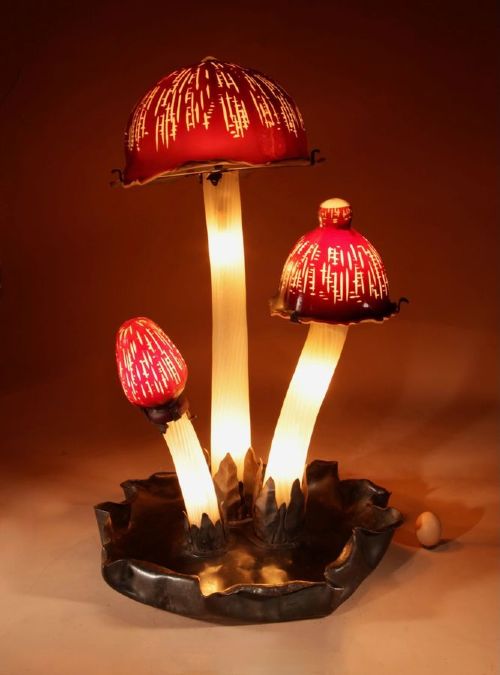
When searching for bohemian art nouveau glass, buyers encounter works largely centred around the early twentieth century and the nineteenth century, capturing the organic spirit of Jugendstil and the Vienna Secession. Vases dominate the selections, alongside decorative bowls, inkwells, table lamps, goblets, and decanters.
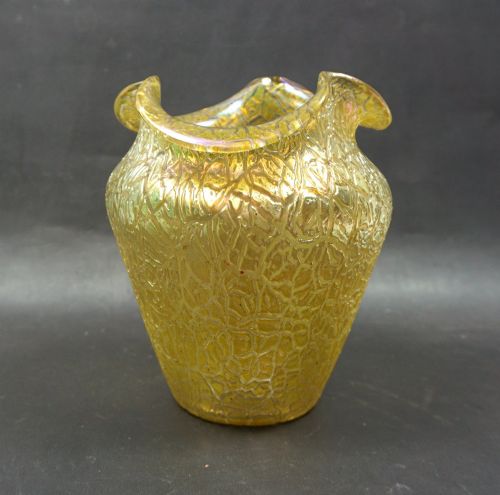
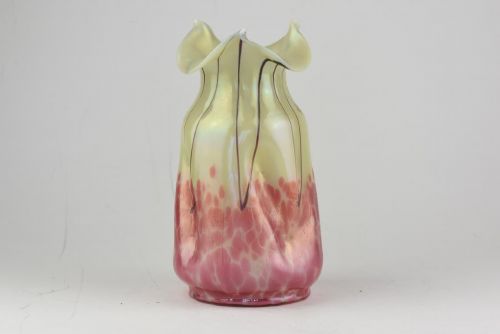
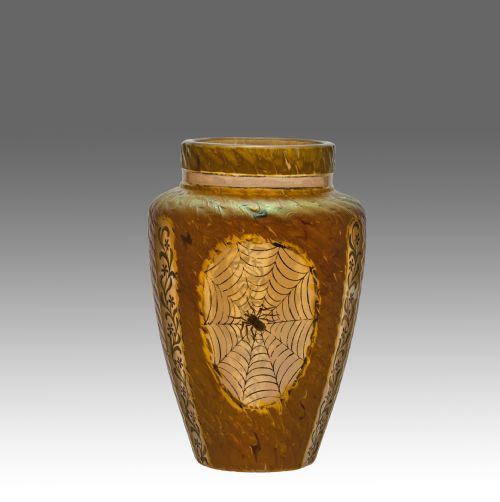
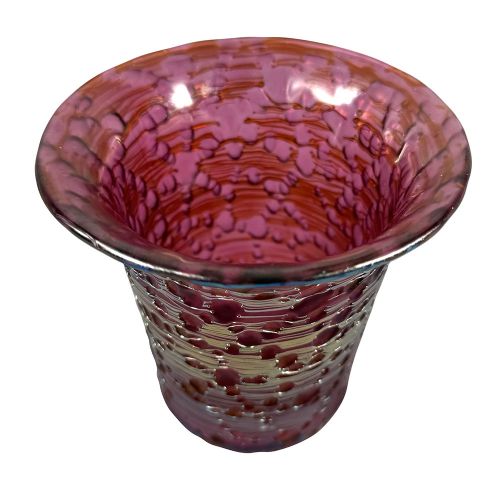
The most common forms on this page take inspiration from natural geometries, often rendered in blown glass or hand-blown glass with metallic treatments. Makers from Bohemia utilised techniques that produced distinct decors, ranging from the mottled Papillon surface to applied trails and metallic mounts.
How they were made
Hot glass manipulation formed the basis of these works, utilising blowing techniques to shape vessels before applying surface treatments while the metal remained malleable. Molten metallic oxides were sprayed onto hot glass to achieve the signature iridescent sheen seen across many pieces.
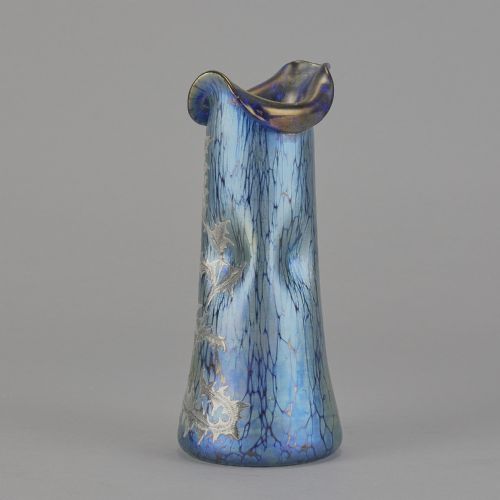
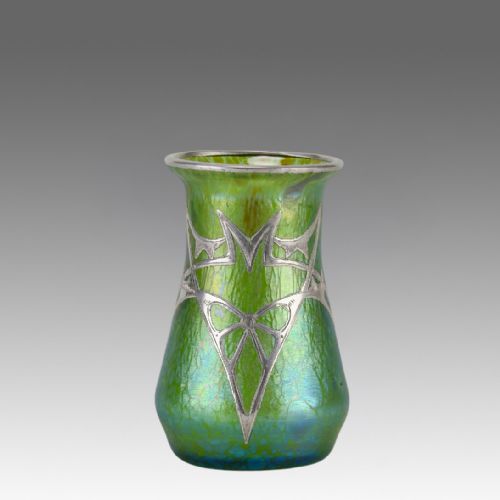
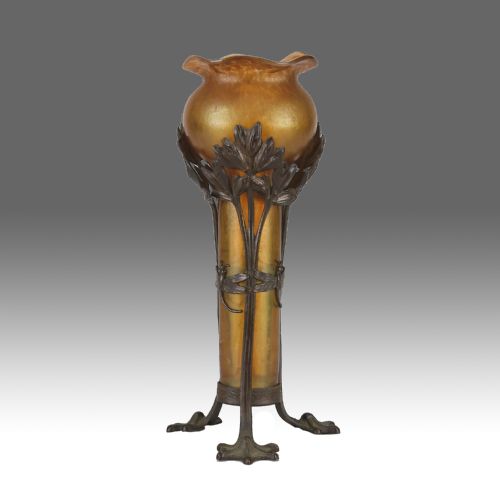
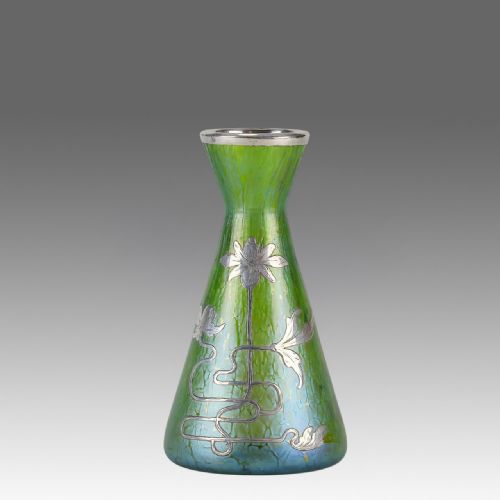
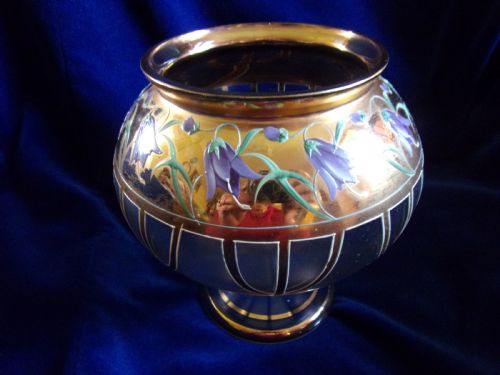
Certain examples incorporate sterling silver, pewter, or bronze mounts, while others rely on hand-painting with enamel and gilding directly onto the glass body. The interaction between the metallic overlays and the iridescent or coloured glass creates a striking visual depth.
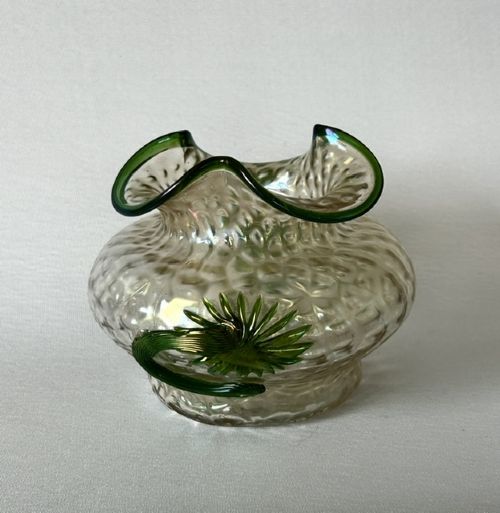
Watch for the cunning tadpole décor, proving that even Victorian glassblowers found inspiration in pond life.
What varies in quality
Quality rests upon the skill involved in the glassblowing and the complexity of the surface decors, such as the precision of the Phänomen threading or the depth of the Papillon iridescence. Pieces that successfully integrate metal overlays, such as silver or pewter mounts, demonstrate a higher tier of workshop collaboration.
The distinctiveness of the glass formulation, including vaseline glass or cobalt blue hues, dictates the visual impact of the object. Finer examples display harmonious proportions between the blown vessel and any applied decoration, enamel, or bronze stand.
Loetz Witwe·Kralik Glass·Pallme Konig·Frits Hechert·Moser
The Bohemian Art Nouveau Glass Glossary
- Iridescent Glass
- Glass treated with metallic salts while hot to produce a rainbow-like sheen on the surface. This effect mimics natural mother-of-pearl.
- Papillon
- A specific Loetz glass décor featuring a mottled, butterfly-wing pattern of metallic iridescence. It remains one of the most recognisable finishes from the Bohemian glasshouses.
- Jugendstil
- The continental European movement spanning the late nineteenth and early twentieth centuries, translating as youth style. It shares close ties with British Art Nouveau.
- Silver Overlay
- A technique where sterling silver is bonded directly onto the glass body in decorative patterns. The metal is often worked with floral or abstract motifs.
Bohemian Art Nouveau Glass: Frequently Asked Questions
How do I identify Loetz glass?
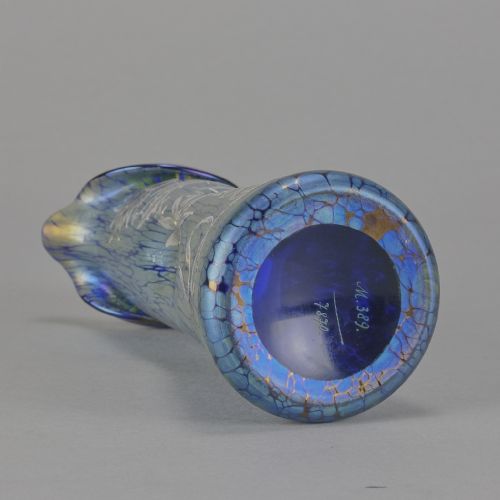
Many Loetz pieces exhibit characteristic iridescent decors like Papillon or Phänomen, often paired with organic pinched shapes. Unsigned examples usually require comparison of the pontil mark and colour palette with documented workshop patterns.
Documentation in period catalogues helps confirm attribution, as paper labels often did not survive the decades of handling.
What is silver overlay glass?
Silver overlay involves electroplating sterling silver directly onto the finished glass vessel in floral or geometric designs. The process creates a permanent chemical bond between the metal and the glass surface.
These pieces frequently combine the organic lines of the period with heavy metallic embellishment.
Where were these pieces made?
The objects originate primarily from the Bohemia region, which encompassed major glassmaking centres in what is now the Czech Republic. Factories such as Loetz and Kralik operated within this historic manufacturing hub.
Local access to skilled blowers and chemical laboratories enabled these workshops to pioneer advanced iridescent finishes.
How should I display iridescent glass?
Position these items near natural light sources to activate the metallic oxides within the iridescent surface. Direct sunlight highlights the shifting colour spectrum across the blown vessel.
Keep them away from damp environments to preserve any delicate enamel work or metal mounts.