
Blue Sapphire Cluster
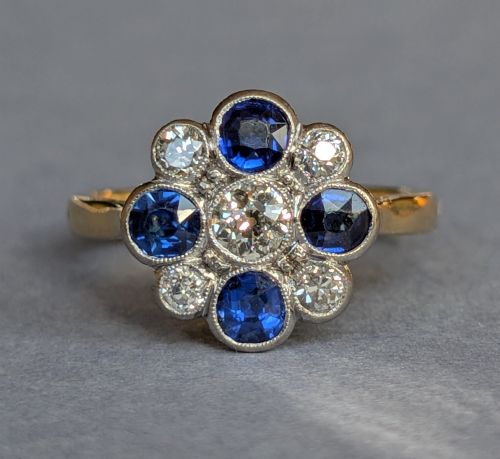
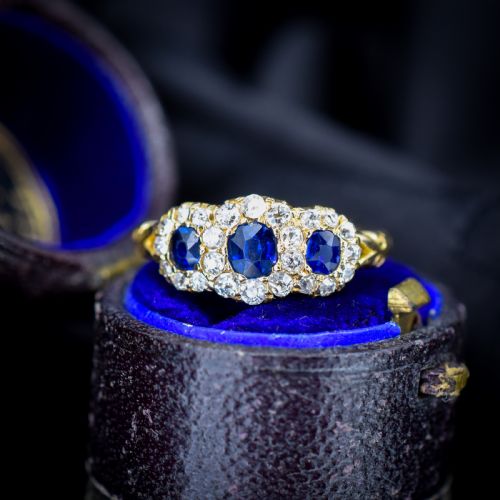
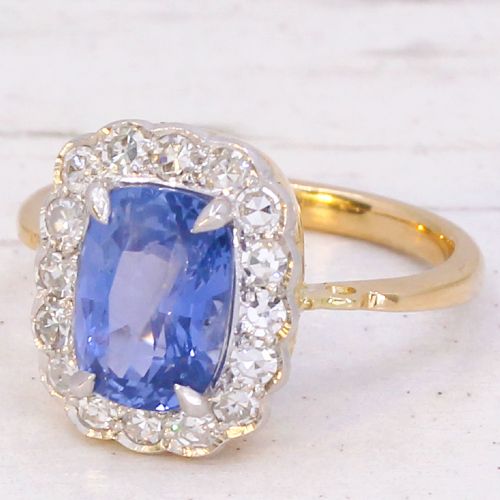
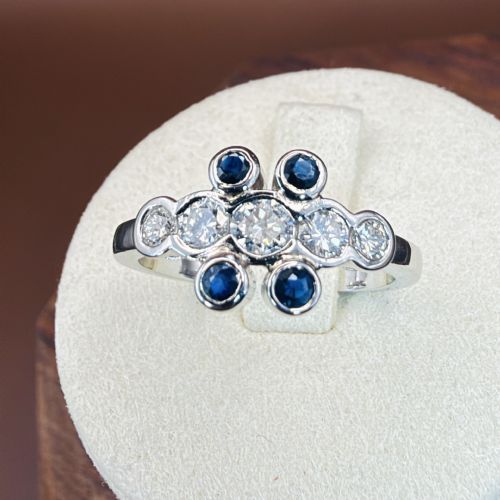
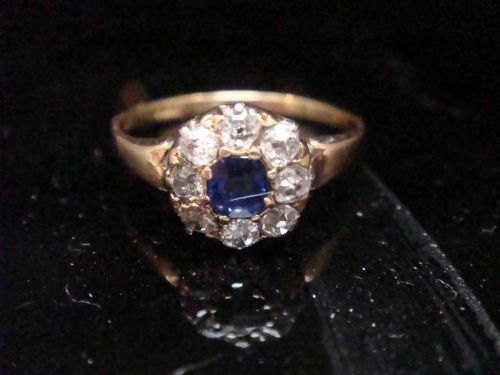
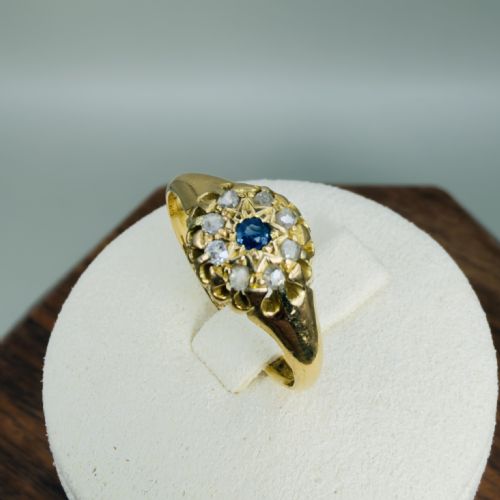
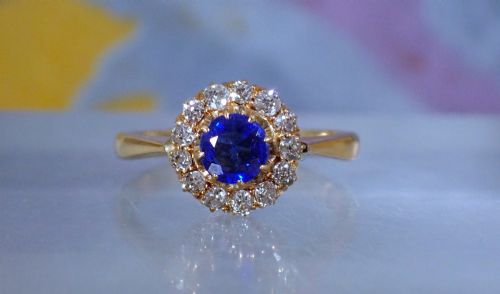
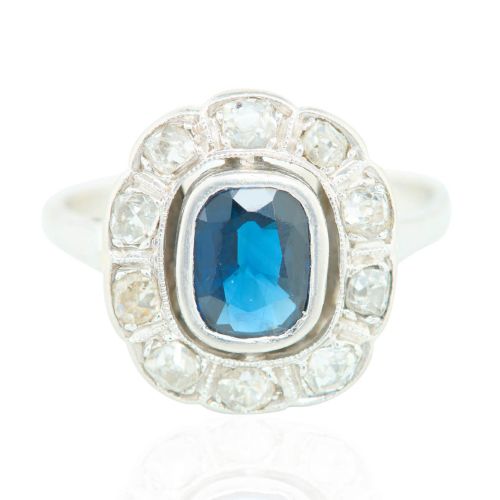
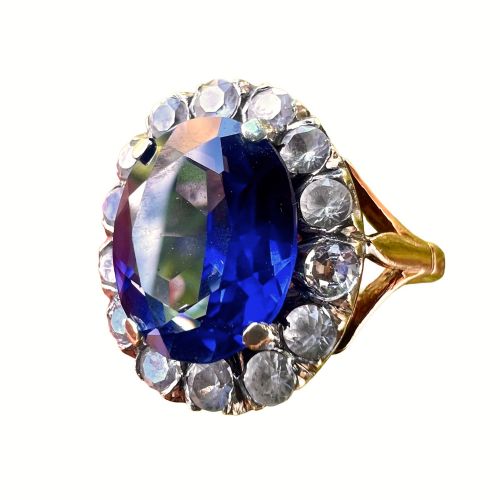
A blue sapphire cluster brings together a central stone encircled by diamonds, forming an arrangement that dominated Victorian, Edwardian, and Art Deco jewellery design.
Blue Sapphire Cluster
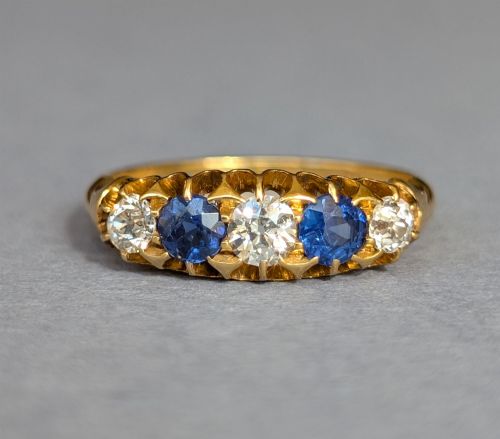
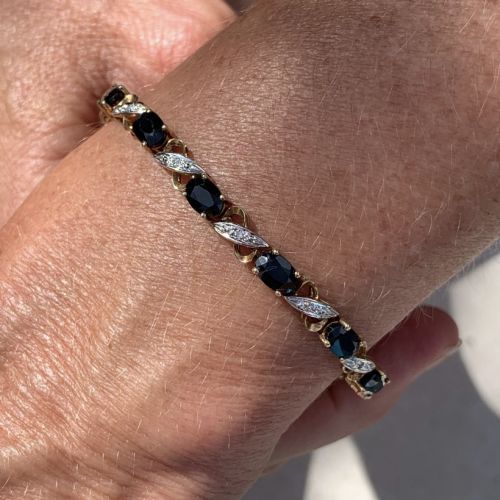
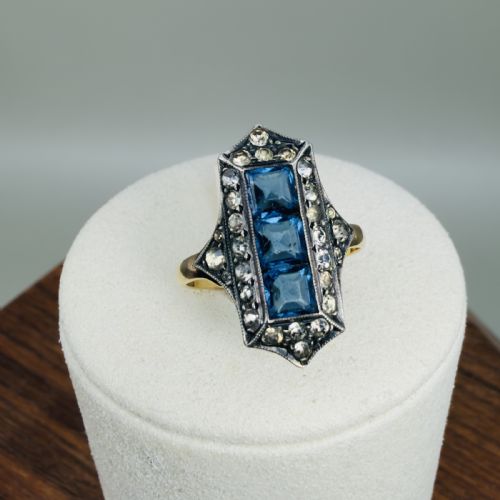
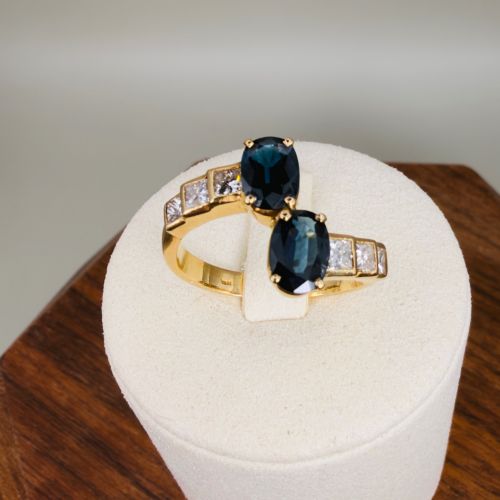
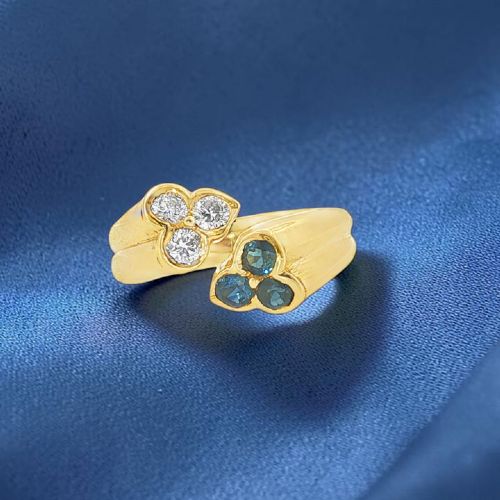
A blue sapphire cluster centres on a prominent blue gemstone framed by supporting diamonds or pearls, primarily taking the form of finger rings alongside occasional brooches, bracelets, necklaces, and earrings. These pieces span Victorian, Edwardian, Art Deco, and mid-century periods, capturing shifting tastes from delicate daisy designs to geometric target and navette configurations.
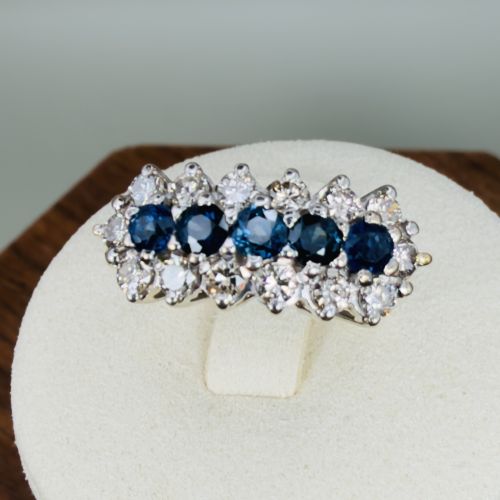
The most common form encountered in these listings is the ring, constructed in configurations such as double clusters, boats, and floral halos. Stones range from unheated Burmese and Ceylon origins to synthetic alternatives, set alongside various diamond cuts including old mine, old cut, princess, and brilliant facets.
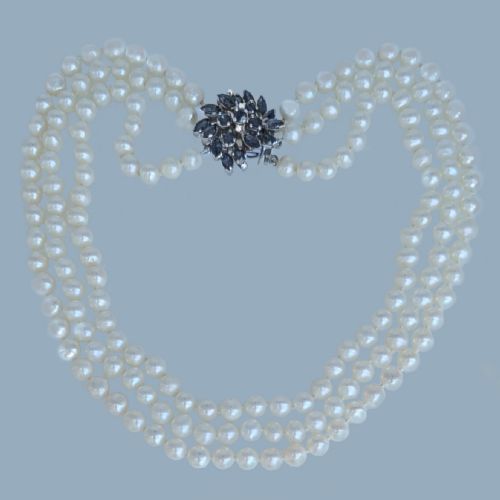
Beyond rings, the selection includes antique brooches with foliate motifs and necklaces featuring sapphire and diamond floral clasps. Metal choices shift through the decades, moving from traditional yellow gold to platinum and white gold mountings.
Materials and construction
Craftsmanship relies upon combining precious metals such as platinum, silver, and various carats of gold with central sapphires and accent diamonds. Goldsmiths utilised yellow gold and silver-topped gold during the Victorian and Edwardian eras, transitioning to platinum and white gold as Art Deco design demanded crisp geometric lines.
Stone setting techniques dictate the visual weight of each cluster, employing claw, bezel, and calibre-cut methods to secure the gems. Pearls and paste stones also appear as supporting elements in specific daisy or halo arrangements.
Distinctions in quality
Quality rests upon the geological origin and thermal treatment of the sapphire, with unheated stones from sources like Burma and Ceylon commanding distinct attention. The depth of the blue hue, clarity, and carat weight directly shape the presence of the central gem.
The precision of the surrounding diamond work and the integrity of the metal mounting determine the overall execution. Evidence of careful gem cutting, such as calibre-cut sapphires fitted tightly to geometric channels, distinguishes finer workshops.
Kutchinsky·Le Vian
The Blue Sapphire Cluster Glossary
- Cluster ring
- A ring design featuring a central gemstone surrounded by a border of smaller stones, typically diamonds.
- Calibre cut
- Gemstones specifically shaped and cut to fit closely together in a geometric channel without visible metal partitions between them.
- Navette
- A boat-shaped gemstone setting that tapers to pointed ends at either side, prevalent in Art Deco pieces.
- Old cut diamond
- A hand-faceted diamond shape common in antique jewellery, characterised by a smaller table and a high crown.
- Unheated sapphire
- A natural sapphire that has undergone no artificial heat treatment to enhance its colour or clarity.
Blue Sapphire Cluster: Frequently Asked Questions
What defines a blue sapphire cluster?
A blue sapphire cluster consists of a central blue sapphire framed by a border of smaller stones, usually diamonds. This arrangement creates a distinct floral or geometric focal point.
Such designs appeared frequently across the Victorian, Edwardian, and Art Deco periods, evolving from organic daisy shapes into sharp geometric forms.
How do I identify an Art Deco cluster ring?
Art Deco cluster rings are characterised by geometric lines, platinum or white gold settings, and specific stone cuts like calibre or princess shapes. Target rings and navette silhouettes are typical of this era.
These pieces often emphasise symmetry and stark contrast between the bright blue sapphire and surrounding diamonds.
Were these pieces only made as rings?
While rings represent the vast majority of surviving pieces, makers also produced brooches, bracelets, necklaces, and earrings in cluster formations.
Victorian and Edwardian examples often include foliate brooches and floral clasp necklaces incorporating the same central gemstone arrangement.
What is the difference between antique and vintage clusters?
Antique cluster pieces generally date from the Victorian and Edwardian eras, displaying hand-cut stones and traditional yellow gold or silver-topped gold settings. Vintage pieces span later decades like the 1950s and 1960s, often utilising platinum or white gold.
Mid-century and later vintage examples frequently feature different diamond cutting styles and heavier metal mountings.