





Blue Rural Painting
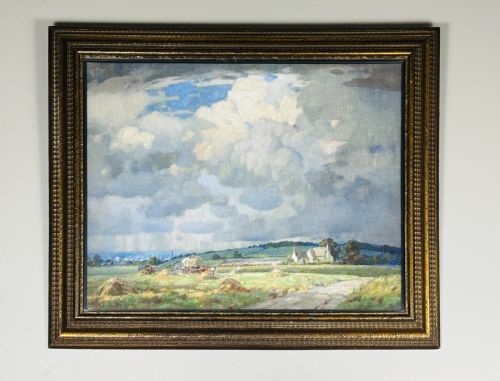
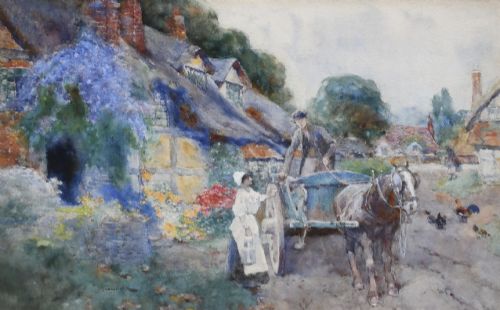
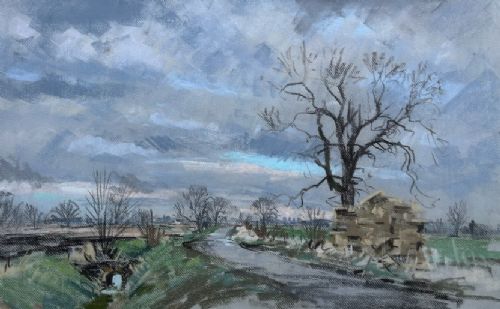
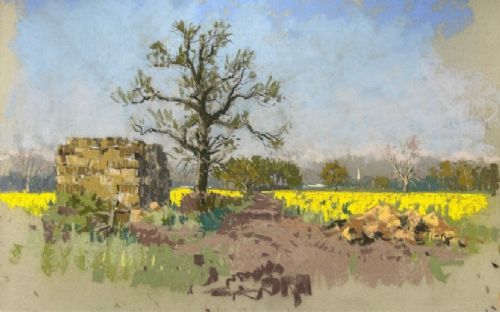
Blue rural painting captures pastoral scenery, farmsteads and open country through watercolours, pastels and oils created across the nineteenth and twentieth centuries.
Blue Rural Painting
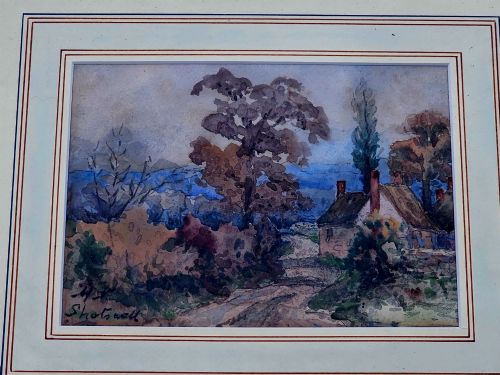
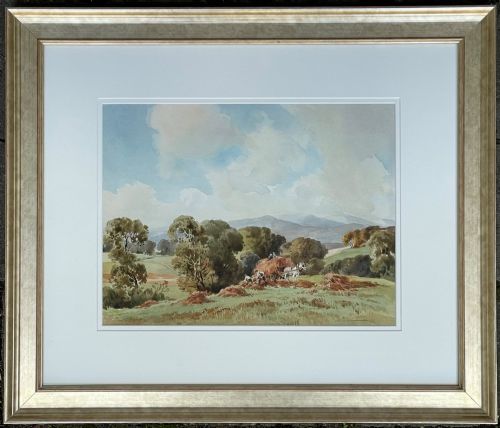
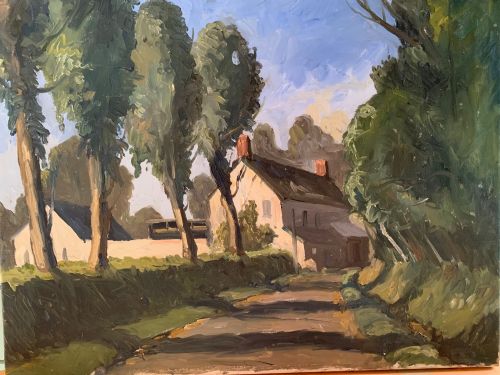
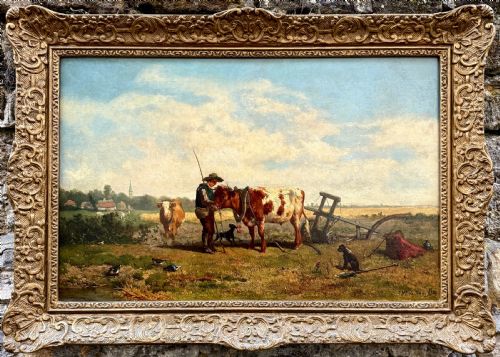
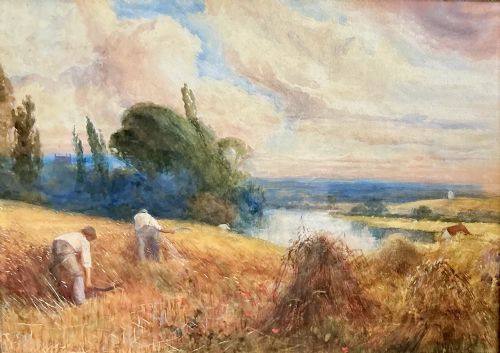
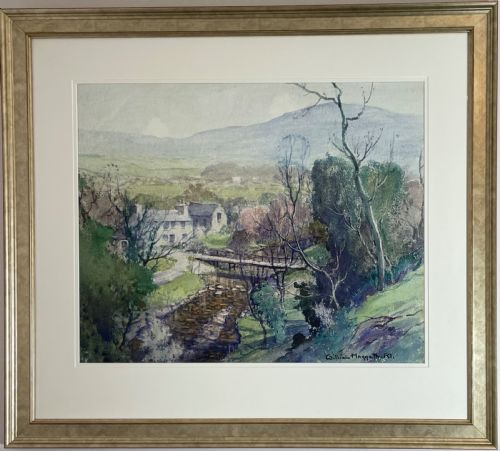
A blue rural painting gathers landscape works depicting country scenes, village paths, agricultural labour and rolling fields rendered in cooler palettes or atmospheric daylight. The selections on this page span from the nineteenth century through the Edwardian era and into the mid-twentieth century, recording British and French countryside subjects.
Most examples take the form of works on paper or canvas, including watercolours, pastel drawings and oil paintings. Subjects frequently involve farm workers, harvest fields, rivers and rural cottages observed through British Impressionism, Victorian pastoral styles and traditional regional schools.
Materials and Technique
Artists relied upon watercolour pigment applied to paper sheets or oil paint worked onto canvas, panel and wood supports. These mediums allowed painters to capture changing light across rural vistas, from precise watercolour washes to textured oil brushwork.
Many works remain housed in period wood frames, occasionally protected beneath glass, preserving the original paper and canvas supports alongside the pigments applied by the painter.
Blue Rural Painting Retail Price Guide 2026
Typical asking prices for blue rural painting among the pieces listed under this phrase on Sellingantiques today, from the lower quarter to the upper quarter. They describe what is for sale here now, not the wider market.
Dates recorded across the listings stretch from the Victorian era through the Edwardian period up to nineteen sixty.
Assessing Quality and Execution
The strength of a composition rests upon the handling of light and the direct observation of the landscape. Stronger examples demonstrate confident brushwork or delicate washes that convey atmosphere and spatial depth rather than mechanical repetition.
Provenance and documentation also separate works, as signed pieces with identified locations in Yorkshire, Kent or France offer clearer context regarding the artist and the specific rural setting portrayed.
Percy Lancaster·Frederick Hines·Johannes de Haas·Edgar Woollatt·Fred Lawson·James William Booth·William Hoggatt·William Sydney Cooper·James Orrock·Frederick W. Jackson·George Soper·Florence Hess·William Joseph Boyes·William Greaves·Owen Bowen·Bernard Walter Evans·Will Anderson·Rowland Henry Hill·Daniel Pasmore·Frederick J. Knowles·Fred Stead·Henry Sylvester Stannard·Thomas Rose Miles·Samuel Towers·Sir Ernest Albert Waterlow
The Blue Rural Painting Glossary
- Watercolour
- A painting method where fine pigment is suspended in a water-soluble binder and applied to paper. It creates transparent washes and luminous atmospheric effects.
- Oil on Canvas
- A painting technique utilising pigments bound in drying oil applied to woven fabric stretched over a wooden frame. This method permits rich texture and deep colour layering.
- Pastel Drawing
- A work executed using dry pigment sticks shaped into crayons. It produces velvety surfaces that require framing behind glass for protection.
- Impressionism
- An artistic approach focusing on the accurate depiction of light and its shifting qualities. Painters working in this manner prioritised open-air observation over rigid academic finish.
Blue Rural Painting: Frequently Asked Questions
What periods do these paintings represent?
The pieces span from the nineteenth century through the Edwardian period and into the mid-twentieth century. Most examples originate between 1890 and 1930.
This timeframe encompasses Victorian pastoral traditions, Edwardian watercolours and mid-century British landscape painting.
Which materials were commonly used?
Artists used watercolour pigment on paper, pastel sticks, and oil paint applied to canvas or wood panels. Wood frames frequently accompany these works.
Paper supports dominate the watercolour selections, while oil paintings utilise stretched canvas or wooden boards.
How do I identify the location of a scene?
Many titles and signatures record specific geographic details, noting places such as Yorkshire dales, Kentish landscapes, or French rural views. Inscription on the reverse of the work often provides further clues.
Local landmarks, churches and farmsteads mentioned by the artist help pinpoint the exact setting.
How should I care for a watercolour painting?
Watercolours require protection from direct sunlight to prevent fading of the pigments on paper. Keeping them behind glass in stable indoor environments preserves the paper support.
Avoid hanging works in damp spaces to protect both the paper and the original frame.