





Blue Glass Shade
A blue glass shade transforms functional lighting into a rich coloured focal point for your room.
Blue Glass Shade
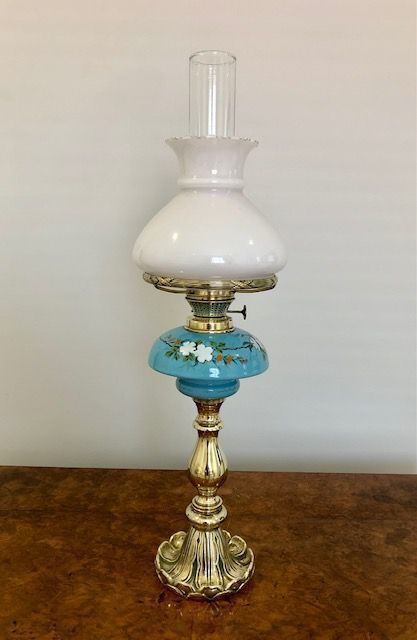
When you search for a blue glass shade, you encounter lighting components integrated into oil lamps, pendants, and sconces spanning the Victorian, Edwardian, and Art Deco periods. These pieces utilise glass combined with brass, ceramic, and patinated metal to deliver both illumination and decorative presence.
The versions most frequently met on this page include globe shades on nineteenth-century oil lamps, ceiling lights, and wall sconces. Their forms range from simple tinted glass to frosted or leaded cobalt constructions, reflecting stylistic shifts from French Art Nouveau to Arts and Crafts designs.
Materials and construction
Construction relies on blown or moulded glass shaped into globes, fonts, or plafonniers, often paired with brass or bronze mountings. Metal components provide structural support through embossed brass, brackets, and adjustable arms.
Makers integrated coloured glass with specialised textures, utilising frosted finishes, applied leaded segments, or beaded prismatic elements. This combination of glasswork and patinated metal forms the primary physical structure across all periods.
Blue Glass Shade Retail Price Guide 2026
Typical asking prices for blue glass shade among the pieces listed under this phrase on Sellingantiques today, from the lower quarter to the upper quarter. They describe what is for sale here now, not the wider market.
Some nineteenth-century oil lamps featured terrestrial globe shades, bringing the entire world into your evening reading circle.
Assessing quality
Quality differentiates through the depth and consistency of the glass colour, alongside the crispness of brass embossing and casting work. Finer examples display heavier metal components and well-integrated glass elements that retain structural integrity.
The refinement of period hardware, such as adjustable table lamp mechanisms and signed bronze mounts, separates standard domestic lighting from higher-grade workshop production.
The Blue Glass Shade Glossary
- Plafonnier
- A ceiling-mounted bowl light that sits close to the surface, often associated with Art Deco interiors. These fixtures direct light downwards through patterned glass.
- Font
- The oil reservoir portion of a lamp, which in these pieces frequently incorporates blue glass. It sits atop a ceramic, glass, or metal base.
- Ewer
- A jug-shaped vessel form adapted into an ornamental lamp base. These decorative pieces often date from the late nineteenth century.
- Opaline glass
- An opaque or semi-translucent glass type that diffuses light softly. It appears across Victorian and Edwardian lighting fixtures.
Blue Glass Shade: Frequently Asked Questions
What periods do these shades come from?
The listings span the nineteenth century through the early twentieth century, encompassing Victorian, Edwardian, and Art Deco eras. You will find pieces reflecting distinct design movements such as Arts and Crafts and French Art Nouveau.
Manufacturing dates typically range from the 1870s up to the 1930s, showing a transition from traditional oil lamps to early electric ceiling and table fixtures.
How were these glass shades originally used?
Many of these pieces functioned as part of oil lamps, housing the flame and diffusing the light emitted from the burner. Others served as pendant lights or wall sconces to illuminate specific interior spaces.
Over time, many oil lamps were adapted for electricity while retaining their original glass shades and metal components.
What materials accompany the glass?
Brass forms the primary metal support for the majority of these lamps, often featuring embossed or patinated surface details. Ceramic, marble, and patinated bronze also appear in bases and structural mounts.
Some configurations incorporate leaded glass construction or suspended beaded prisms around the central shade.
How do I identify different styles?
Victorian and late nineteenth-century pieces often feature heavy brass embossed bases and globe shades on oil lamps. Art Deco and later twentieth-century examples tend toward geometric plafonniers and simplified glass forms.
Arts and Crafts pieces frequently utilise leaded cobalt glass pendants and cherub wall lights reflecting turn-of-the-century aesthetic priorities.