



Blue Glass Shade Lamp
A blue glass shade lamp brings warm, coloured light to a room through traditional glassworking and metal mounts.
Blue Glass Shade Lamp
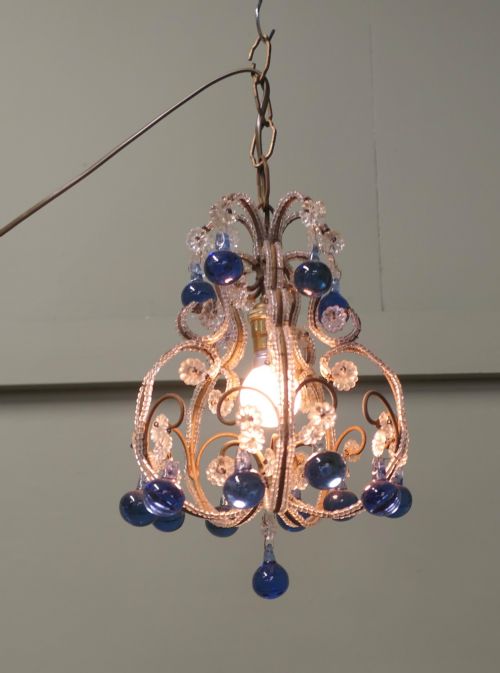
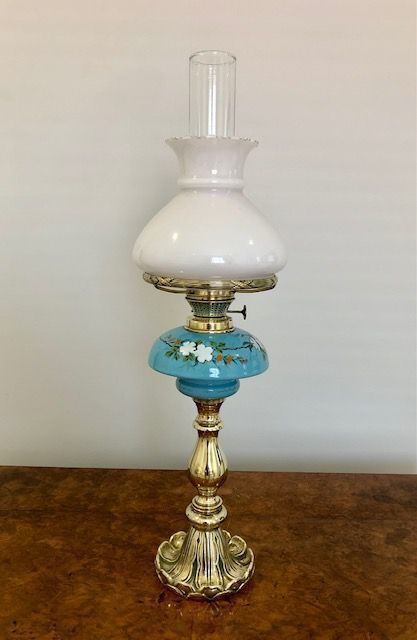
A blue glass shade lamp is a functional lighting fixture that relies on coloured glass components to diffuse illumination. These items range from Victorian and Edwardian oil lamps with tinted fonts to Art Deco ceiling lights and French Arts and Crafts wall sconces.
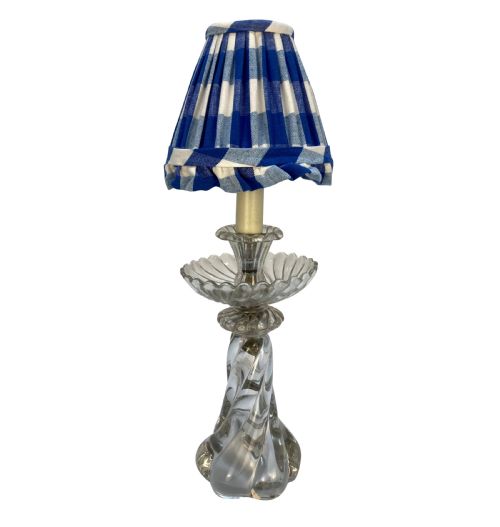
The pieces on this page span the late nineteenth century through to the nineteen-thirties, covering forms such as table lamps, pendant lights, chandeliers, and wall brackets. Most examples combine glass shades with metal bases made from brass, bronze, or patinated metal.
When searching for a blue glass shade lamp, buyers encounter everything from modest oil lamps with blue fonts to elaborate leaded glass pendant lights and Baccarat frosted glass table lamps. The selection leans heavily towards nineteenth-century oil lamps and early twentieth-century hanging fixtures.
How they were made
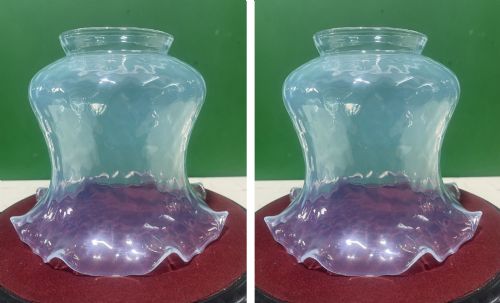
Makers utilised mouth-blown and pressed glass techniques to create the distinct blue shades, opaline components, and frosted globes seen across these periods. Metalwork foundations involved cast brass, embossed brass, and bronze, often paired with ceramic or black glass bases.
Construction methods varied from the functional brass burners and font collars of Victorian oil lamps to the leaded glass assembly of Arts and Crafts pendant lamps and the delicate bronze framing of height-adjustable table lamps.
Blue Glass Shade Lamp Retail Price Guide 2026
Typical asking prices for blue glass shade lamp among the pieces listed under this phrase on Sellingantiques today, from the lower quarter to the upper quarter. They describe what is for sale here now, not the wider market.
Some nineteenth-century globe shades were designed with terrestrial maps etched onto the glass surface, bringing geography into the parlour.
What varies in quality
Quality rests in the weight and clarity of the glass, the crispness of brass embossing, and the structural integrity of the metal mounts. Heavier casting and finer hand-finishing distinguish superior examples from standard production pieces.
Originality of components also dictates standard, as matched period burners, intact prisms, and unaltered mounting brackets elevate the integrity of a fixture.
Tiffany Studios NYC·Baccarat
The Blue Glass Shade Lamp Glossary
- Font
- The oil reservoir of a lamp, often rendered in coloured glass to match or contrast with the shade.
- Plafonnier
- A shallow bowl-shaped ceiling light mounted close to the ceiling, frequently produced in frosted or tinted glass during the Art Deco period.
- Opaline glass
- A semi-translucent milky glass that diffuses light softly, found in various nineteenth-century lighting components.
- Sconce
- A wall-mounted lighting fixture designed to hold candles or electric bulbs, represented here in French Arts and Crafts styles.
Blue Glass Shade Lamp: Frequently Asked Questions
How do I wire an old lamp?
Rewiring typically involves threading modern insulated cable through the existing brass body and burner gallery by a qualified electrician.
Original oil lamp components can often be adapted for modern electrical wiring without permanently altering the historical metalwork.
Are these lamps electrified?
Many pieces began life as oil lamps or paraffin burners before being converted to electricity at a later date.
Ceiling lights and pendant fixtures from the twentieth century were generally designed specifically for electrical currents from the outset.
How do I clean blue glass?
Gentle washing in lukewarm water with mild soap removes dust and grime from smooth glass shades without damaging the surface.
Avoid harsh chemical cleaners on frosted or decorated glass sections to preserve the original finish.
How do I date an oil lamp?
Dating relies on the burner mechanism patents, the style of the brass embossing, and the shape of the ceramic or glass base.
Victorian pieces usually feature heavy cast brass work, whereas Edwardian and later pieces show shifts towards simpler lines or early electrical fittings.