




Blue Glass Flacon
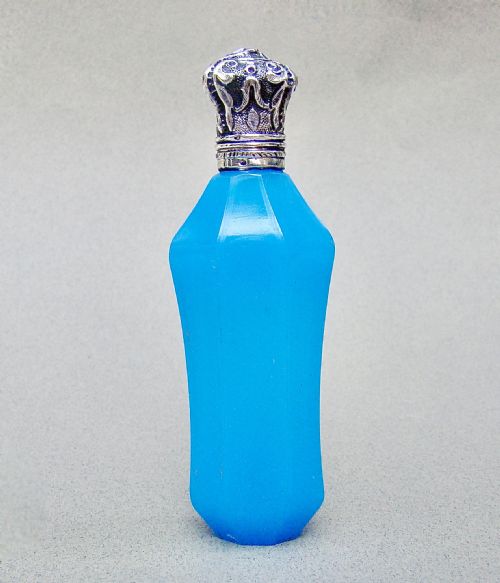
A blue glass flacon brings together rich colour and delicate metalwork, serving as a striking dressing table accessory.
Blue Glass Flacon
A blue glass flacon encompasses small scent bottles and perfume bottles produced across the nineteenth and twentieth centuries. These vessels combine vivid shades of blue glass with decorative mounts, often designed for holding perfume or volatile salts on a dressing table.
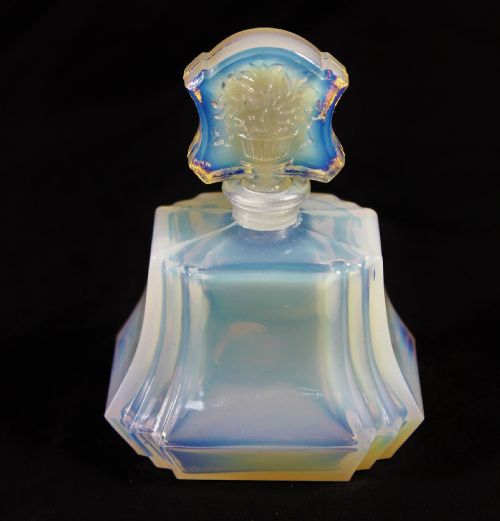
The versions most frequently met on this page include French opalescent and pressed glass creations from the Art Deco period, alongside earlier Victorian examples. Makers utilised overlapping layers, enamel, and silver mountings to elevate simple glassware into decorative art objects.
How they were made
Glassmakers employed techniques such as pressing, moulding, and casing to achieve varied depths of blue colouration and opalescence. Frosted and opaline finishes required careful temperature control during the cooling process to create the desired translucent quality.
Silversmiths and enamelers fitted sterling silver collars, hinged caps, and guilloche enamel details directly onto the glass bodies. These metal components were often hallmarked and secured to protect the bottle rim and house an internal stopper.
Listings span the nineteenth century and the Art Deco period of nineteen thirty, uniting opaline glass, frosted glass, and sterling silver.
What varies in quality
The standard of a blue glass flacon depends heavily on the crispness of the moulded relief and the purity of the glass body. Pieces featuring intricate opalescence or smooth cased overlays demonstrate greater technical skill in the kiln.
The refinement of the metal mounts also dictates overall execution, separating standard production wares from pieces finished with detailed guilloche enamel or hand-chased sterling silver work.
Rene Lalique·Sabino
The Blue Glass Flacon Glossary
- Opalescent Glass
- Glass that diffuses light to display a milky, iridescent glow, frequently shifting in tone across the moulded contours.
- Guilloche Enamel
- A decorative technique where translucent enamel is layered over engine-turned metalwork to create repeating geometric patterns.
- Cased Glass
- Glass formed of two or more distinct layers of different colours, often cut away to reveal the contrasting hue beneath.
- Sterling Silver
- A silver alloy containing substantial pure silver by weight, commonly used for the hinged caps and collars of scent bottles.
Blue Glass Flacon: Frequently Asked Questions
What is a blue glass flacon used for?
These vessels were originally designed to hold perfume, liquid scents, or smelling salts on a Victorian or Art Deco dressing table. They served as both functional containers and decorative ornaments.
Today, collectors display them on vanity trays or within cabinet collections to showcase the rich blue glass tones and metalwork.
How do I identify an Art Deco flacon?
Art Deco examples typically display geometric mouldings, stylised motifs, and opalescent or frosted glass bodies dating from around nineteen thirty. They often feature minimal sterling silver mounts rather than elaborate nineteenth-century chasing.
Signatures or moulded marks from makers like Sabino or Lalique frequently appear on the base or side of these twentieth-century pieces.
What materials are used in these bottles?
The primary body is constructed from glass, which ranges from clear opaline and frosted types to deep cased blue overlays and pressed opalescent glass. Silver and sterling silver provide structural caps and collars.
Enamel, particularly guilloche enamel, is often applied to the metal components to introduce additional colour and pattern.
How do nineteenth-century bottles differ from later ones?
Nineteenth-century examples, such as those from the French Second Empire or Victorian era, tend to feature heavy silver mounts and cased glass overlays. The aesthetic leans towards ornate craftsmanship and detailed metalwork.
Later twentieth-century pieces focus more on the sculptural qualities of moulded opalescent glass, reflecting the shift towards Art Nouveau and Art Deco design styles.