

Blue Gemstone Cluster
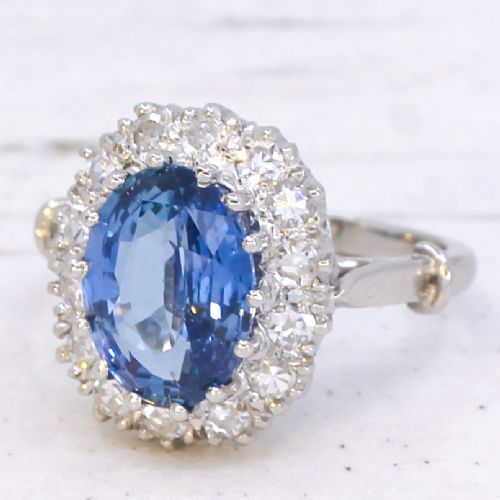
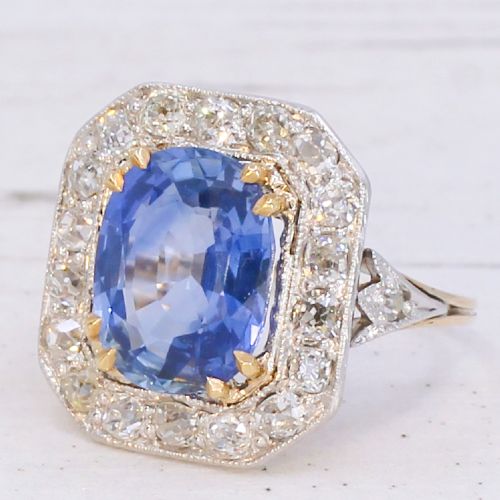
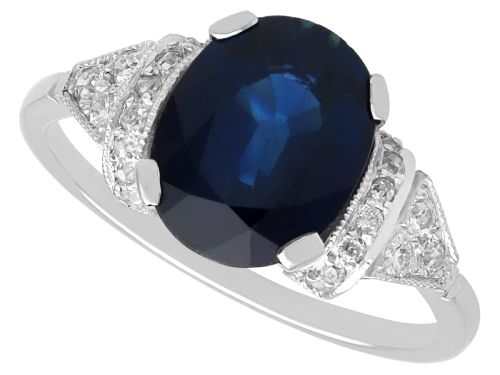
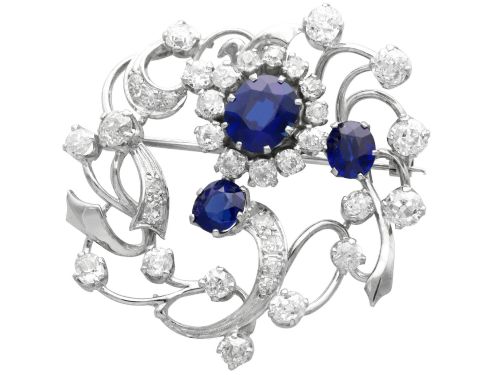
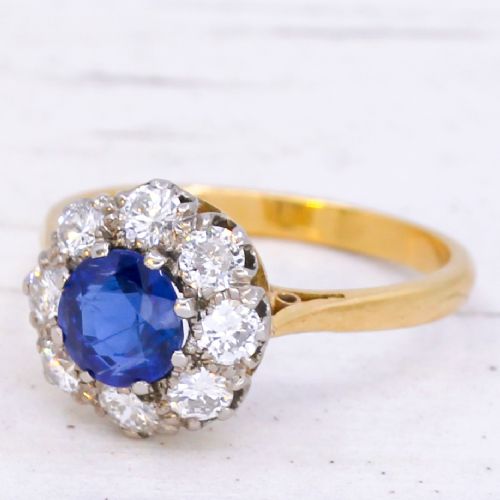
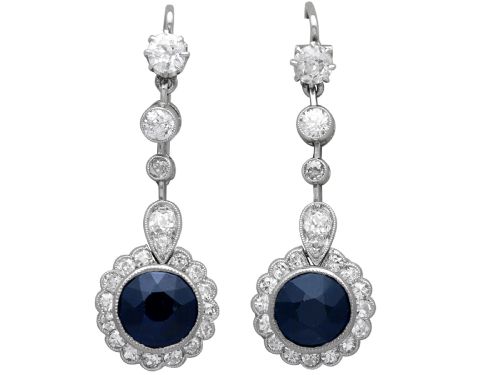
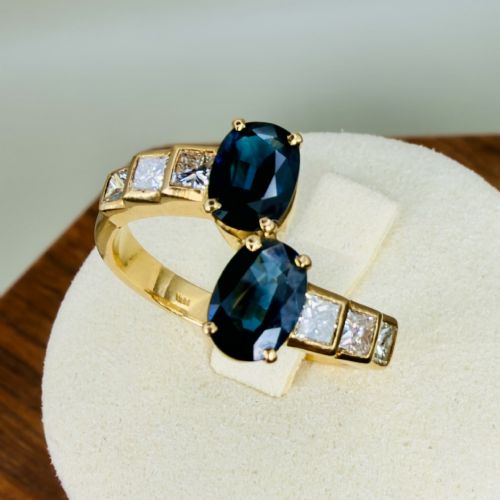
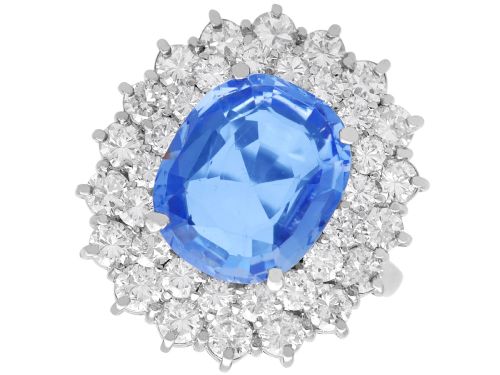
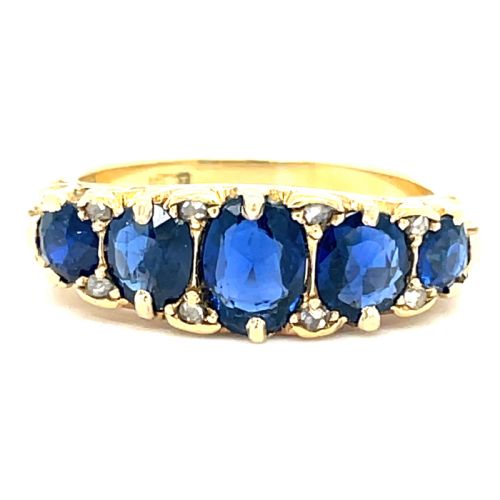
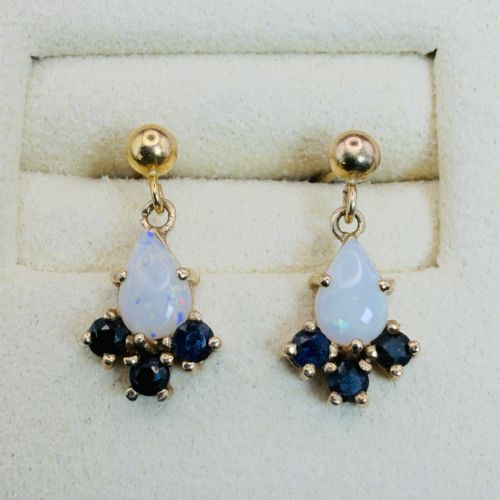
A blue gemstone cluster brings together rich central sapphires, aquamarines or tanzanites framed by sparkling diamonds in enduring platinum and gold settings.
Blue Gemstone Cluster
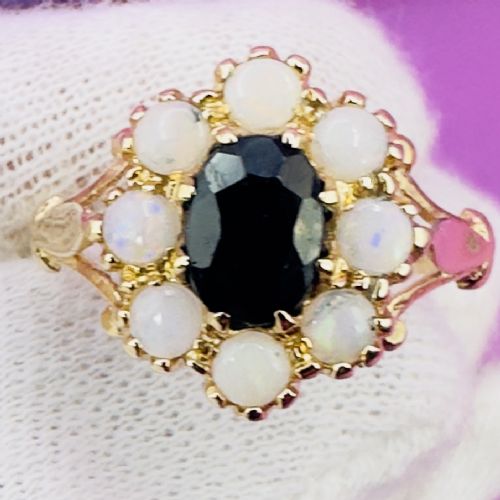
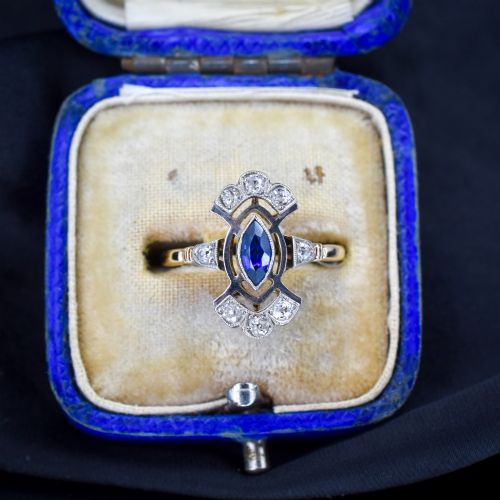
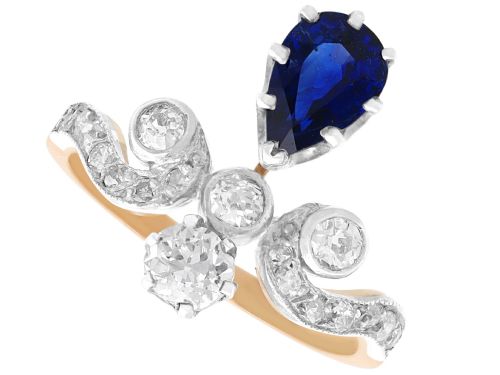
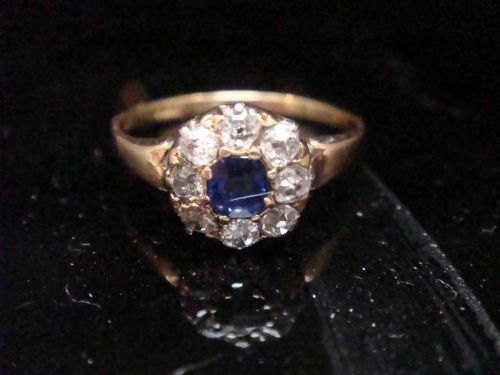
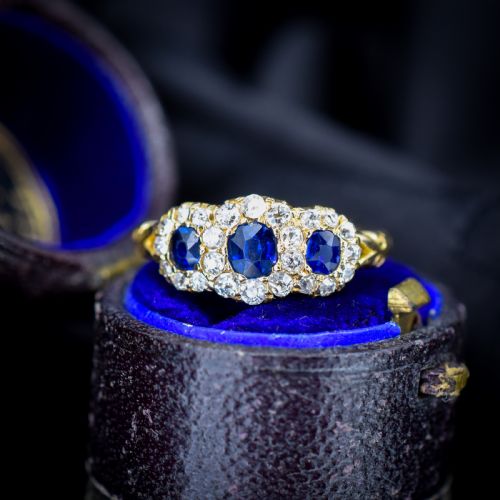
The selection spans Victorian, Edwardian, Art Deco and mid-century periods, alongside vintage and contemporary classic revivals. Rings dominate the selection, ranging from traditional boat shapes and navette outlines to circular daisy designs.
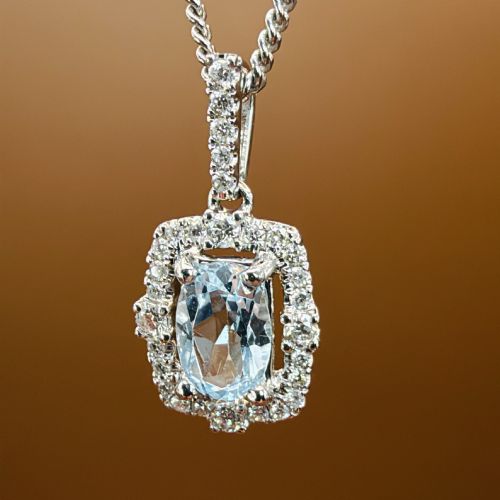
Sapphire remains the primary blue gemstone across Victorian, Edwardian and Art Deco examples, while aquamarine and tanzanite frequently appear in mid-century and vintage pieces. Gold and platinum provide the structural foundation for these arrangements.
Materials and construction
Goldsmiths utilised 18ct yellow gold, 14ct gold, 9ct gold and platinum to secure the stones, occasionally combining gold shanks with platinum settings to enhance the brilliance of the diamonds. Silver also appears on early Edwardian mounts alongside gold.
Central stones feature varied cuts including oval, emerald, pear, princess and cushion shapes, complemented by old cut or modern brilliant cut diamonds. Prong, bezel and halo settings hold each gemstone firmly in place within the cluster arrangement.
Blue Gemstone Cluster Retail Price Guide 2026
Typical asking prices for blue gemstone cluster among the pieces listed under this phrase on Sellingantiques today, from the lower quarter to the upper quarter. They describe what is for sale here now, not the wider market.
Listings span eight distinct periods from the Victorian era through the 1960s, executed in platinum and various carats of gold.
Distinctions in quality
Quality rests upon the depth of colour and clarity of the central blue gemstone, whether a Ceylon sapphire, an aquamarine or a tanzanite. Stones with vibrant saturation and minimal inclusions elevate the overall piece.
The precision of the stone setting and the matching of the surrounding diamond melee define the standard of craftsmanship. Uniformity in diamond size and symmetry within the cluster indicate careful bench work.
The Blue Gemstone Cluster Glossary
- Cluster ring
- A ring featuring a central prominent gemstone encircled by a ring of smaller stones, typically diamonds.
- Navette
- A boat-shaped gemstone cut or mounting that tapers to points at both ends, popular in Art Deco designs.
- Daisy cluster
- A floral ring design where round accent stones surround a central round gemstone like petals.
- Old cut diamond
- A hand-faceted diamond cut before modern machine standards, featuring a smaller table and high crown.
- Boat ring
- A curved, horizontally oriented ring shape designed to sit low across the finger.
Blue Gemstone Cluster: Frequently Asked Questions
What periods do these pieces come from?
The selection includes Victorian, Edwardian, Art Deco and mid-century eras, extending into later vintage revivals.
Craftsmanship and metal choices often reflect these specific historical periods.
Are all the blue stones sapphires?
While sapphire is the most common blue gemstone, aquamarine and tanzanite also appear frequently.
Mid-century designs in particular tend to favour the pale blue of aquamarine or the violet-blue of tanzanite.
What metals were used in the settings?
Makers utilised platinum, 18ct yellow gold, 18ct white gold, 14ct gold and 9ct gold across different eras.
Early pieces sometimes combine gold shanks with platinum or silver settings.
How should I wear an antique cluster ring?
Cluster rings make striking standalone pieces on the hand due to their broad face and colourful stones.
Consider pairing them with plain wedding bands to let the cluster remain the focal point.