



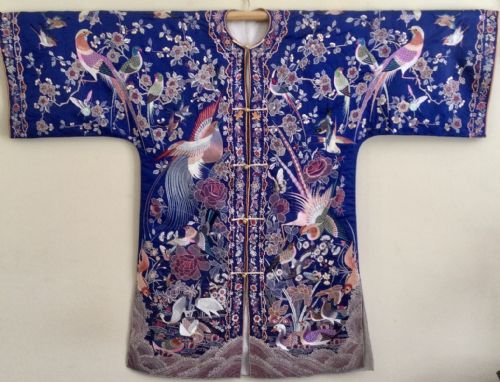

Blue Embroidered Textile
These blue embroidered textile pieces bring hand-stitched silk, wool and velvet into a room, offering centuries of global needlework tradition for your walls.
Blue Embroidered Textile
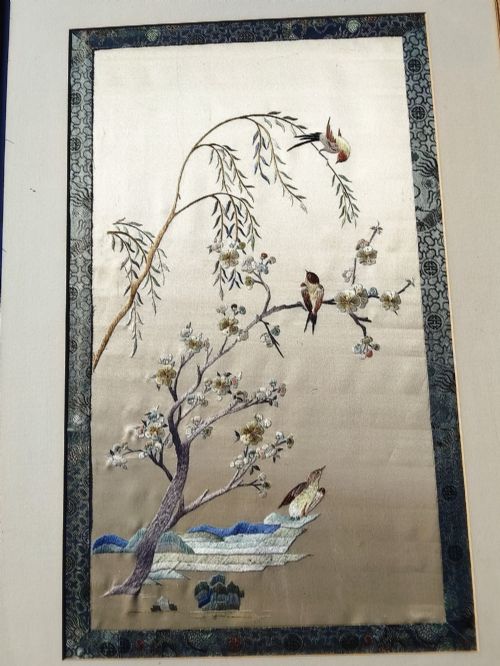
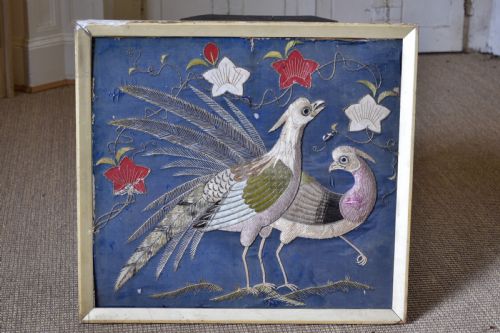
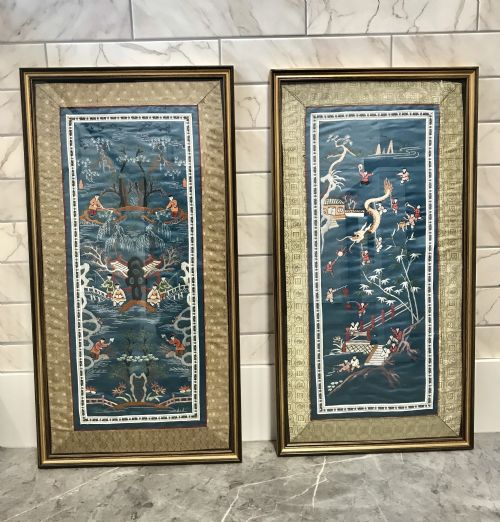
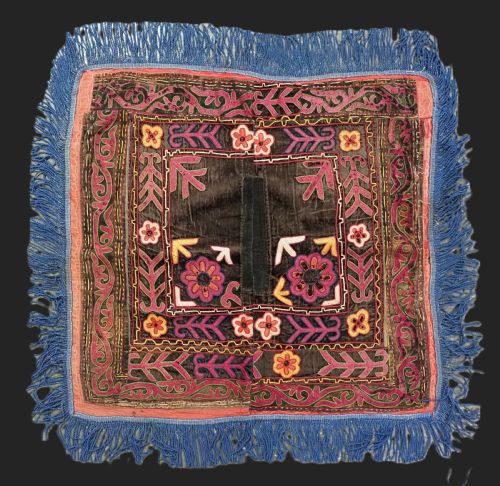
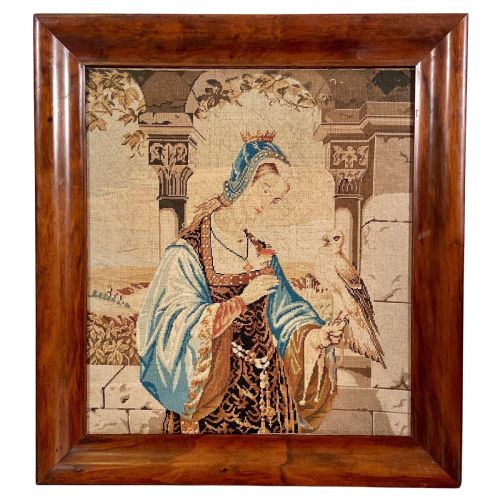
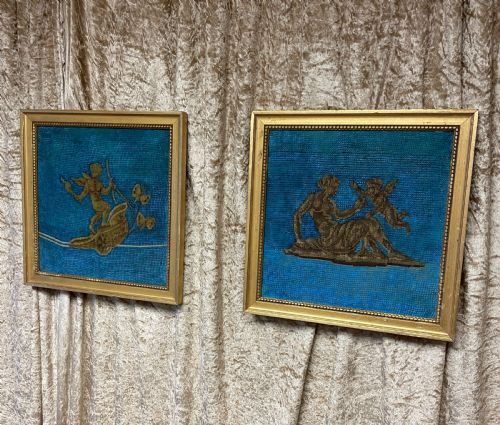
A blue embroidered textile is a needlework piece featuring blue threads, silks or backgrounds, encompassing framed art, wall hangings and antique garments. You are most likely to meet nineteenth-century Chinese silk panels, Central Asian tribal dowry pieces, and European needlework pictures.
The inventory ranges from eighteenth-century French panels to nineteen-sixties vintage oriental pictures. Makers utilised varied surfaces including cotton, wood, and glass framing to preserve these delicate works.
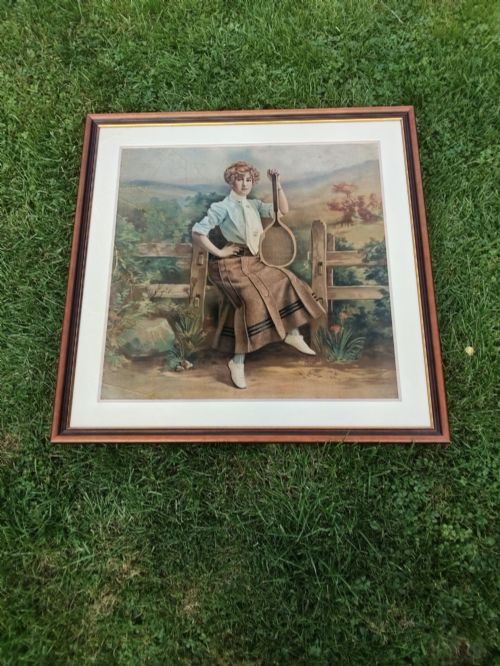
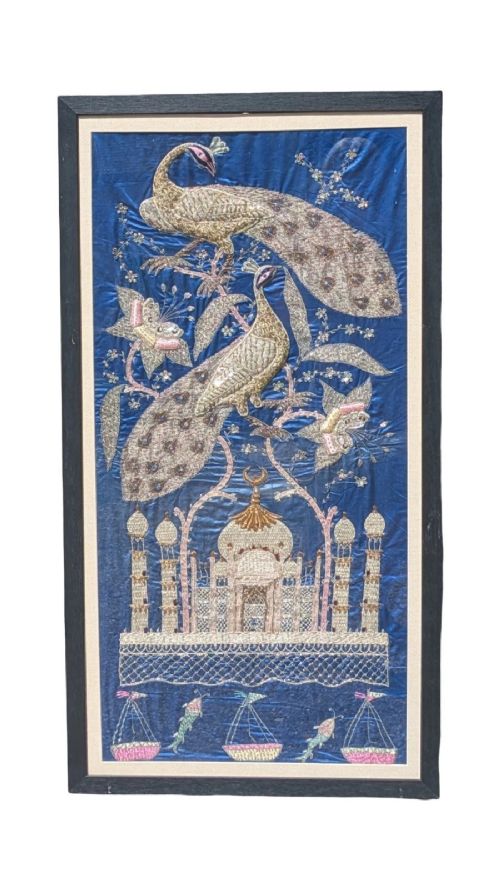
Forms span from Ottoman velvet coverlets and Anglo-Indian Taj Mahal depictions to Edwardian tapestries and Uzbek Lakai tribe ilgich wall hangings. These objects served as decorative wall art, traditional dowry items, and scholarly textile art.
Materials and construction
Artisans stitched elaborate scenes using silk, wool, and metallic thread upon backgrounds of velvet, cotton, and woven textile. These materials were frequently mounted within wooden frames under glass to protect the fragile fibres.
Techniques combine hand sewing and traditional needlework across diverse cultural workshops, from Chinese figural panels to Ottoman metal-thread coverlets. Central Asian tribal pieces employ dense geometric stitching characteristic of regional dowry embroidery.
Blue Embroidered Textile Retail Price Guide 2026
Typical asking prices for blue embroidered textile among the pieces listed under this phrase on Sellingantiques today, from the lower quarter to the upper quarter. They describe what is for sale here now, not the wider market.
Current listings feature textiles from the eighteenth century, nineteenth century, Edwardian era, and nineteen-sixties using silk, wool, velvet, and metallic thread.
Distinctions in quality
Quality depends upon the precision of the hand sewing and the complexity of the rendered figures, dragons, trees, or classical portraits. Finer examples display meticulous control of metallic thread and silk across intricate compositions.
The preservation of the underlying velvet, wool, or silk fabric dictates the overall standard of the piece. Intact framing and original structural materials elevate the surviving condition of these historical textiles.
The Blue Embroidered Textile Glossary
- Ilgich
- A traditional Uzbek dowry embroidery piece created for wall hanging by tribal makers. These works often feature bold geometric motifs and distinct cultural symbolism.
- Needlework
- A piece of artwork or textile produced by sewing stitches with a needle upon a fabric ground. This term covers both domestic tapestries and formal framed pictures.
- Metallic thread
- A decorative thread incorporating flat strips of metal or wrapped core fibres used in embroidery. Ottoman and Asian textiles frequently employ this material to add reflective detail.
- Chinoiserie
- A European artistic style reflecting Chinese motifs and decorative traditions. Items in this taste often appear within nineteenth-century framed silk pictures.
- Tapestry
- A heavy textile woven or stitched with pictorial designs meant for display. These pieces usually hang upon walls as framed works or panels.
Blue Embroidered Textile: Frequently Asked Questions
How do I hang a textile?
Many of these pieces arrive framed under glass, allowing direct wall mounting using standard picture hooks.
Unframed wall hangings require careful consideration of weight and support to avoid pulling the antique fibres.
What periods are available?
The selection spans from the eighteenth century through the nineteenth century, including Edwardian examples.
Twentieth-century pieces from nineteen hundred up to nineteen sixty also appear in the inventory.
Where did these textiles originate?
Pieces originate from various global traditions, including China, Turkey, France, India, and Central Asia.
Tribal workshops, European studios, and Ottoman centres all contributed to this diverse textile heritage.
What materials were used?
Artisans worked primarily with silk, wool, velvet, cotton, and metallic thread stitched onto textile grounds.
Surviving examples are frequently housed in wooden frames behind glass for protection.
How do I care for silk embroidery?
Keep framed pieces away from direct sunlight to prevent the silk and dyed threads from fading over time.
Maintain a stable room atmosphere to protect delicate organic fibres and metallic elements from moisture damage.