



Black Spindle Back Chairs
Black spindle back chairs bring vernacular warmth and ebonised polish together, offering robust seating shaped by nineteenth-century craft traditions.
Black Spindle Back Chairs
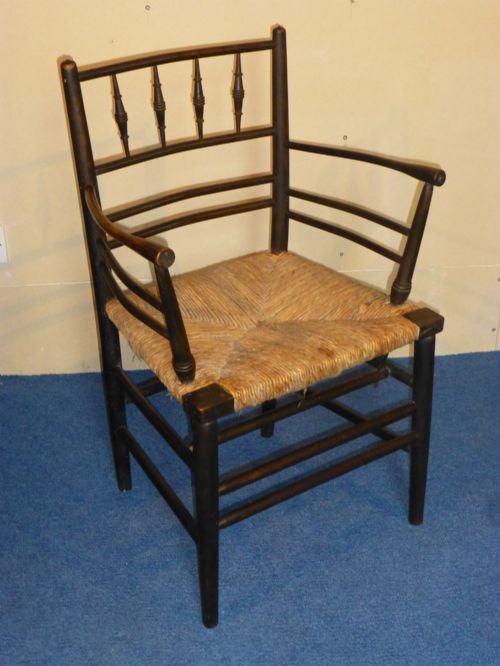
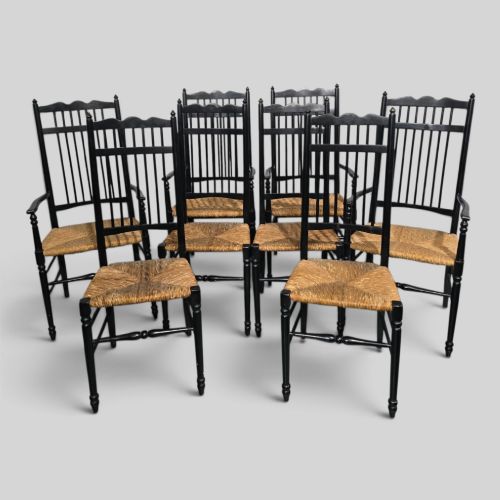
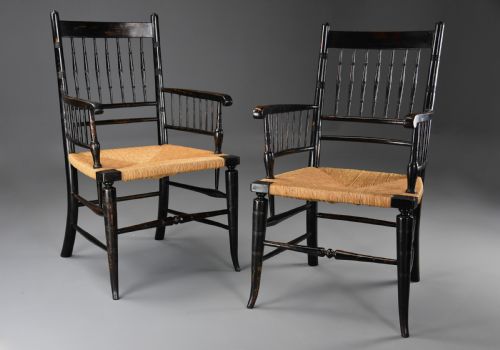
Black spindle back chairs comprise a diverse group of seating forms, including armchairs, rocking chairs, dining chairs, prayer chairs, child chairs, and salon chairs. These pieces trace their origins through the Victorian era, the nineteenth century, the Regency period, and even earlier eighteenth-century vernacular traditions. Buyers seeking black spindle back chairs will encounter everything from simple painted rockers to sophisticated ebonised designs by notable makers.
Armchairs and rocking chairs provide larger scales for domestic comfort, while salon chairs and prayer chairs offer delicate proportions suitable for specific rooms. The turning of the spindles and uprights gives each piece linear rhythm, a defining characteristic of this seating category. Survival in original paint or ebonised finishes indicates careful preservation by previous owners.
How they were made
Makers utilised a variety of native and accessible timbers, constructing frames in beech, birch, pine, and walnut. These woods provided the structural integrity needed for slender turned spindles and load-bearing legs. Craftsmen turned components on lathes before assembling them with traditional joinery.
Surfaces received dark ebonised treatments or coats of paint, capturing the taste of the nineteenth century and earlier rural workshops. Natural rush and woven seating materials frequently provide durable, textured pads for the frames. Some variants incorporate upholstered elements, expanding the comfort of the traditional wooden form.
Black Spindle Back Chairs Retail Price Guide 2026
Typical asking prices for black spindle back chairs among the pieces listed under this phrase on Sellingantiques today, from the lower quarter to the upper quarter. They describe what is for sale here now, not the wider market.
Listings feature woods such as beech, birch, pine, and walnut, paired with ebonised finishes or original paint.
What varies in quality
Quality rests in the crispness of the spindle turning and the integrity of the structural frame. Finer examples exhibit balanced proportions and harmonious scaling between the uprights, arms, and seats.
The survival and condition of original ebonised finishes or early paint layers significantly influence the character of a piece. Original rush seating intact and tight demonstrates superior preservation compared to later replacements.
Morris and Co·Philip Webb·Liberty of London·Ford Madox Brown
The Black Spindle Back Chairs Glossary
- Ebonised wood
- Timber treated with stain, dye, or paint to simulate the dark, dense appearance of ebony. This finish gained immense popularity during the Victorian and Aesthetic periods.
- Rush
- A marsh plant used to weave durable, traditional seats for vernacular and country chairs. Natural rush provides a textured, organic surface.
- Spindle back
- A chair back constructed from a series of slender, turned vertical wooden rods or spindles. This construction offers structural support with visual lightness.
- Prie dieu
- A low prayer chair designed for private devotion, often featuring a low seat and an upper rest for kneeling or leaning. These nineteenth-century pieces frequently display turned and ebonised frames.
- Vernacular
- Everyday furniture built by regional craftsmen following local traditions rather than high-style academic designs. Welsh turned chairs represent strong examples of this independent rural craft.
Black Spindle Back Chairs: Frequently Asked Questions
What periods do these chairs come from?
The pieces span the eighteenth, nineteenth, and Victorian eras, encompassing Regency designs and the Arts and Crafts movement.
Craftsmen continued traditional turning techniques across these decades, leading to overlapping styles in rural and urban workshops.
How were rush seats maintained?
Natural rush is woven tightly across the seat frame to create a resilient, supportive surface for daily sitting.
Owners protect these organic materials by avoiding damp environments and keeping the dried plant fibres conditioned.
Where were prayer chairs used?
Prayer chairs, or prie dieu chairs, served in domestic bedrooms and private sitting rooms for personal devotions.
Their low profiles and compact frames allowed them to fit easily into domestic spaces without dominating the room.
What distinguishes ebonised furniture?
Ebonised surfaces mimic expensive exotic hardwoods by staining or painting cheaper timbers like beech or birch in deep black.
This technique allowed nineteenth-century makers to achieve sophisticated, dark aesthetics popular in Aesthetic and Victorian interiors.