

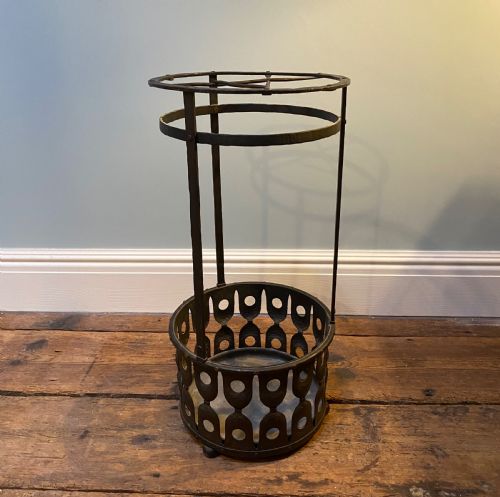
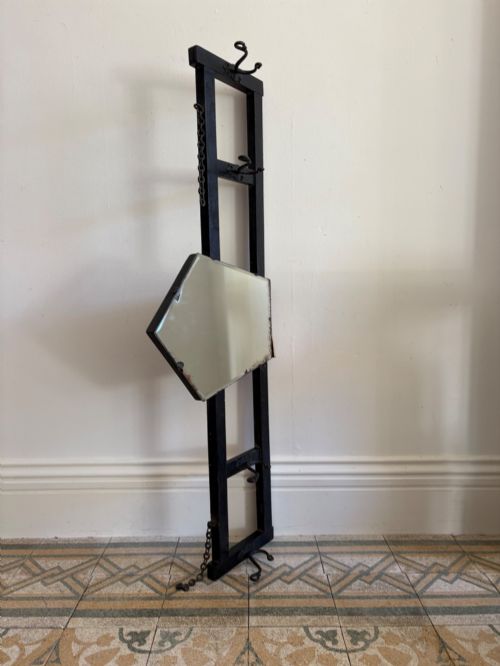
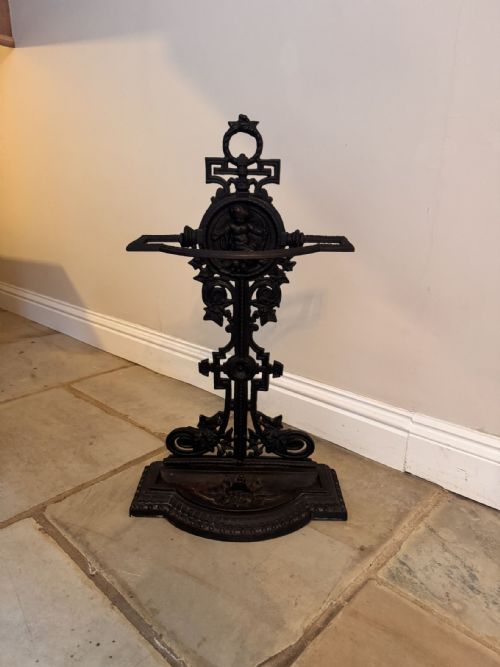
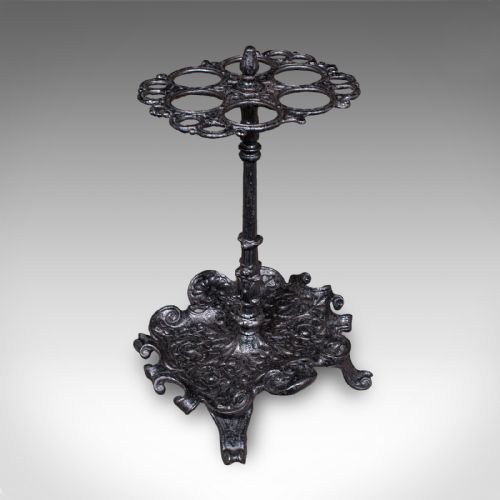
Black Hall Stand
When you search for a black hall stand, you enter a world of heavy cast iron and intricately carved wood designed to organise an entrance.
Black Hall Stand
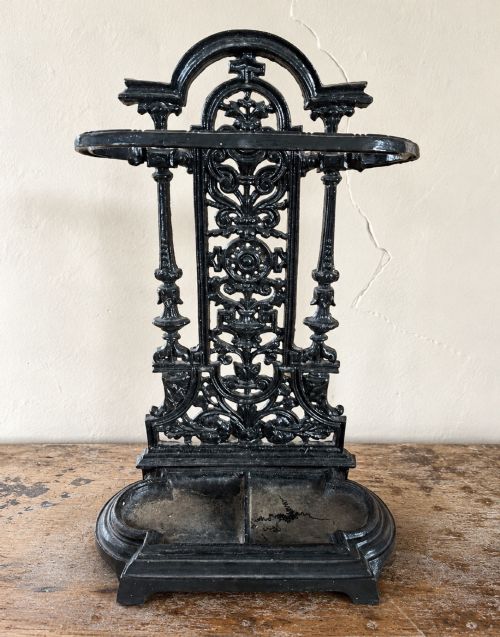
A black hall stand provides a dedicated space in an entranceway for coats, hats, sticks, and umbrellas. The pieces available span the nineteenth century and the early twentieth century, taking forms such as umbrella stands, stick stands, and combined hall furniture.
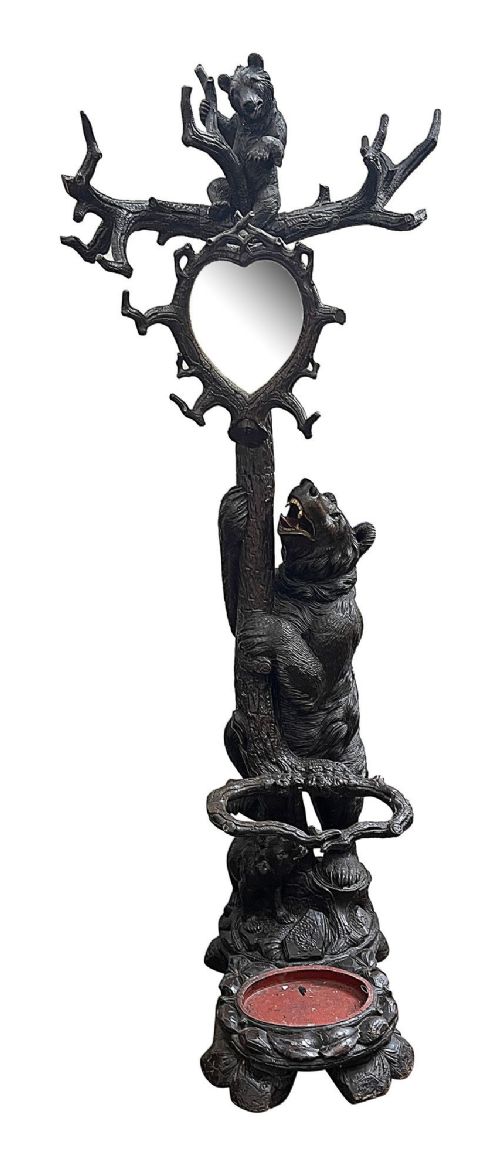
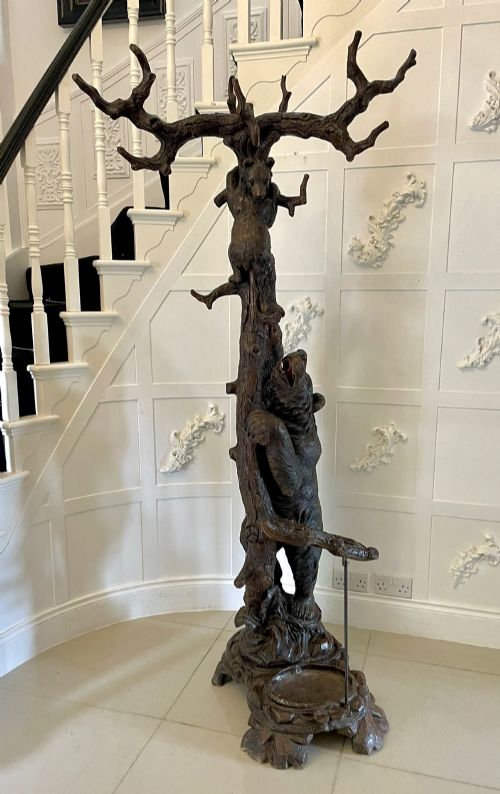
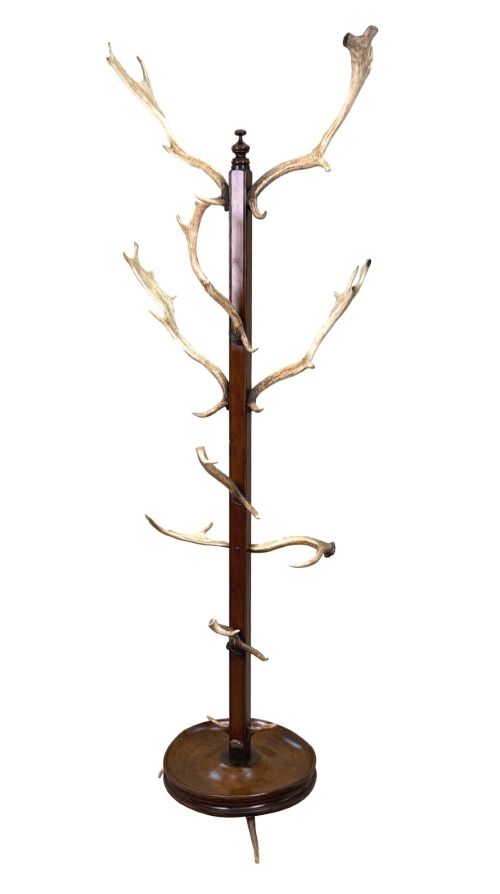
Victorian cast iron examples dominate the selections, alongside heavily carved wooden Black Forest pieces and sleek geometric designs from the Art Deco period. Buyers encounter everything from utilitarian umbrella racks to large architectural oak stands featuring carved bears and mounted mirrors.
Materials and construction
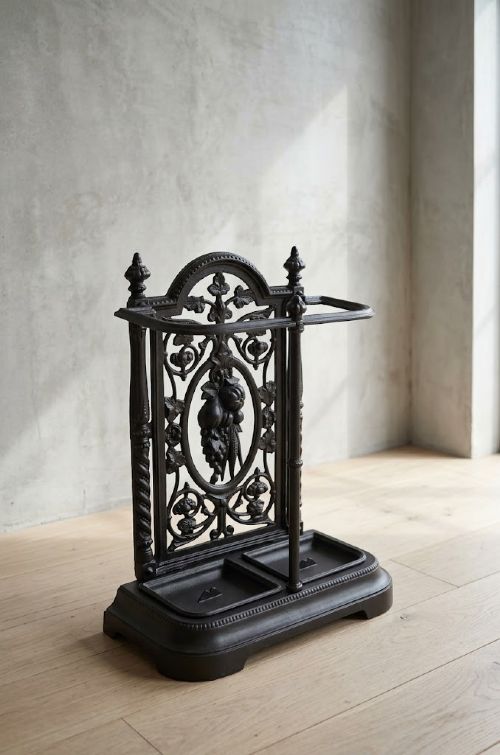
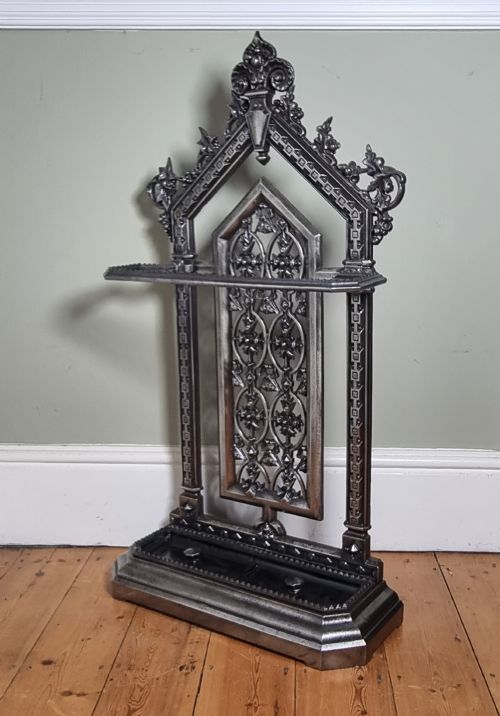
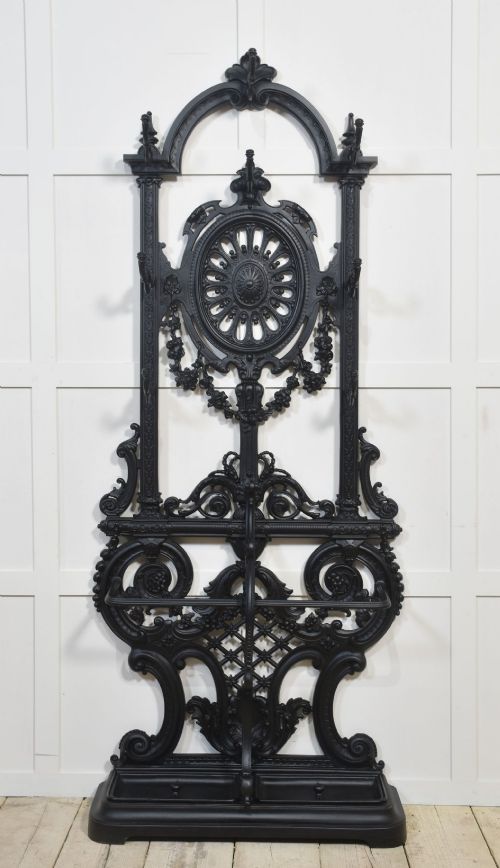
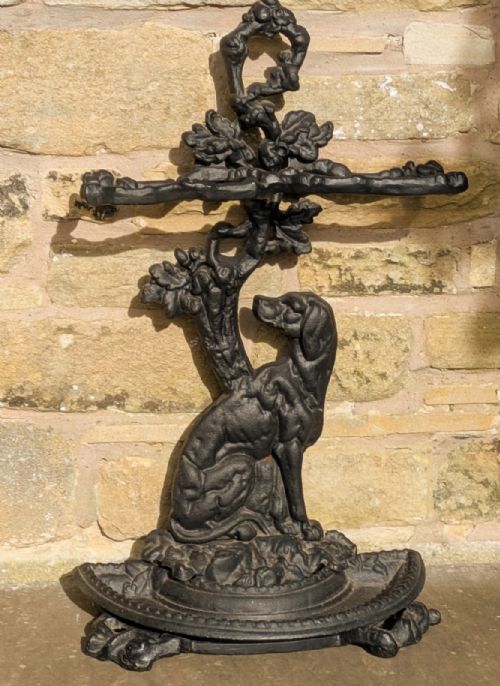
Foundries utilised cast iron and wrought iron poured into moulds to create rigid, durable umbrella loops and openwork frames. These metal structures were frequently painted black to protect the surface and achieve a uniform finish.
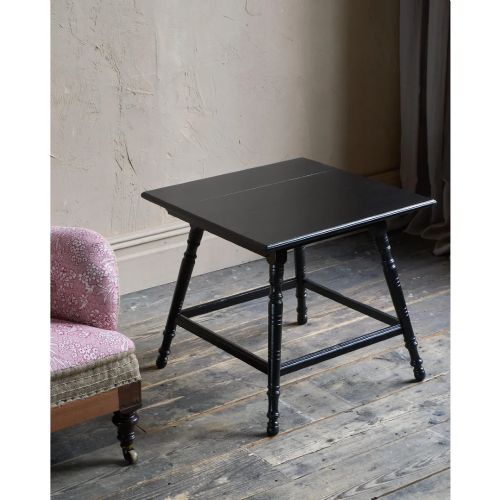
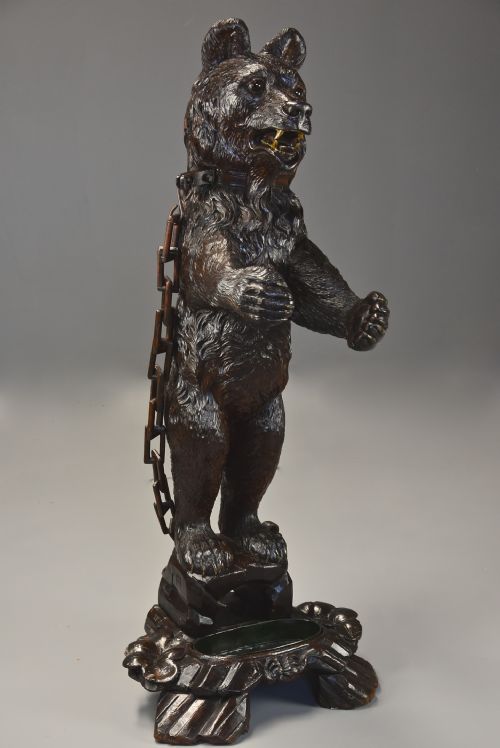
Carved wood examples relied upon linden wood, walnut, and oak, shaped by hand with chisels to depict naturalistic forms like animals and foliage. Ebonised wood and nickel-plated finishes appear in the later aesthetic and Art Deco eras to alter the visual weight of the timber and metal.
Black Hall Stand Retail Price Guide 2026
Typical asking prices for black hall stand among the pieces listed under this phrase on Sellingantiques today, from the lower quarter to the upper quarter. They describe what is for sale here now, not the wider market.
Functional umbrella stands appear alongside larger hall furniture incorporating mirrors, coat hooks, and side tables.
Assessing craftsmanship and design
Depth and precision of the hand-carving separate standard wooden hall stands from exhibition-quality pieces, particularly within the Black Forest tradition where animal anatomy and foliage require steady artistic control. In metalwork, the crispness of the foundry casting and the complexity of the stick loops indicate the maker's ambition.
The integrity of the structural joints and the presence of original drip pans or mirrors influence how complete a piece remains. Foundry stamps and registration marks further distinguish standard production items from documented works by notable foundries.
Coalbrookdale·Falkirk Foundry·Hindley and Sons
The Black Hall Stand Glossary
- Cast iron
- A strong, hard alloy of iron and carbon poured into a mould to shape complex patterns. It forms the rigid frame of many Victorian umbrella stands.
- Ebonised wood
- Timber treated with a dark stain or chemical process to imitate ebony. This dark finish creates a formal, sombre appearance suitable for nineteenth-century interiors.
- Black Forest
- A style of wood carving originating in Switzerland and Germany, known for realistic depictions of animals such as bears and foxes. These carvings often form the structural pillars of hall stands.
- Demi-lune
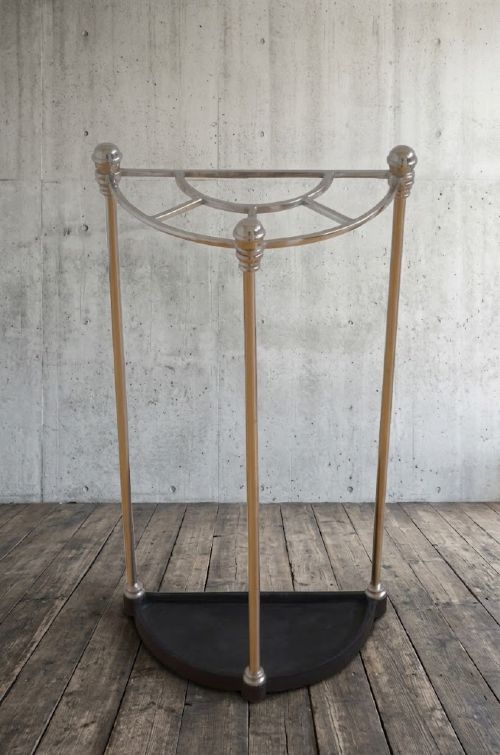
- A half-moon shape used for console tables and umbrella stands designed to sit flat against a wall. This profile saves floor space in narrow hallways.
- Stick loop
- The metal or iron ring divider designed to keep walking canes and umbrellas upright and separated. It prevents wet tips from pooling together.
Black Hall Stand: Frequently Asked Questions
What is a black hall stand used for?
These furnishings serve as an entranceway drop point for daily outdoor wear. They hold coats, hats, umbrellas, and walking sticks ready for departure.
In period homes, they maintained order in the hallway before guests entered the main reception rooms. Today they fulfil the same practical role while adding architectural presence to an entrance.
How do I identify a Victorian cast iron stand?
Victorian cast iron stands display heavy, rigid frames with openwork scroll designs or animal figures like gun dogs. Many incorporate built-in drip pans at the base to catch water from wet umbrellas.
Look for foundry stamps or registration marks cast into the metal near the base. These markings often reveal the date of production or the manufacturing company.
What distinguishes Black Forest hall stands?
Black Forest hall stands feature deeply carved wooden figures, most notably bears holding branches or standing beside oak trees. The carving is executed in softwoods like linden or walnut with high attention to anatomical detail.
These pieces often combine umbrella storage with coat hooks and a central mirror. They reflect the nineteenth-century taste for naturalism and rustic alpine themes.
How do I care for cast iron and ebonised wood?
Cast iron requires minimal maintenance beyond dusting and occasional light oiling if untreated, though most period examples possess a painted black surface. Keep them away from persistent dampness to prevent surface corrosion.
Ebonised wood benefits from gentle dusting with a soft cloth and periodic polishing with appropriate waxes. Avoid harsh chemical cleaners that can strip the dark surface treatment.