



Black and White Table
A black and white table brings stark contrast to a room, combining pale marble tops with dark iron, wood, or paint.
Black and White Table
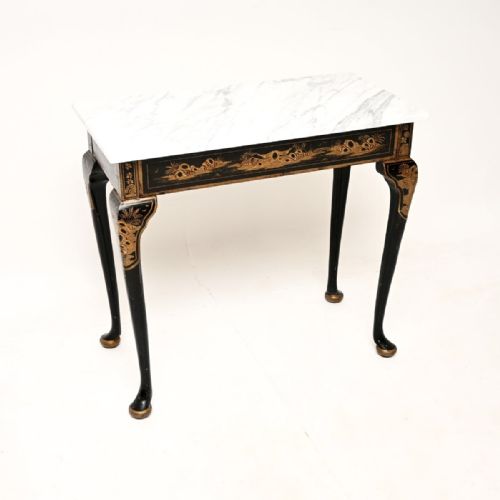
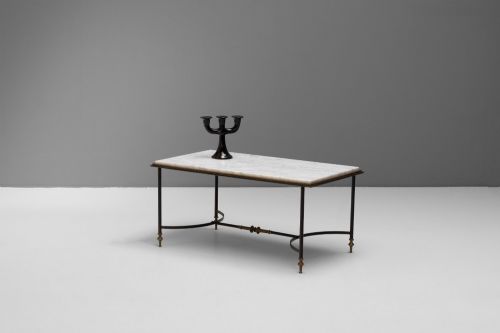
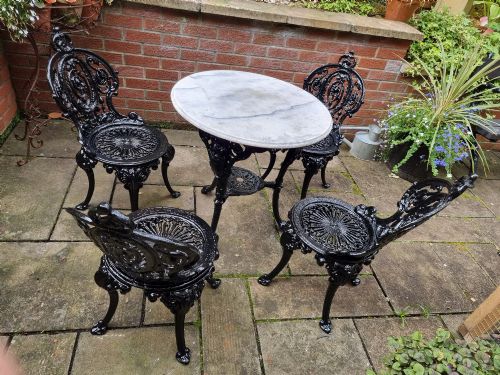
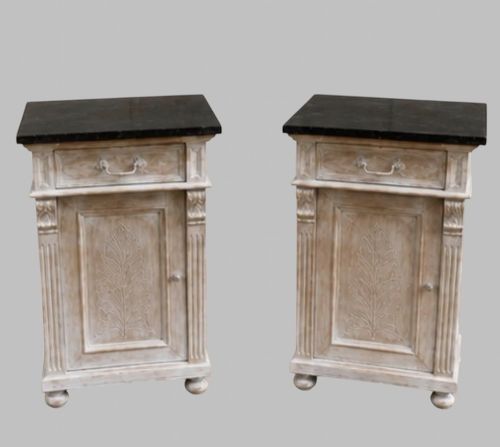
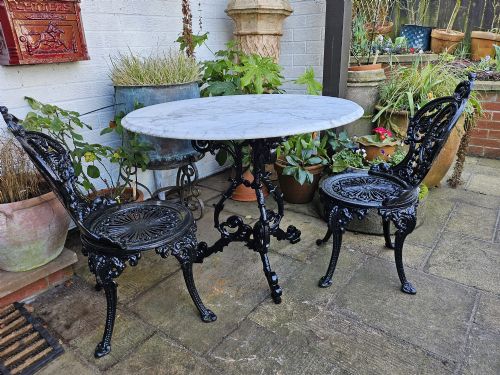
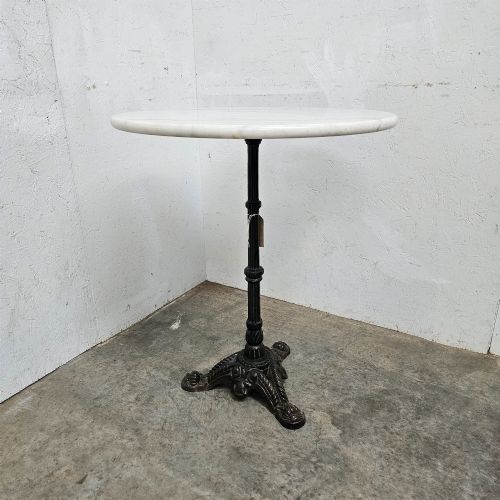
A black and white table encompasses a striking mix of surfaces and structures, frequently pairing cool white marble with ebonised wood, cast iron, or painted finishes. These pieces range from compact bistro and coffee tables to substantial console tables and bedside cabinets.
The selection leans heavily toward nineteenth-century designs and pieces from the early twentieth century, including French bistro styles and Victorian lacquerwork. Buyers encounter both utilitarian cafe furniture and decorative domestic items sharing this classic palette.
How they were made
Makers combined robust structural metals like cast iron, brass, and wrought iron with smooth stone surfaces, primarily white marble, to create durable and stable furniture. Wooden elements were often painted, ebonised, or finished with detailed lacquerwork.
Techniques varied from industrial casting for heavy garden and cafe bases to fine hand-carving and decorative painting on cabinets and side tables. Glass and ceramic components were also integrated into lighting and smaller display items.
Black and White Table Retail Price Guide 2026
Typical asking prices for black and white table among the pieces listed under this phrase on Sellingantiques today, from the lower quarter to the upper quarter. They describe what is for sale here now, not the wider market.
Some side tables are carved in the lifelike form of seated hounds, keeping a permanent watch beside your chair.
What varies in quality
Quality rests upon the integrity of the materials, noting particularly the thickness and veining of the marble top alongside the weight and casting crispness of the iron or brass base. Superior examples retain original painted or ebonised surfaces without heavy modern intervention.
The refinement of decorative details, such as carved woodwork, applied lacquer, or integrated ceramic mounts, dictates the distinction between standard utilitarian items and higher-tier decorative pieces.
Eileen Grey
The Black and White Table Glossary
- Ebonised
- Wood treated to resemble ebony, creating a dense black finish that contrasts sharply with white marble.
- Bistro table
- A small cafe table typically constructed with a heavy metal base and a circular stone or wooden top.
- Chinoiserie
- European decorative art imitating Chinese motifs, often seen in black lacquerwork and gilded detailing.
- Spelter
- A zinc alloy frequently used as a cheaper alternative to bronze for sculptural bases and lamp figures.
Black and White Table: Frequently Asked Questions
What is a black and white table?
A black and white table is a piece of furniture featuring a contrasting colour scheme, most commonly found in pieces that pair white marble tops with black painted wood or dark iron bases.
These items span various forms, including bistro tables, console tables, and bedside cabinets, originating from the nineteenth and early twentieth centuries.
How do I care for a marble top?
Marble surfaces require gentle cleaning with mild soap and warm water to preserve the stone and prevent staining from acidic liquids or oils.
Avoid harsh chemical cleaners that can etch the polished white surface over time.
Where were these tables used?
Many of these pieces served practical roles in European cafes, patisseries, and domestic hallways as functional surfaces.
Others functioned as decorative bedside cabinets or side tables within Victorian and Art Deco interiors.
How do I identify a Victorian piece?
Victorian examples often feature dark ebonised woods, elaborate lacquerwork, or dense ceramic and brass components typical of the nineteenth century.
Examining the construction methods and material pairings helps distinguish these from later twentieth-century productions.