


Black and Gold Box
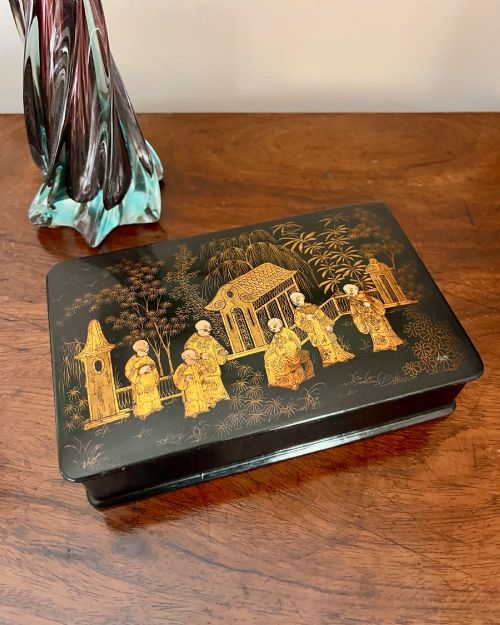
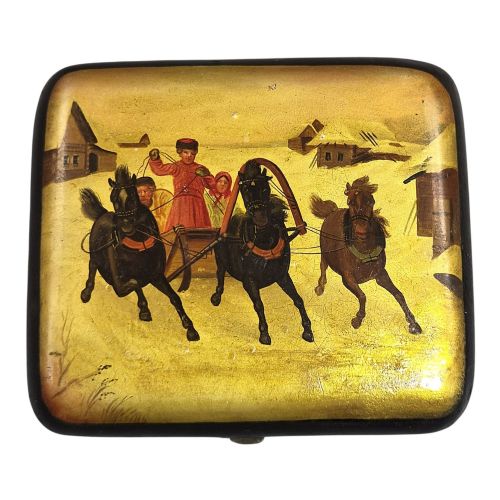
When you handle a black and gold box, you meet centuries of meticulous handcraft from workshops spanning Regency England to Meiji Japan.
Black and Gold Box
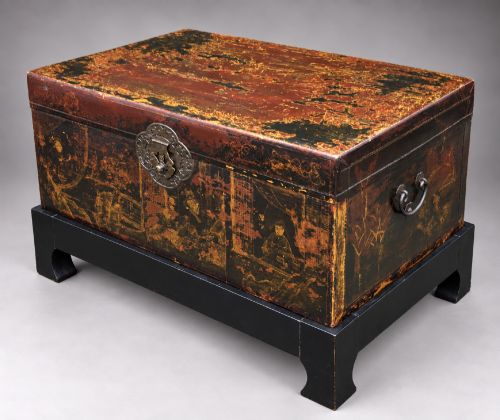
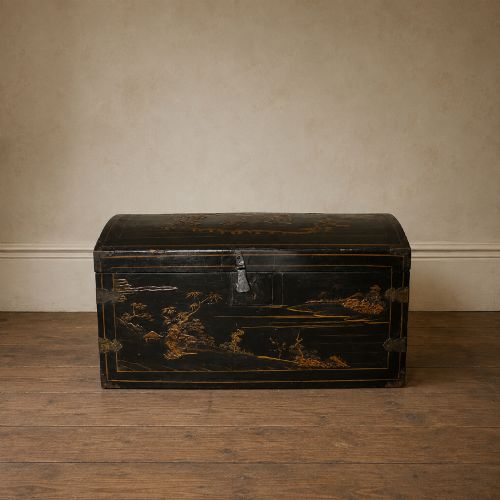
A black and gold box encompasses a diverse group of containers designed for storage, writing, or display, ranging from compact tea caddies to large blanket chests. The pieces gathered here predominantly originate from nineteenth-century workshops in China, Japan, and England, reflecting global trade and aesthetic exchanges.
You will frequently encounter table cabinets, tea caddies, and small decorative trunks, each created to house precious personal items. The forms span from Regency penwork boxes to Japanese lacquer cabinets on stands, showing utility paired with decorative ambition.
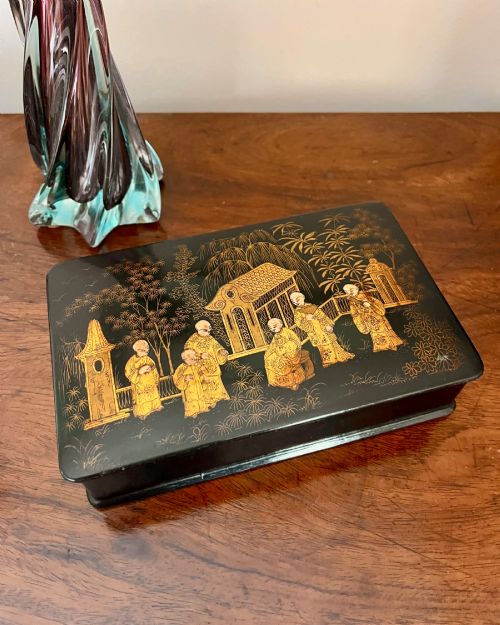
The aesthetic leans heavily into Chinoiserie and export styles, utilising dark grounds punctuated by metallic highlights. These containers served functional roles in period interiors while doubling as displays of refined taste.
Materials and Technique
Makers relied on wood, papier-mâché, and metal foundations, building up multiple coats of lacquer to create a durable, glossy ground. Artisans then applied gold leaf, gilt, or paint by hand to build intricate motifs directly onto the surface.
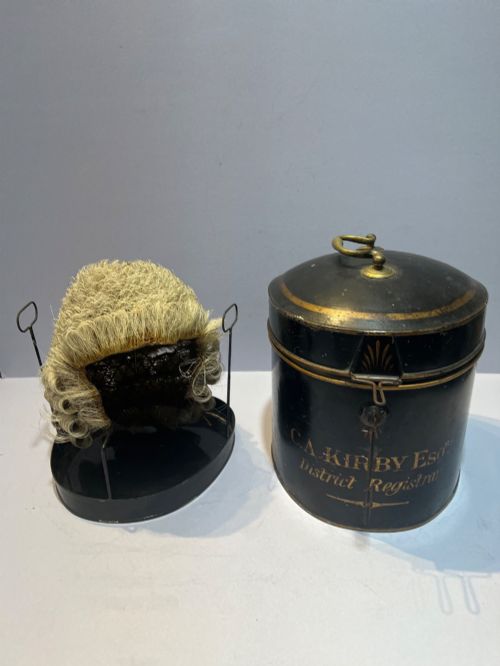
Some nineteenth-century boxes stored legal wigs rather than tea.
Assessing Quality
Quality rests in the precision of the hand-applied decoration and the stability of the foundation material. Superior examples display crisp detail in the gilding and well-aligned joinery that withstands the opening and closing of lids and drawers over generations.
The depth of the lacquer finish and the complexity of the pictorial design distinguish standard production items from masterwork pieces. Original internal fittings, such as lidded tea canisters or fitted writing slopes, elevate the integrity of the piece.
Eade and Son·Vishnyakov Workshop·Hawkes and Co·Heian Zohiko
The Black and Gold Box Glossary
- Chinoiserie
- European interpretation and imitation of Chinese and East Asian artistic traditions. This style dominated decorative arts during the Regency and Victorian periods.
- Lacquer
- A durable finish applied to wood or papier-mâché objects, derived from resin or varnish. It provides a glossy, protective surface ideal for detailed gilding.
- Penwork
- A decorative technique utilising finely drawn ink designs on wood or prepared surfaces. It often mimics more costly inlay or lacquer work through meticulous hand-drawn detail.
- Tea Caddy
- A small container designed for storing loose tea leaves, often featuring internal compartments. They were prized household objects in the eighteenth and nineteenth centuries.
- Pietra Dura
- An artistic technique using cut and fitted polished coloured stones to create geometric or figural images. It frequently appears on nineteenth-century European caskets.
Black and Gold Box: Frequently Asked Questions
What were tea caddies used for?
Tea caddies served to store valuable loose tea leaves securely under lock and key in the formal rooms of the house.
Because tea was an expensive commodity during the Georgian and Regency eras, these containers often featured internal compartments and fitted locks.
How do I care for lacquer boxes?
Keep lacquer surfaces away from direct sunlight and dramatic shifts in temperature to prevent the wood or resin from drying out.
Dust gently with a dry, soft cloth and avoid chemical polishes or excessive moisture that can damage the delicate gilt decoration.
How do I identify Regency penwork?
Regency penwork is characterised by intricate, hand-drawn black ink motifs applied directly to a pale wood or painted ground.
Close inspection reveals the fine line work of the artist, often depicting classical scenes, florals, or Chinoiserie landscapes.
Where were Chinese export pieces made?
Chinese export items were produced in coastal workshops specifically to satisfy European and American market demands for Asian aesthetics.
These pieces combined traditional Chinese lacquer techniques with European furniture forms such as work tables and domed chests.