







Balkan Geometric Carpet
A balkan geometric carpet brings bold village patterns and flatweave craftsmanship into modern interiors.
Balkan Geometric Carpet
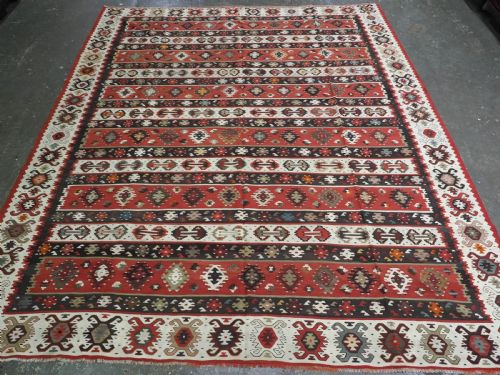
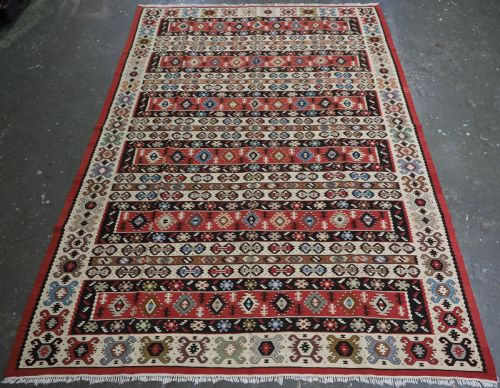
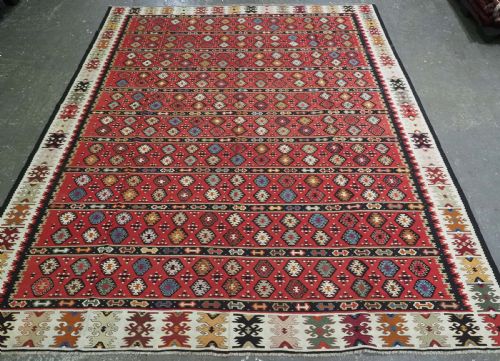
When searching for a balkan geometric carpet, buyers encounter flatwoven kilims originating from regions such as Pirot and Sarkoy, spanning dates from the mid-nineteenth century through the early twentieth century. These textiles are categorised under styles like Balkan Folk Art, Ottoman Balkan, and traditional tribal designs.
The pieces available typically take the form of large room-size carpets, area rugs, and kilim rugs. Designs focus on banded layouts, flowering trees, lattice patterns, and repeat medallions executed in traditional regional motifs.
How they were made
These flatweaves utilise wool and cotton construction. Weavers constructed the textiles using traditional slit-weave and flat-faced tapestry techniques without a pile, producing crisp lines suited to geometric ornamentation.
Natural materials dictated the handling of colour, resulting in warm soft palettes, pastel tones, and deep reds. The interplay of wool warps and wefts created durable floor coverings designed for practical daily use.
Balkan Geometric Carpet Retail Price Guide 2026
Typical asking prices for balkan geometric carpet among the pieces listed under this phrase on Sellingantiques today, from the lower quarter to the upper quarter. They describe what is for sale here now, not the wider market.
Styles recorded in the inventory include Balkan Folk Art, traditional Ottoman Balkan designs, and banded repeat patterns.
What varies in quality
Quality in these flatweaves rests upon the precision of the geometric layout and the preservation of the original weave. Pieces demonstrating scarce designs, such as specific lattice or flowering tree motifs, separate themselves from standard repeat patterns.
The depth and retention of the colour palette also determine distinction within the range. Examples maintaining soft reds, warm tones, or clear pastel hues without fading represent the higher tier of surviving flatweaves.
The Balkan Geometric Carpet Glossary
- Kilim
- A flatwoven carpet or rug produced without a pile by tightly interlacing warp and weft strands. This construction method creates a lightweight textile with identical patterns visible on both sides.
- Pirot
- A regional weaving centre known for producing distinctive flatwoven kilims with precise geometric ornamentation. Rugs from this origin often display balanced motifs and traditional border systems.
- Sarkoy
- A traditional style and town associated with flatwoven rugs featuring banded, floral, or medallion layouts. These textiles originate from the Balkan and Ottoman borderlands.
- Warp
- The stationary vertical threads stretched onto a loom that form the structural foundation of the textile. Weft threads are woven horizontally across these structural strands.
- Band
- A horizontal decorative stripe running across the field of the rug. Banded designs order the geometric motifs into distinct parallel registers.
Balkan Geometric Carpet: Frequently Asked Questions
How do I clean a flatweave rug?
Gentle surface cleaning and regular vacuuming without a beater bar help maintain wool flatweaves. Professional textile cleaning is recommended for deeper maintenance to protect the fibres.
Avoiding excessive moisture and direct sunlight preserves the natural dyes and structural integrity of older pieces.
Are these rugs suitable for high traffic?
Flatwoven kilims are durable due to their tight tapestry construction. They handle normal walking traffic well when paired with a quality rug underlay.
Placing them in moderate traffic areas prevents excessive wear on the wool warps and wefts over time.
How do I date an old kilim?
Dating relies on examining material characteristics, natural dye palettes, and structural wear patterns. Stylistic conventions specific to nineteenth and early twentieth-century workshops also guide identification.
Comparing structural details against documented regional pieces helps establish an approximate period of origin.
Can these rugs be used on heated floors?
Natural wool and cotton flatweaves tolerate standard underfloor heating systems quite well. The breathable nature of natural fibres allows heat to pass through the textile.
Using a breathable underlay prevents heat trapping and protects both the floor and the rug.