
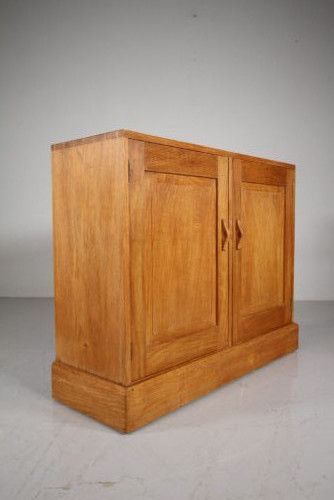
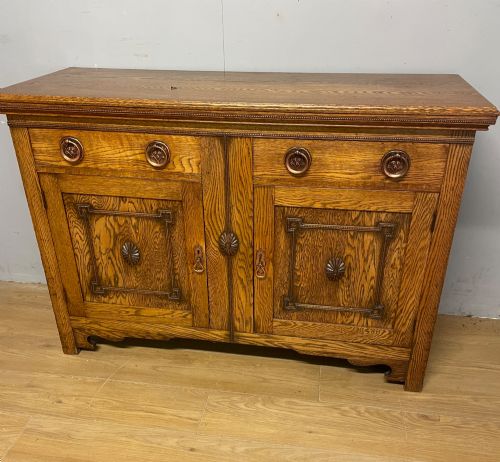
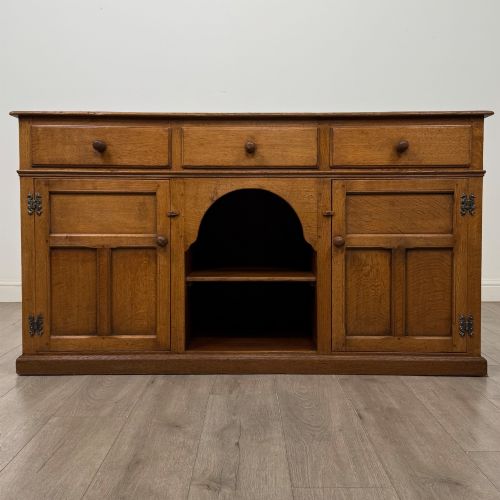
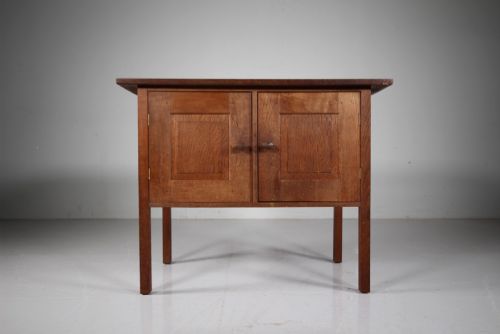
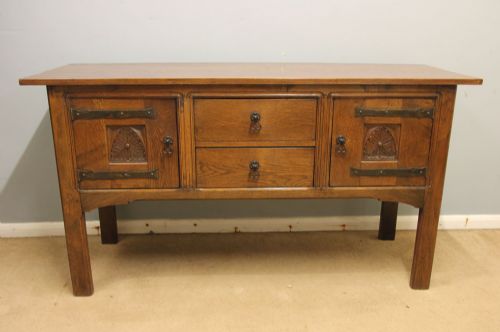


Arts and Crafts Dresser Base
An arts and crafts dresser base is a sturdy storage piece defined by honest construction and timber grain, built to anchor a dining room or hall.
Arts and Crafts Dresser Base
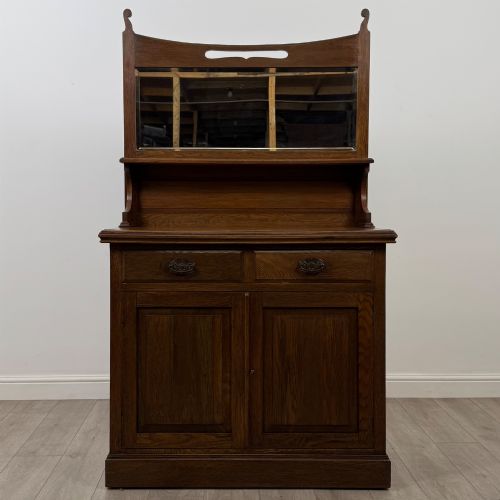
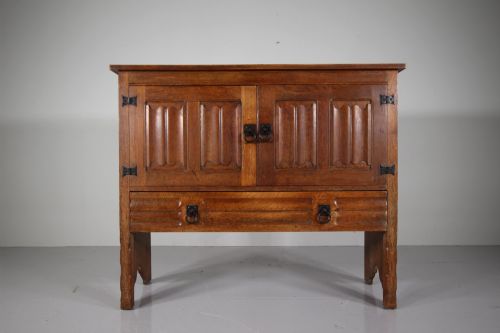
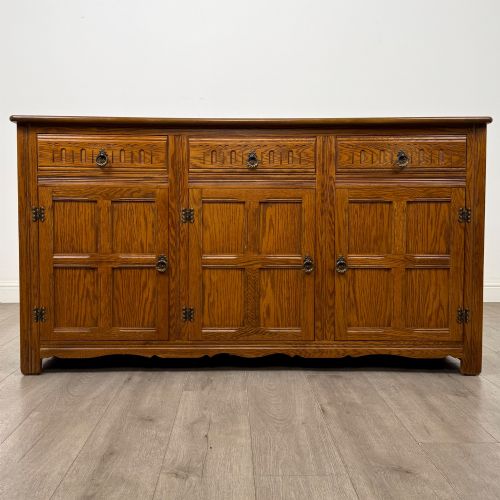
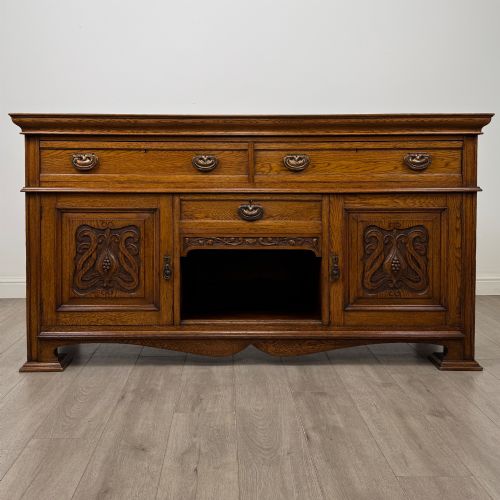
An arts and crafts dresser base provides low-level storage through cupboards and drawers, emerging from periods spanning the Victorian era, the Edwardian years, and into the 1930s. These pieces often align with related forms like sideboards, side cabinets, and cottage dressers.
The aesthetic draws heavily on English country traditions, incorporating Jacobean revival motifs or Gothic revival touches alongside simpler Arts and Crafts principles. You will frequently encounter golden oak, English oak, and occasional burr oak variations across these listings.
Design approaches range from utilitarian Cotswold School pieces to refined workshop productions carrying stamps or attribution to makers such as Peter Waals, Liberty, and T Simpson and Son. Certain examples include mirrorbacks or tall cupboard superstructures, though the low base remains the core form.
Craftsmanship and Proportion
The distinction between standard commercial output and exceptional work lies in the selection of timber, particularly figured or burr oak, and the precision of the joinery. Workshop pieces often display hand-beaten metalwork and thoughtful proportions that elevate them above factory-made sideboard alternatives.
Maker attribution and documented provenance, such as stamps from notable designers or cabinetmakers, separate ordinary utility pieces from collectible examples. Original hardware and untouched surface finishes further distinguish superior survivals.
Listings feature solid oak predominantly, alongside brass and copper hardware, spanning Victorian, Edwardian, and 1930s periods.
Peter Waals·Liberty·T Simpson and Son·Dr Christopher Dresser
The Arts and Crafts Dresser Base Glossary
- Dresser base
- A low sideboard or cabinet featuring drawers and cupboards without the upper plate racks typical of taller dressers. This configuration provides a flat serving surface on top.
- Cotswold School
- A regional design movement associated with the Arts and Crafts philosophy, championing hand-tooling and simple, honest construction in solid wood. Pieces from this tradition often display understated craftsmanship.
- Golden oak
- A bright, warm timber tone achieved through finishing light oak varieties popular during the Edwardian period and early twentieth century. It highlights the natural medullary rays in quarter-sawn boards.
- Mirrorback
- A superstructure incorporating a mirror above the main sideboard surface, designed to reflect light and display decorative objects in a dining space.
- Burr oak
- Timber taken from tree growths containing distorted grain patterns, creating rich swirling figures used on select cabinet doors and drawer fronts.
Arts and Crafts Dresser Base: Frequently Asked Questions
What is an arts and crafts dresser base?
An arts and crafts dresser base is a solid wood storage unit featuring cupboards and drawers, designed during the late nineteenth and early twentieth centuries.
These pieces emphasise honest construction and natural materials over elaborate ornamentation, making them practical for modern dining rooms and hallways.
How do I date an oak dresser base?
Dating relies on stylistic clues, construction methods, and materials, moving from heavy Victorian Gothic revival designs toward lighter Edwardian golden oak and Cotswold School forms.
Hardware styles, timber treatments, and maker stamps or signatures also help narrow down the period of manufacture between the late nineteenth century and the 1930s.
How do I live with an oak sideboard?
An oak sideboard serves as a practical surface for serving food or displaying ceramics, while offering deep interior storage for tableware and linens.
To care for the timber, keep the piece away from direct heat sources and apply natural wax polish periodically to nourish the dry wood grain.
Were these pieces made by hand?
Manufacturing methods varied from small workshop productions using traditional hand-tooling techniques to more commercial factory outputs during the Edwardian era.
Pieces associated with specific designers or schools often show distinct hand-finished joinery and custom hardware that set them apart from standard mass-produced sideboards.