

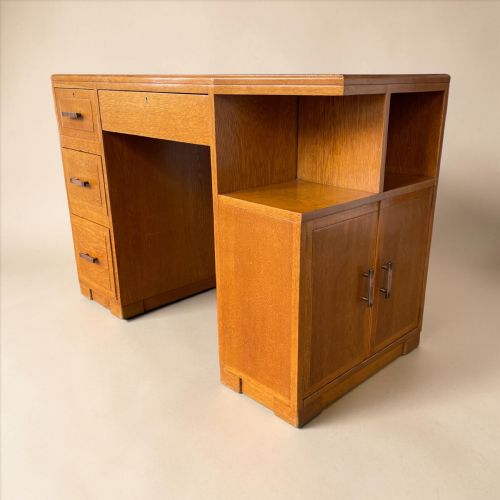
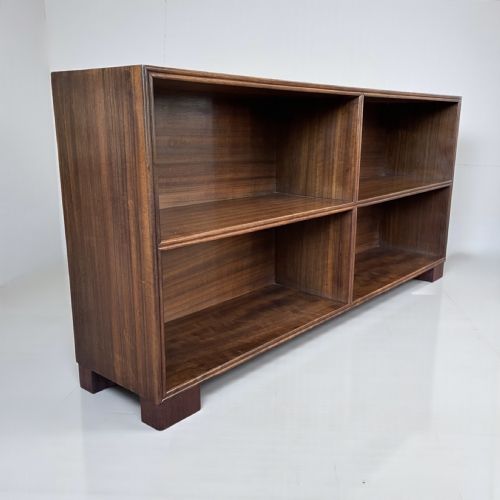

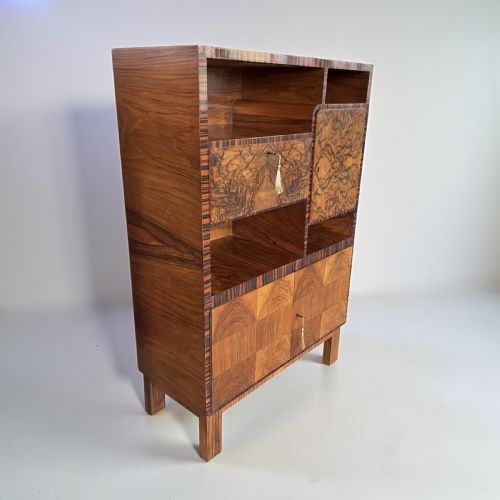


Art Deco Shelving
Art deco shelving brings clean geometric lines and striking veneers into a room, offering practical storage disguised as modernist sculpture.
Art Deco Shelving
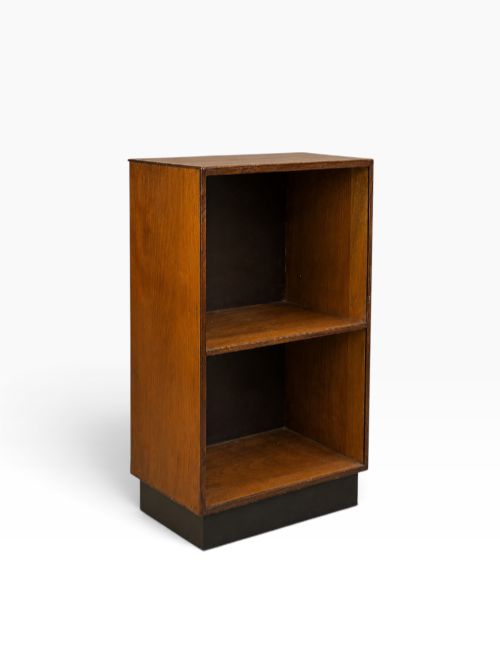
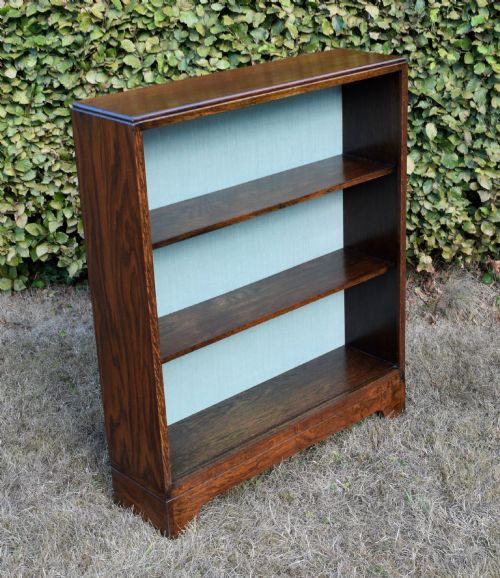
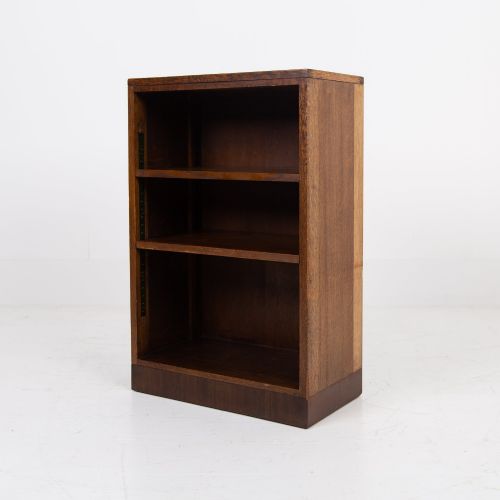
When you search for art deco shelving, you encounter an array of bookcases, display cabinets, and open units designed primarily during the 1930s. These pieces serve to organise books and display objects while anchoring the aesthetic of a modern interior.
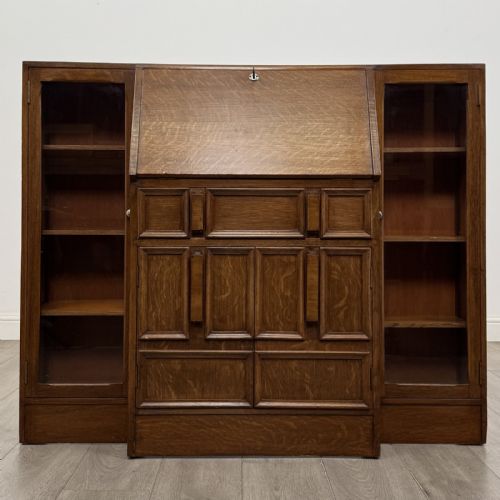
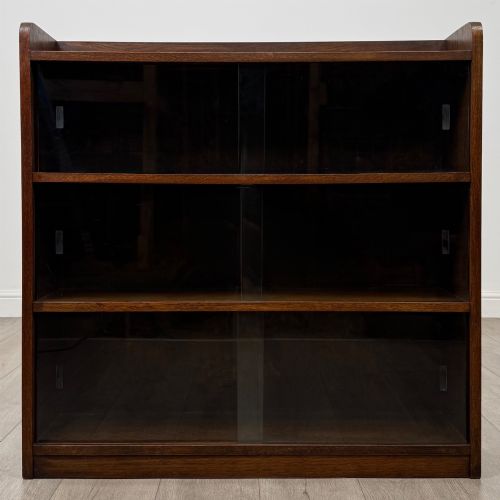
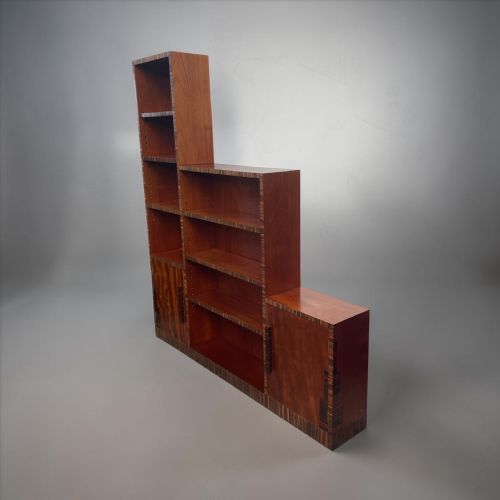
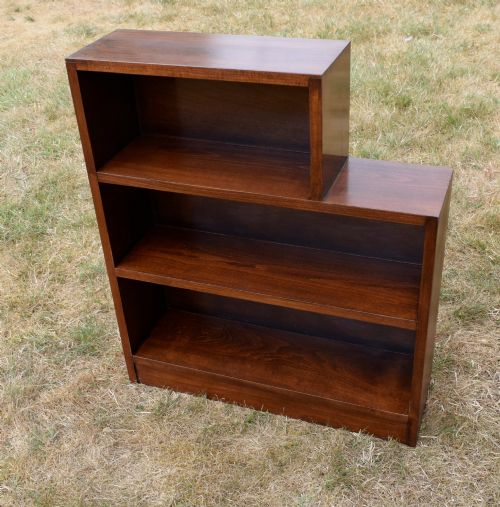
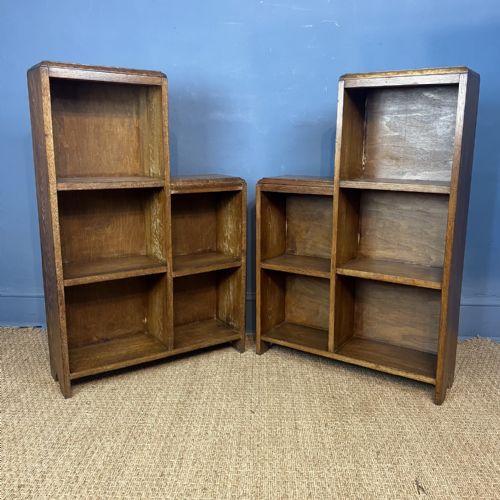
The version you are most likely to meet on this page is the oak or walnut bookcase, often featuring stepped profiles or sliding doors. Such items blend the utilitarian function of Edwardian storage with the aerodynamic curves and linear motifs of the interwar period.
Beyond standard bookcases, the listings span related forms such as bureau cabinets, side tables with shelves, and freestanding display units. These variations demonstrate how cabinetmakers applied modernist principles to diverse domestic furniture.
How they were made
Cabinetmakers constructed these pieces using a solid timber frame of oak, mahogany, or walnut, frequently applying decorative veneer to large flat surfaces to highlight natural wood grain. Timber varieties like ash and ebonised wood also appear, providing distinct surface textures and dark contrasts.
Advanced woodworking techniques allowed makers to produce curved fronts, tiered silhouettes, and stepped book-wells without sacrificing structural stability. Details such as glass panels, brass mounts, and leather inserts completed the construction of these storage units.
Art Deco Shelving Retail Price Guide 2026
Typical asking prices for art deco shelving among the pieces listed under this phrase on Sellingantiques today, from the lower quarter to the upper quarter. They describe what is for sale here now, not the wider market.
Someone once fitted a standard lamp with shelves, proving that even a reading light could not escape the 1930s demand for extra storage.
What varies in quality
The distinction between ordinary production and superior craftsmanship lies in the selection and matching of veneers. Cabinetmakers who took extra care laid burr walnut or figured walnut symmetrically across doors and drawers to create striking visual patterns.
Structural complexity also defines the upper tier of these pieces, seen in architectural mouldings, stacking Globe Wernicke mechanisms, and integrated sliding shelves. Simpler open bookcases rely entirely on the quality of the timber and the precision of the joinery for their appeal.
Heal's·Betty Joel·Maurice Adams·Sandberg & Co·Liberty's of London
The Art Deco Shelving Glossary
- Veneer
- A thin slice of decorative wood glued over a secondary timber base to create patterned surfaces on cabinet doors and shelves. This technique allowed makers to utilise expensive timbers efficiently while achieving bold visual symmetry.
- Stepped
- A silhouette characterised by descending or ascending horizontal tiers that create a geometric skyline effect. This profile remains one of the defining architectural shapes of modernist design.
- Ebonised
- Wood treated with a chemical stain or dark finish to imitate the dense, black appearance of ebony. This treatment was often applied to highlight the clean lines of 20th-century furniture.
- Bureau cabinet
- A hybrid storage form combining a sloping writing flap with enclosed shelving or drawers below. These units provided compact workspace and display capacity within a single footprint.
- Globe Wernicke
- A modular stacking bookcase system featuring glazed doors that lift and slide into the cabinet above. Each tier functions as an independent shelf box that can be rearranged or added to.
Art Deco Shelving: Frequently Asked Questions
How do I spot genuine art deco shelving?
Authentic pieces typically display geometric forms, stepped profiles, and decorative wood veneers characteristic of the 1930s. Look for architectural mouldings and construction methods consistent with interwar cabinetmaking.
At the same time, check for period materials such as solid oak, walnut, and original glass or brass hardware. Comparing the proportions and joinery to known examples helps confirm the date.
Where should I place an open bookcase?
Open bookcases suit living rooms, studies, and hallways where books and decorative objects remain easily accessible. Positioning them against a plain wall allows the timber grain and linear silhouette to stand out.
Keep these pieces away from direct heat sources and strong sunlight to protect the wood and veneer from drying out or fading over time.
Are stacking bookcases difficult to maintain?
Stacking modular units require gentle handling of the glass door mechanisms and individual tier boxes. Regular dusting with a soft cloth preserves the polished finish of the walnut or oak.
Avoid using harsh chemical polishes that can damage vintage wood surfaces. A light application of appropriate wax periodically will maintain the moisture and lustre of the timber.
What is the difference between an Edwardian and a 1930s bookcase?
Edwardian bookcases often feature traditional cornices, carved details, and darker stained timbers derived from Victorian revival styles. Their proportions tend to be heavier and more ornate than later designs.
In contrast, 1930s art deco pieces embrace streamlined geometry, stepped cornices, and figured veneers with minimal ornamentation. The focus shifts from applied carving to the natural pattern of the wood grain.