





Art Deco Metal Clock
An art deco metal clock brings sharp geometric lines and industrial energy into a room, offering both reliable timekeeping and bold period sculpture.
Art Deco Metal Clock
An art deco metal clock is a timepiece defined by the materials and design sensibilities of the early to mid-twentieth century. These objects range from heavy mantel sculptures to functional wall dials and compact desk pieces.
The versions most commonly met on this page date from the nineteen thirties, spanning styles from classic French modernism to Amsterdam School and industrial forms. They combine utilitarian function with decorative metalwork.
Makers and workshops across England, France, Switzerland, and the Netherlands produced these items in various sizes and configurations. Buyers encounter anything from large hospital wall clocks to miniature alarm designs.
How they were made
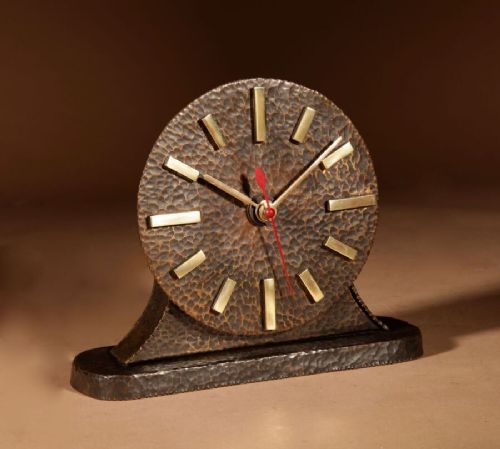
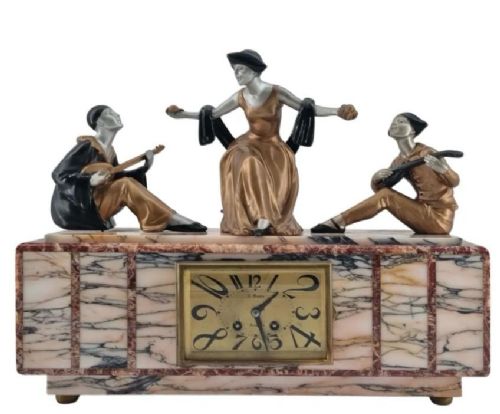
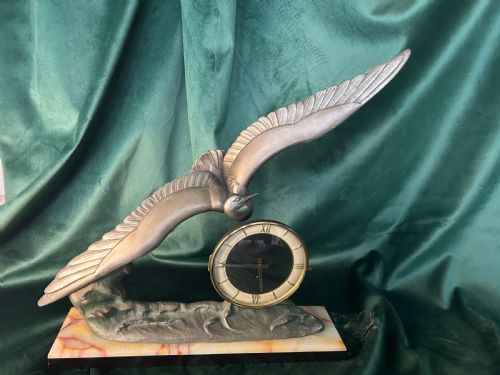
Construction relies heavily on metals such as chrome, brass, bronze, ormolu, and spelter, often paired with glass dials and marble bases. Artisans employed techniques like hammering, patination, and champlevé enamel to create textural contrast.
Many examples incorporate electrical movements or traditional mechanical escapements housed within sturdy metal casings. Surface finishes range from high-polish chrome to darkened patinated brass.
Listings feature items from the nineteen tens, twenties, thirties, forties, and fifties, alongside Edwardian examples.
What varies in quality
Distinction across the range rests on the sophistication of the metalwork and the integrity of the design. Pieces featuring hand-hammered patinated brass or sculptural figures demonstrate superior artistic ambition compared to plain utilitarian models.
The presence of named makers or specific regional styles elevates a piece, as seen in signed works by clockmakers and distinct schools of design. Integration of quality materials like marble and champlevé enamel further separates standard production from finer examples.
Smiths Clockmakers·A.L. Davenport·Bayard·Blangy·Newport·Zenith
The Art Deco Metal Clock Glossary
- Spelter
- An alloy commonly used as a base metal for cast decorative figures and clock cases. It often receives a bronze or gilt finish to mimic more costly materials.
- Champlevé enamel
- A technique where troughs are gouged into a metal surface and filled with vitreous enamel powder before firing. This creates colourful decorative patterns across dials and bezels.
- Ormolu
- A method of applying finely ground high-carat gold to a bronze object using a mercury amalgam. It produces a rich golden lustre on period metalwork.
- Amsterdam School
- An architectural and design movement from the Netherlands emphasising expressive, rounded brickwork and richly textured metalcraft. It brings a distinct organic warmth to geometric forms.
- Strut clock
- A portable timepiece supported by a hinged prop or stand at the back. These are typically designed for desks, dressing tables, or mantelpieces.
Art Deco Metal Clock: Frequently Asked Questions
Where should I place an art deco metal clock?
These timepieces suit mantelpieces, sideboards, and office desks where their metallic finishes catch the light. Wall-mounted versions function well in kitchens, hallways, or workspaces.
Ensure the surface is stable and level, particularly for heavy marble and bronze models. Keep them away from damp environments to preserve the patinated brass and chrome surfaces.
How do I identify an Amsterdam School clock?
Amsterdam School pieces often feature expressive, hammered metal surfaces and distinct architectural detailing. They combine traditional craftsmanship with the bold geometry of the era.
Look closely at the texture of the brass and the construction methods used on the case. These elements distinguish regional Dutch work from standard mass-produced items.
What is a mystery clock?
A mystery clock is an unusual timepiece where the mechanism for moving the hands is concealed or rendered visually perplexing. These conversation pieces were produced in limited numbers.
They rely on ingenious mechanical design to create the illusion that the hands move without drive trains. Collectors prize them for their uncommon engineering.
How do I care for patinated brass?
Patinated brass requires gentle dusting with a dry microfibre cloth to maintain its surface finish. Avoid abrasive cleaning agents that strip away the aged chemical coloration.
Allow the metal to age naturally without aggressive polishing. Proper maintenance preserves the historic character of the piece.